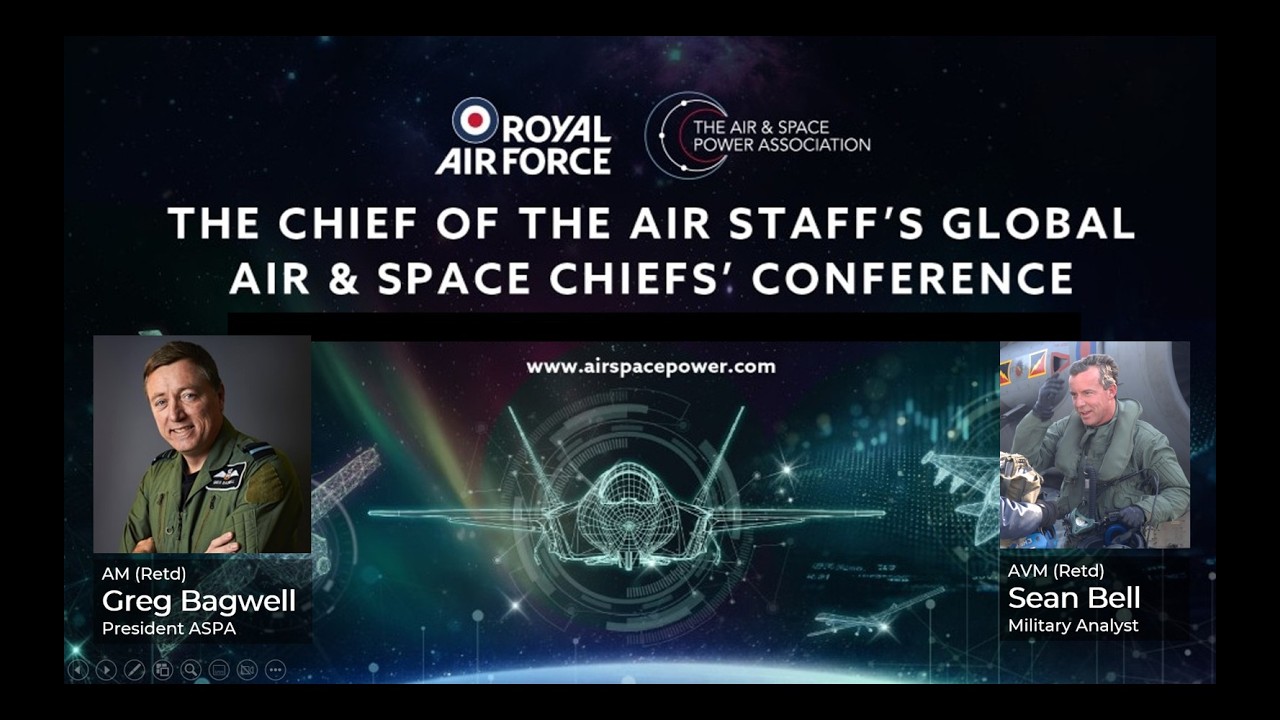
The Chief of the Air Staff’s Global Air & Space Chiefs’ Conference 2026

15 - 16 July 2026

Venue:

London and Online

Details

Description

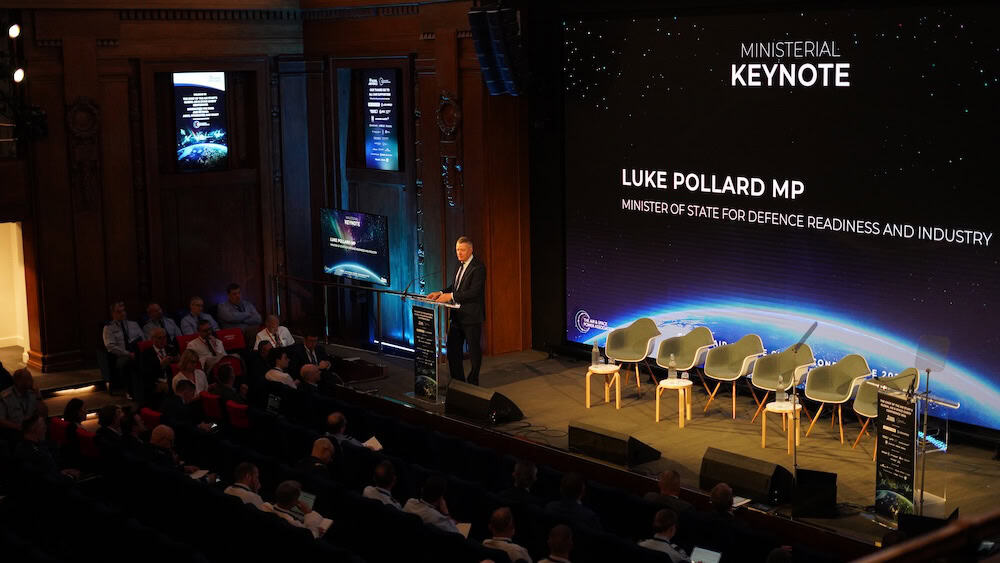
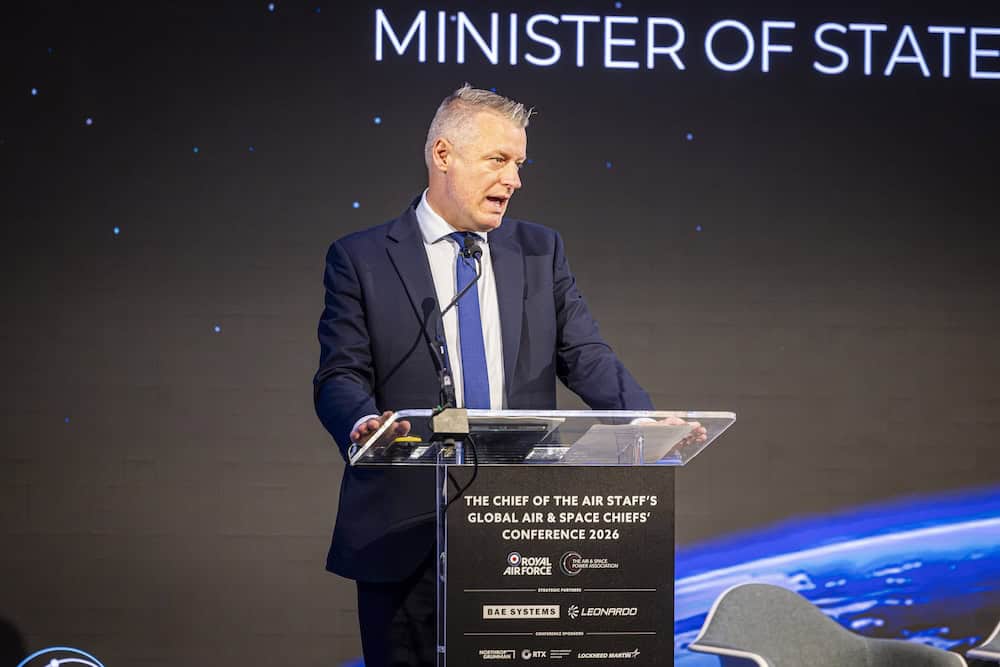
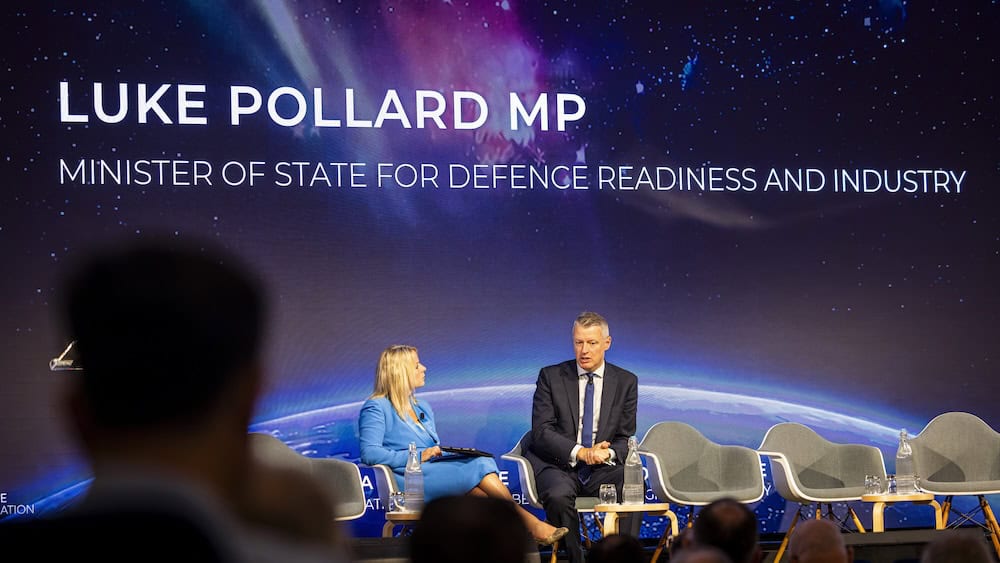
Keynote: Luke Pollard MP
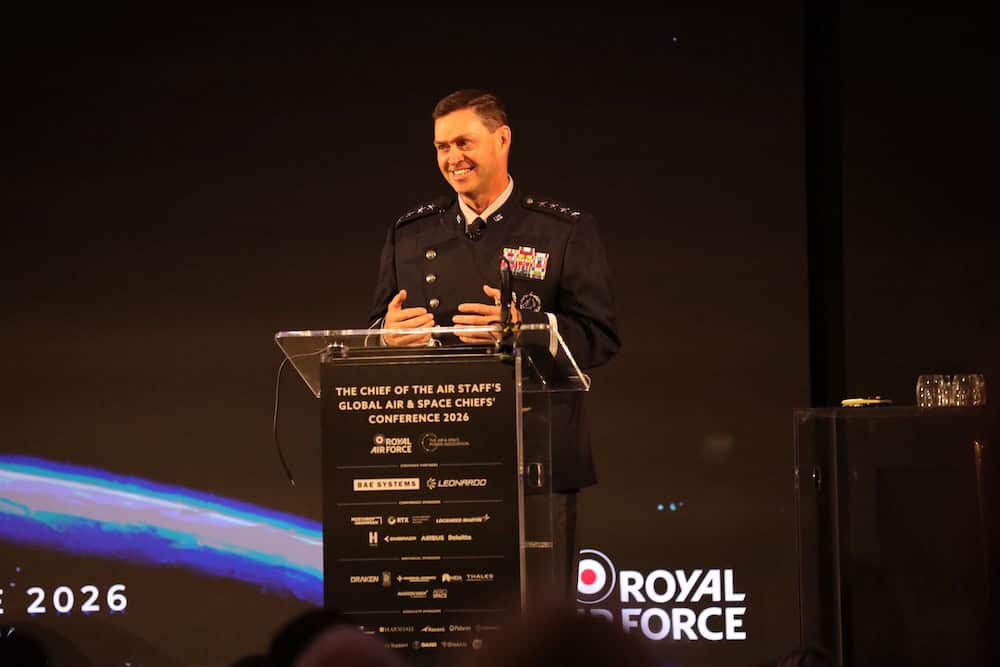
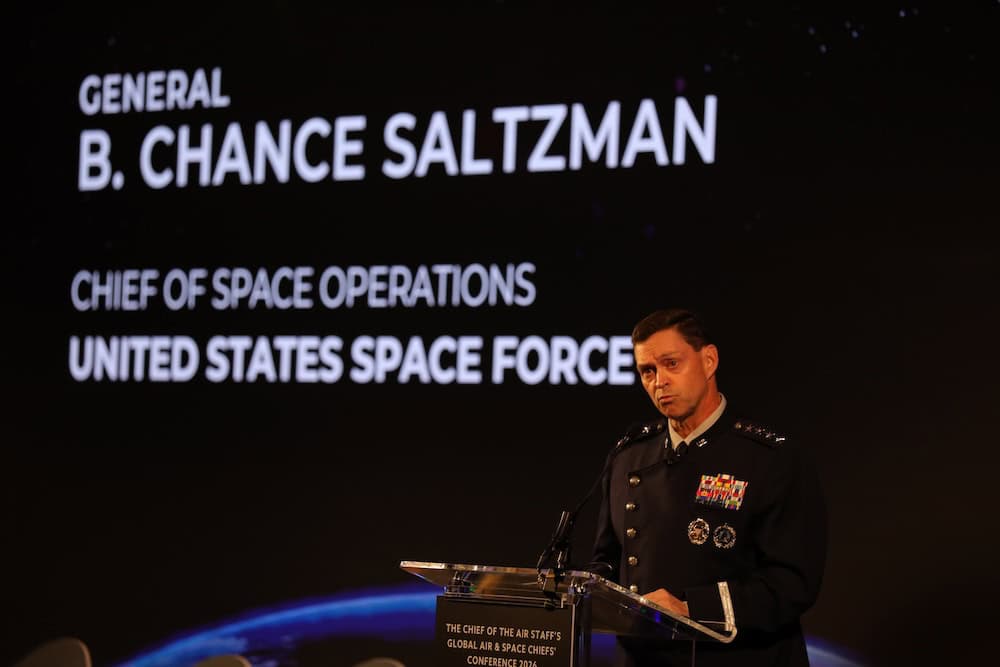
Keynote: Gen B. Chance Saltzman
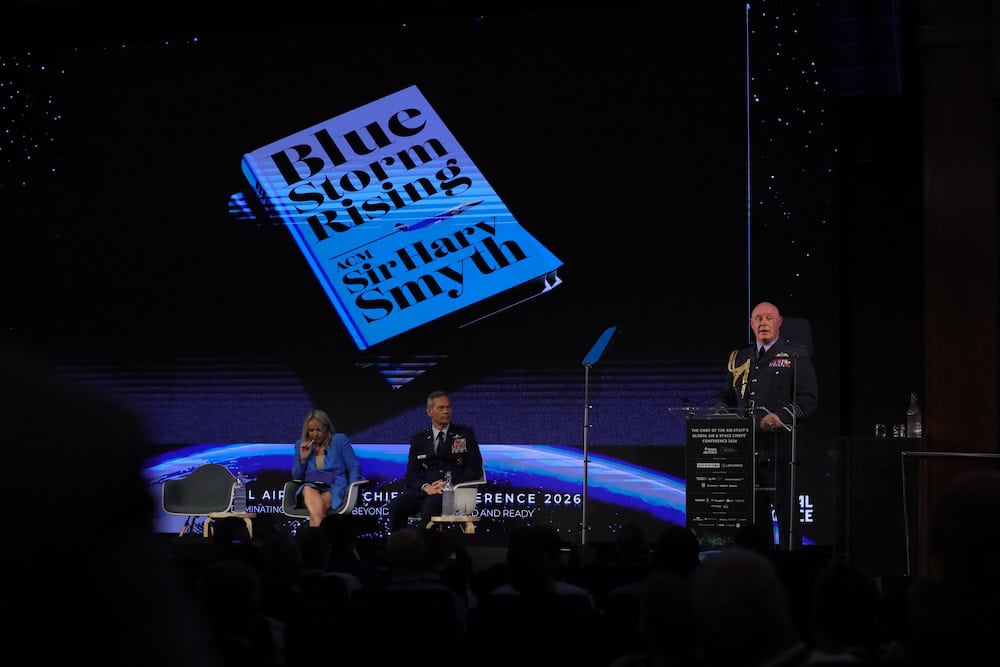
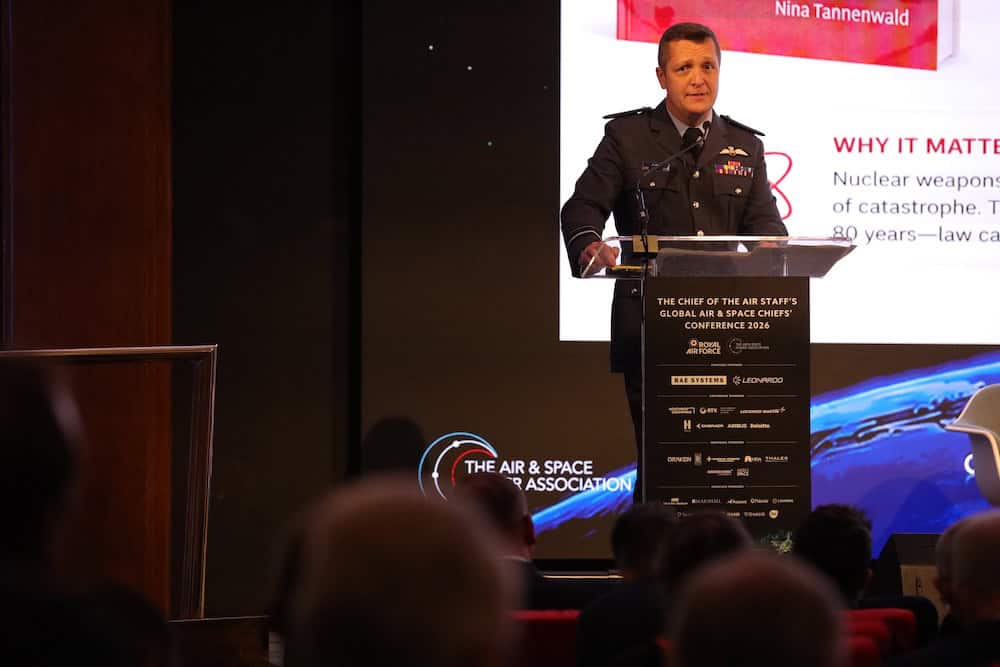
Keynote: ACM Sir Harv Smyth
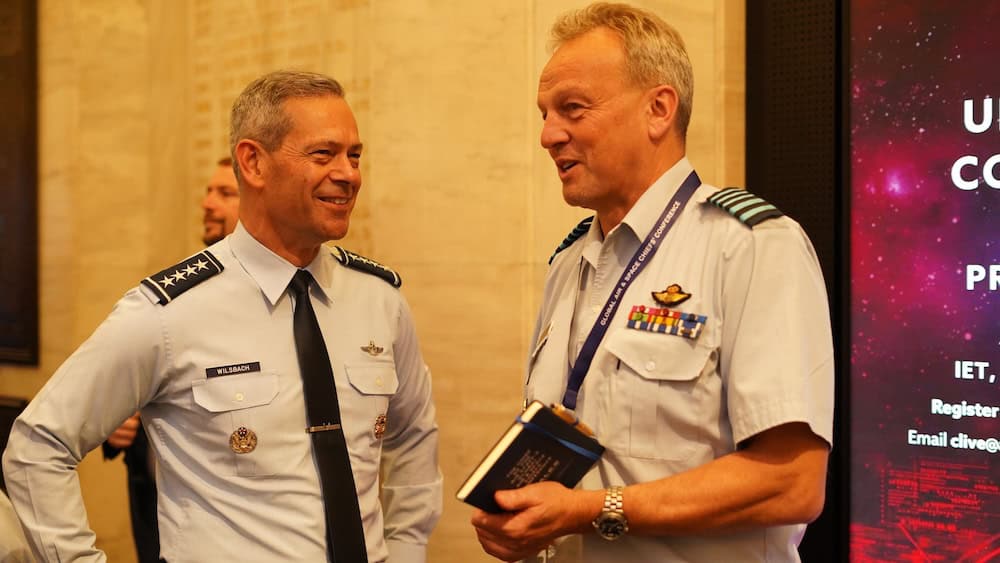
Keynote: General Kenneth S Wilsbach

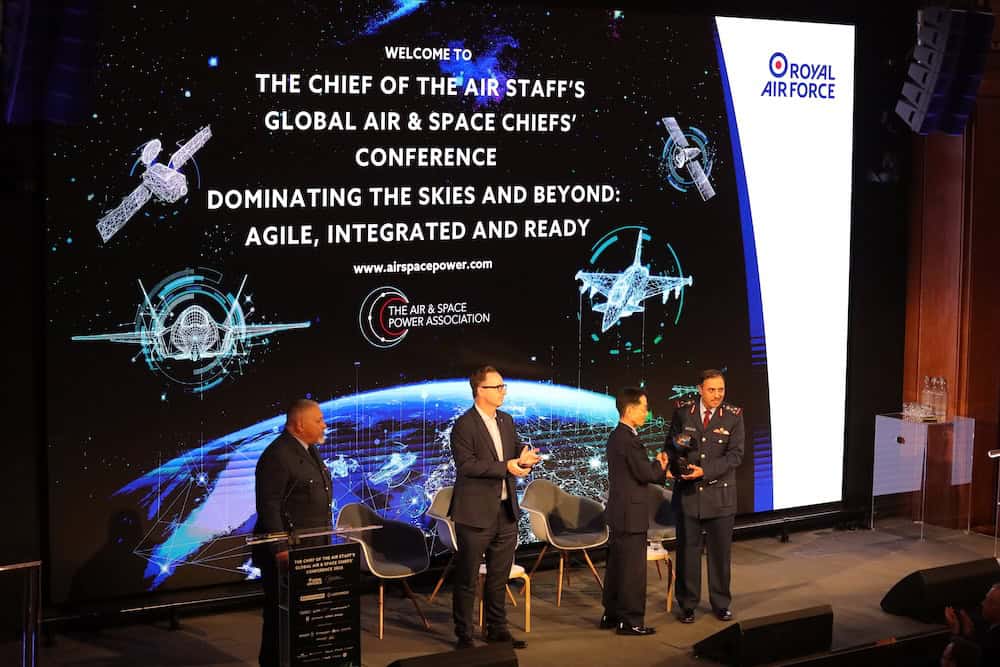
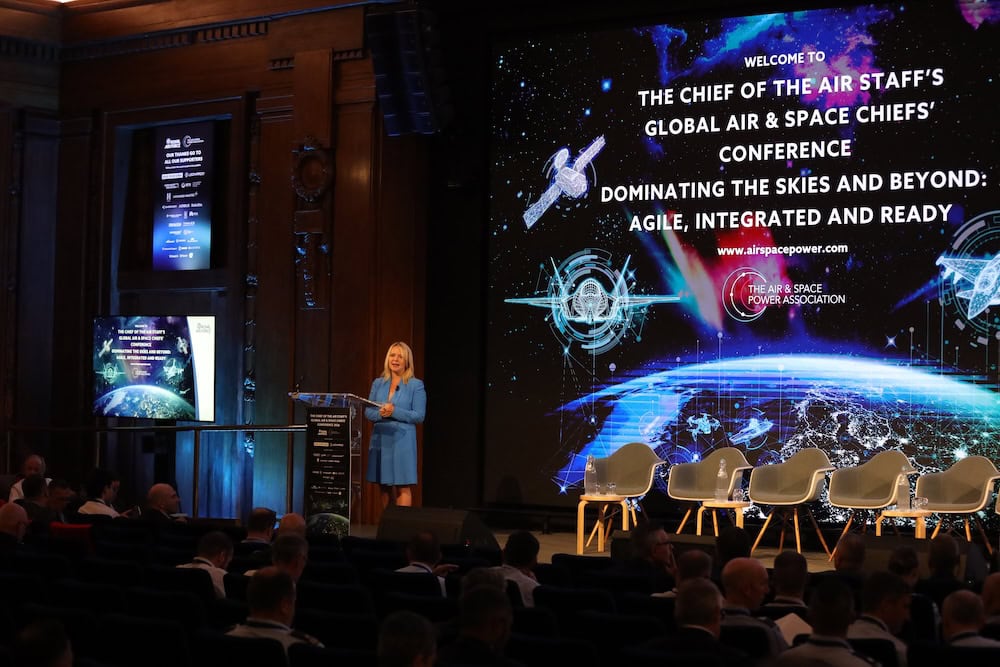
Dominating the Skies and Beyond: Agile, Integrated and Ready

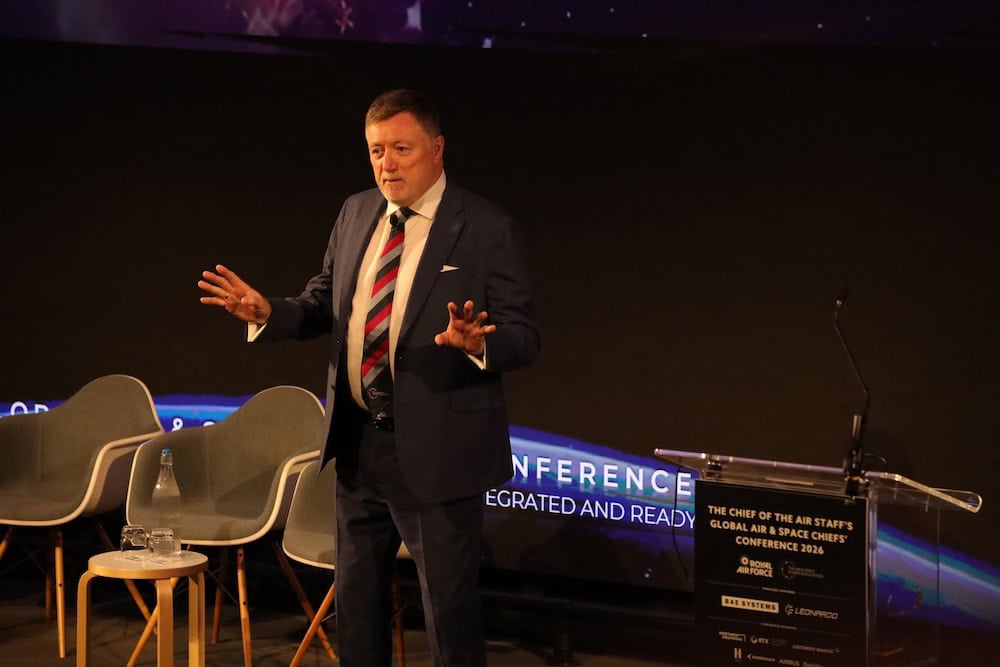
‘In 2026, the rate of change in the global strategic environment shows no signs of abating, if anything, the tempo is increasing. However, there is a constant – the need for air and space power to dominate the skies and beyond. Mastering our domain is what we do; to provide the joint and coalition force with the freedom of action it needs to secure the battlespace, our nations, our interests, and our way of life. This is the ultimate team game; we cannot do this alone.

GASCC26 will explore the challenge and stimulate debate amongst the team who are responsible for delivering agility, integration, and readiness to global air and space power today, tomorrow and together. I look forward to seeing you at the merge!’

Air Chief Marshal Sir Harv Smyth
Chief of the Air Staff, Royal Air Force

About the Global Air & Space Chiefs’ Conference

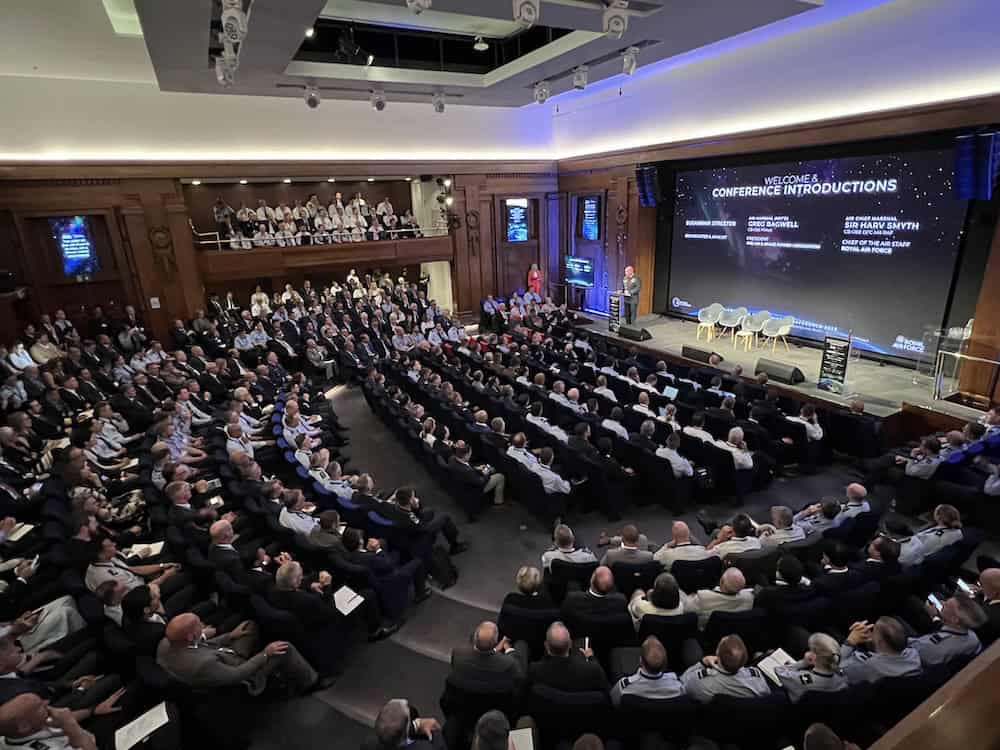
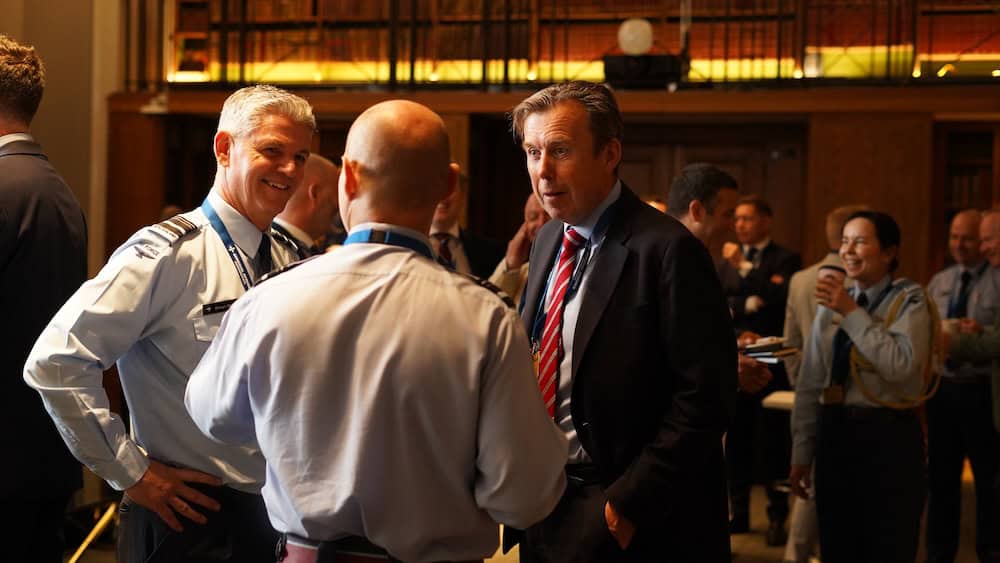
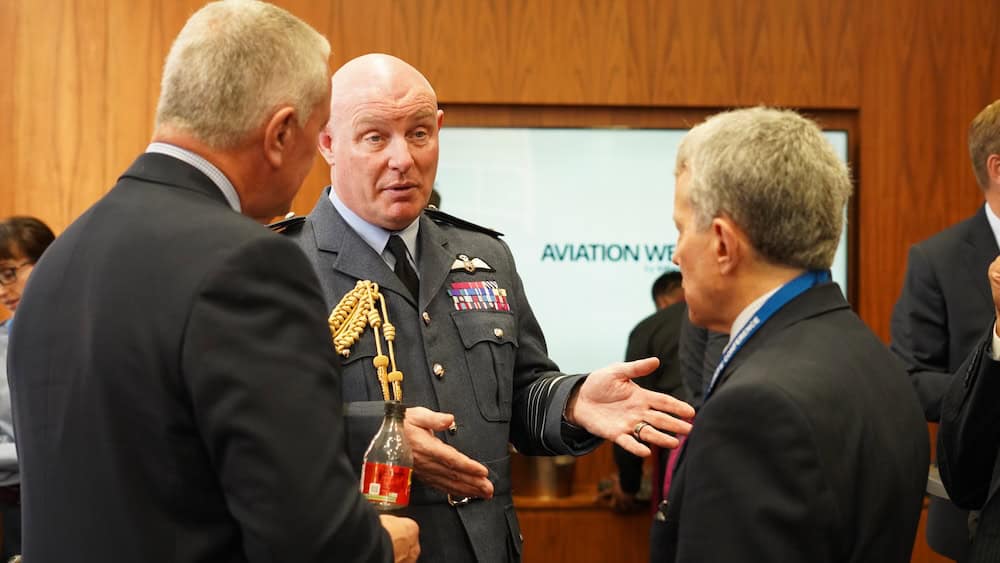
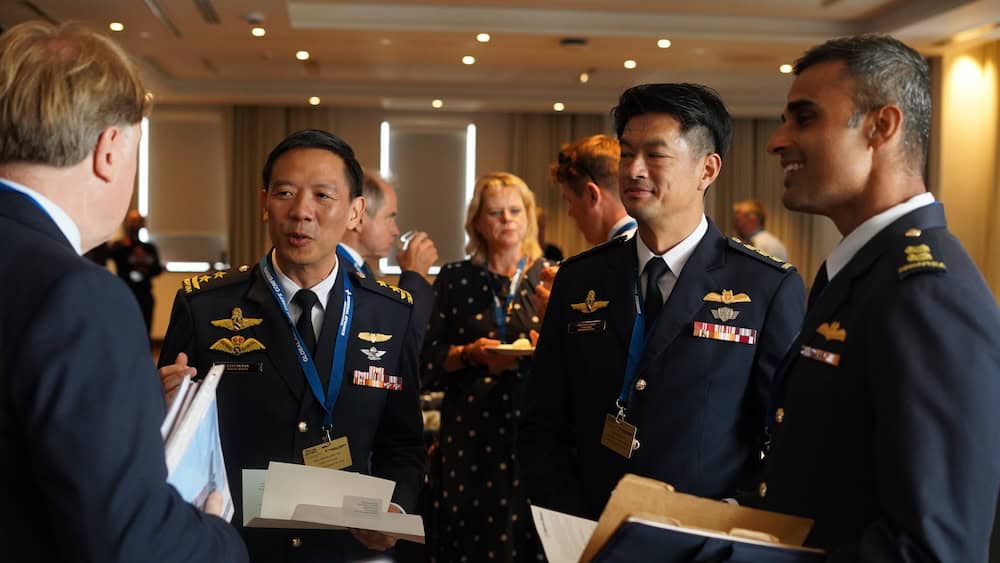
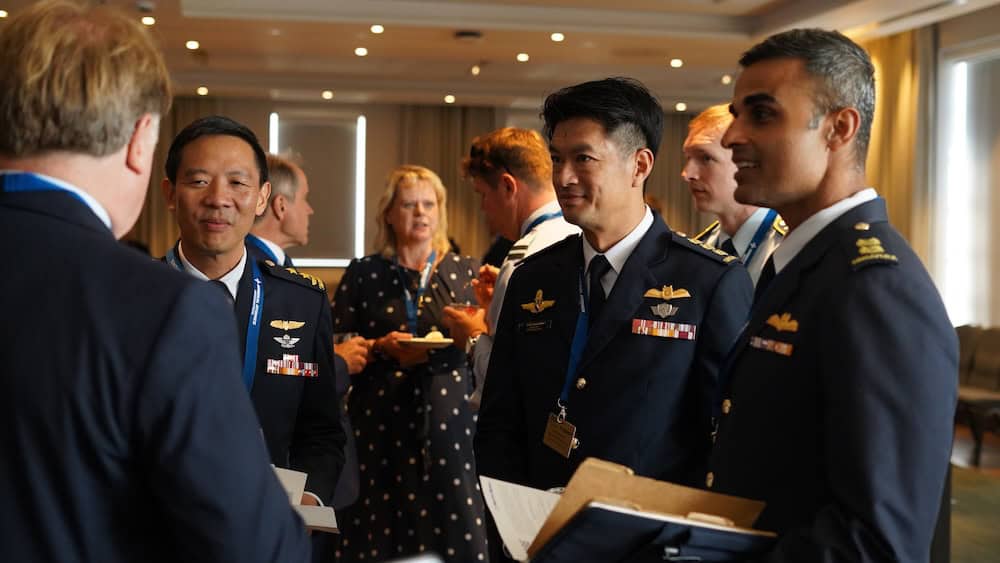
The Chief of the Air Staff’s Global Air & Space Chiefs’ Conference brings together global leaders in Air and Space Power with captains of industry and technology enhanced by experts from international academia.

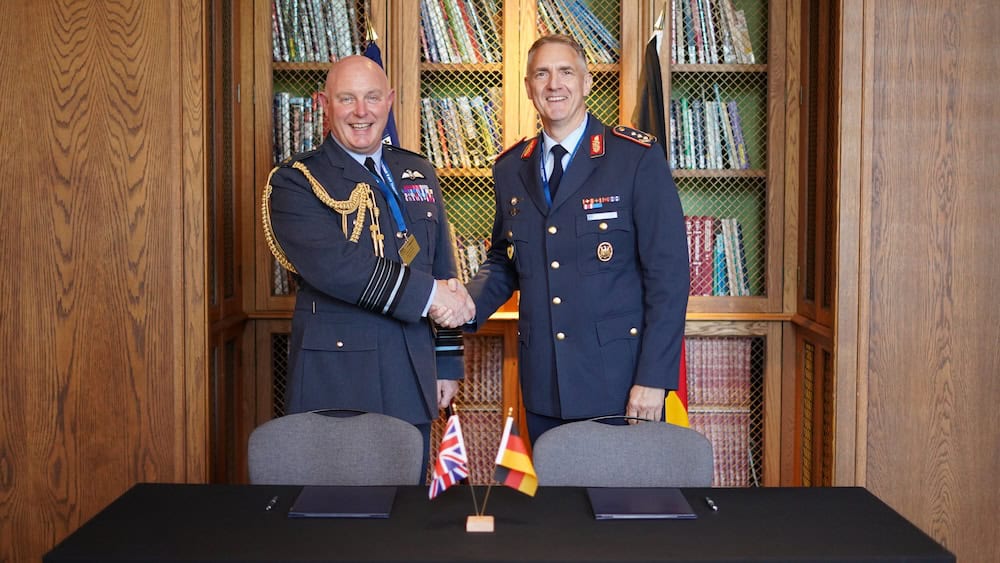
The conference explores the strategic challenges facing the Royal Air Force and Whole Force partners as well as international partners and global allies through a combination of keynote speakers, presentations and diverse panels formed of military, academic, industrial and other scientific and practitioner experts.

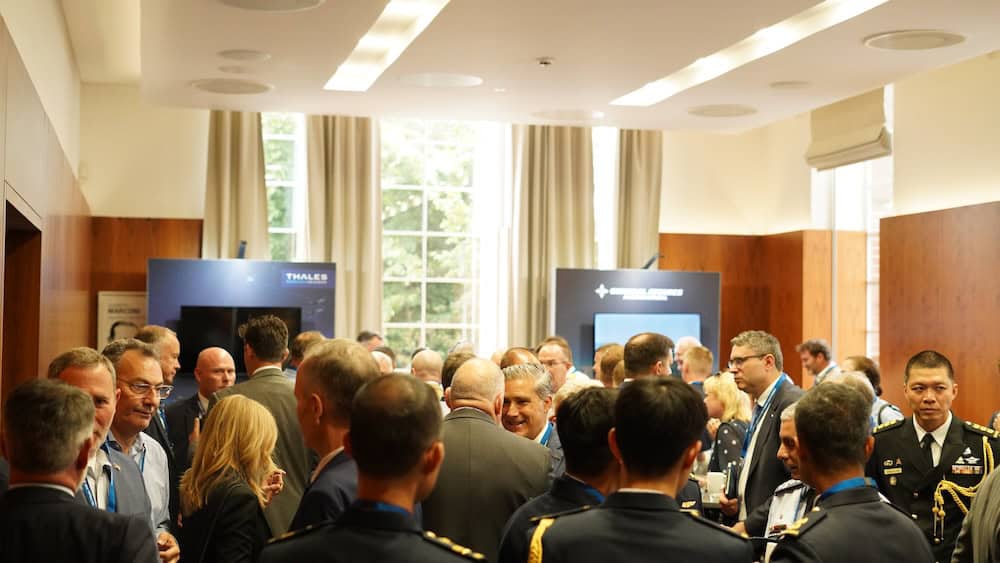
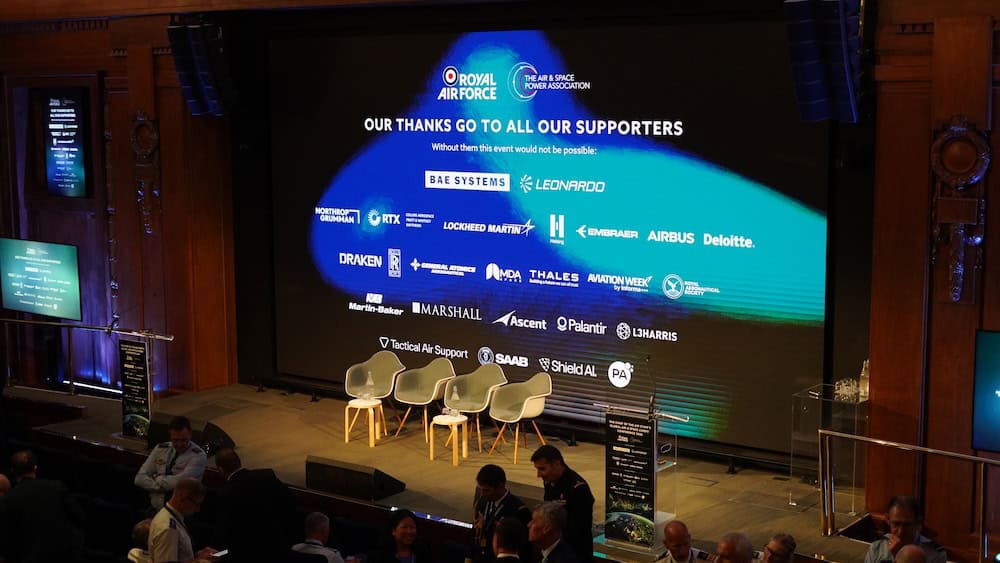
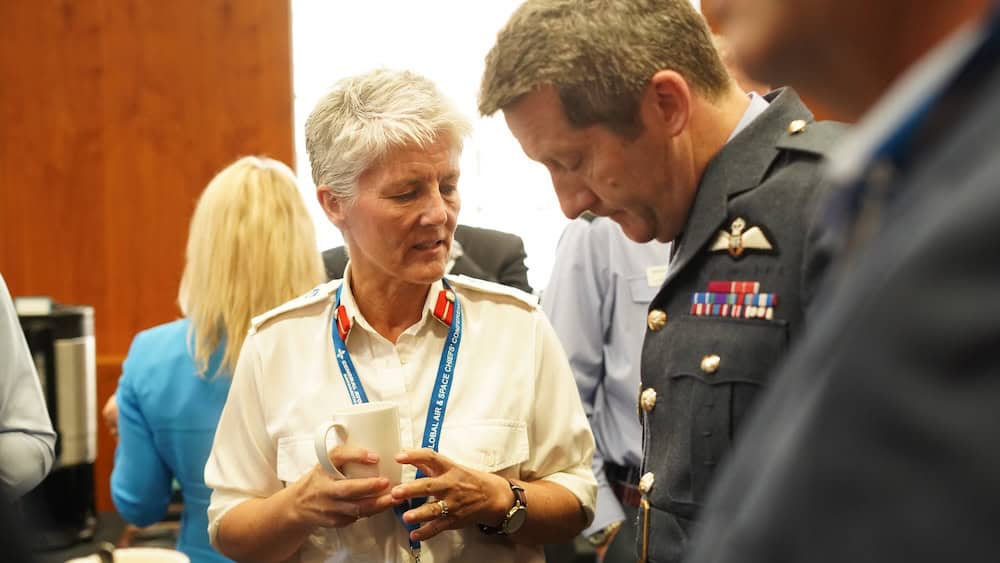
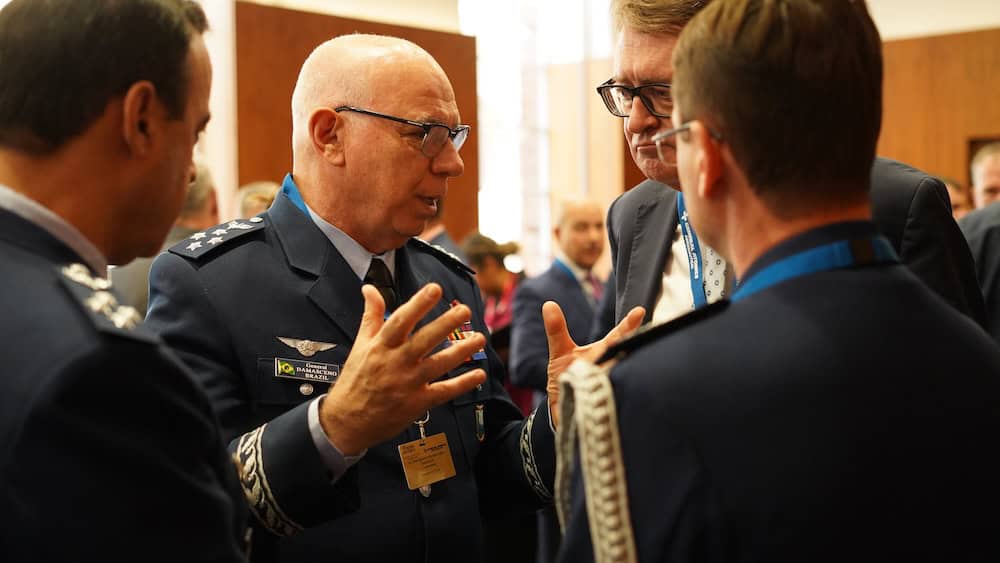
The Global Air and Space Chiefs’ Conference features conference, networking areas and displays and an exclusive reception on the evening of Day One. The conference is also broadcast for virtual attendees.

Conference Theme:

Dominating the Skies and Beyond – Agile, Integrated and Ready

The conference theme explores three key capability areas: space, nuclear and integrated air and missile defence. These focus areas are critical to the UK and to key partner nations as we develop and deliver domination of the skies and beyond.

The conference features the following sessions plus Keynote speeches.

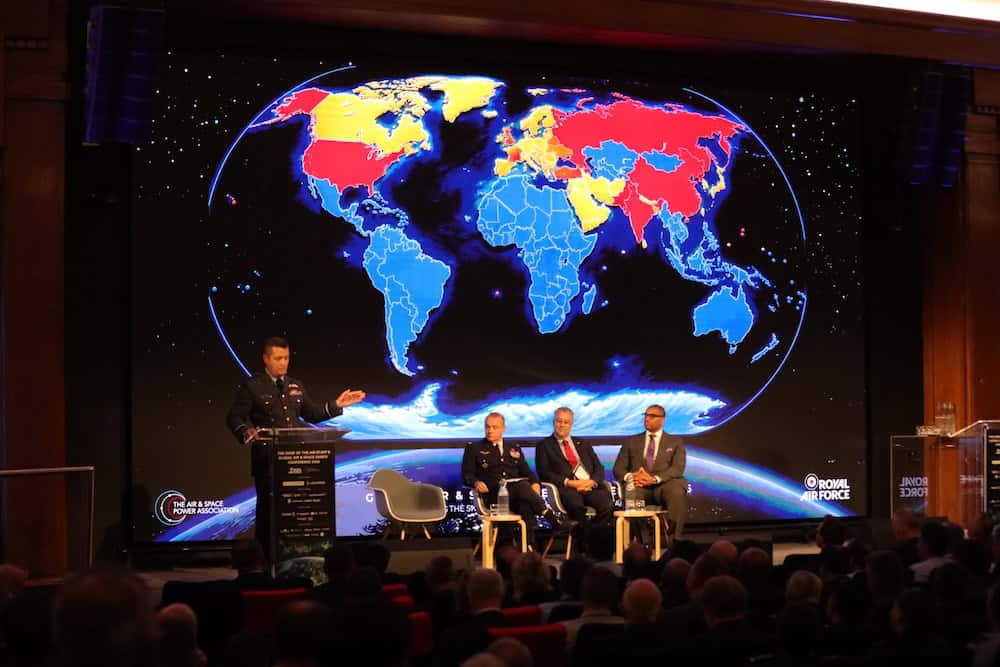
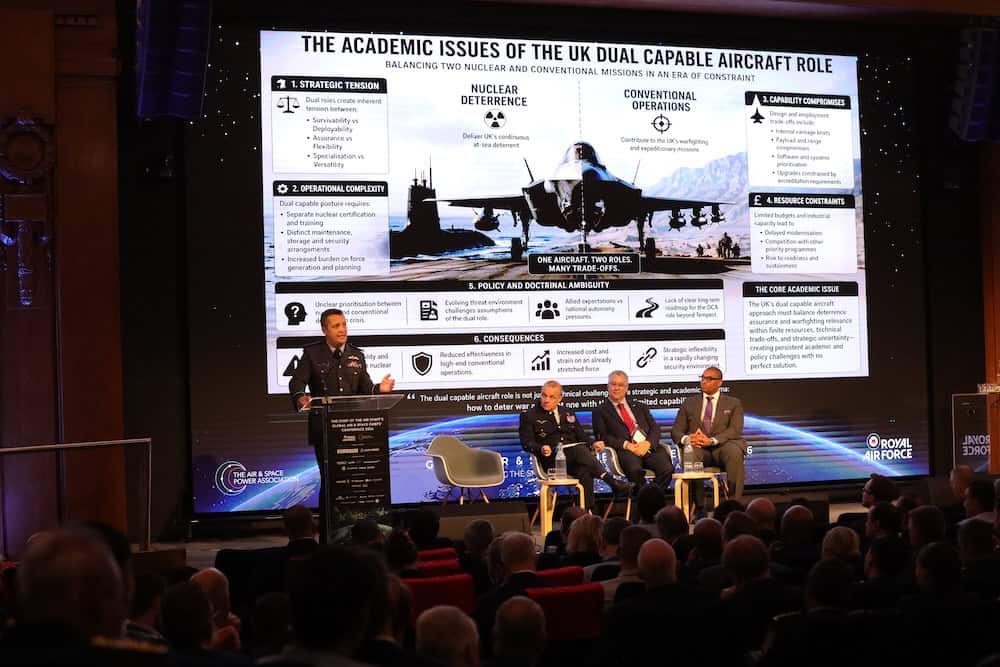
1. Nuclear – Back to the Future?

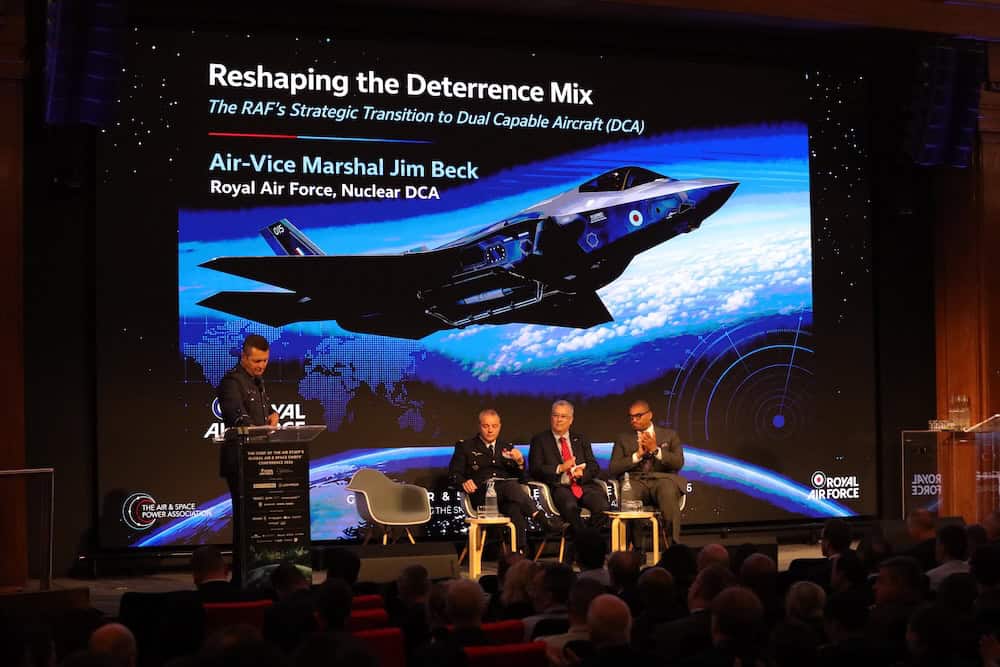
The decision to procure the F-35A provides an opportunity for the RAF to return to the nuclear role. After a three-decade sabbatical, the RAF must refresh its ‘nuclear IQ.’ This first session sees senior defence officials and an international chief share insights on airborne nuclear capability. The panel also includes an Indo-Pacific expert and a leading industry figure who will discuss re-introducing a critical capability to the UK’s and NATO’s inventory.

2. Operationalising the Space Domain

Following the exploration of air-delivered nuclear capability, we shift focus to the rapidly evolving space domain and the importance of space domain awareness for allied security. Following a keynote address by an international space commander, a panel of space experts and practitioners will examine how we achieve optimum space domain awareness and what can be done to counter the threats to this key domain.

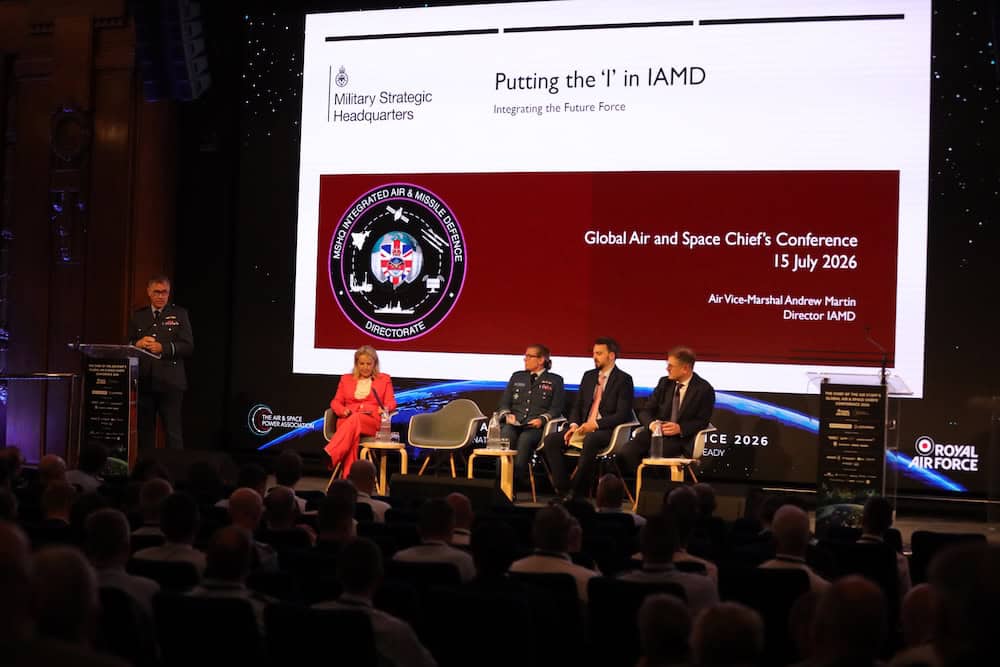
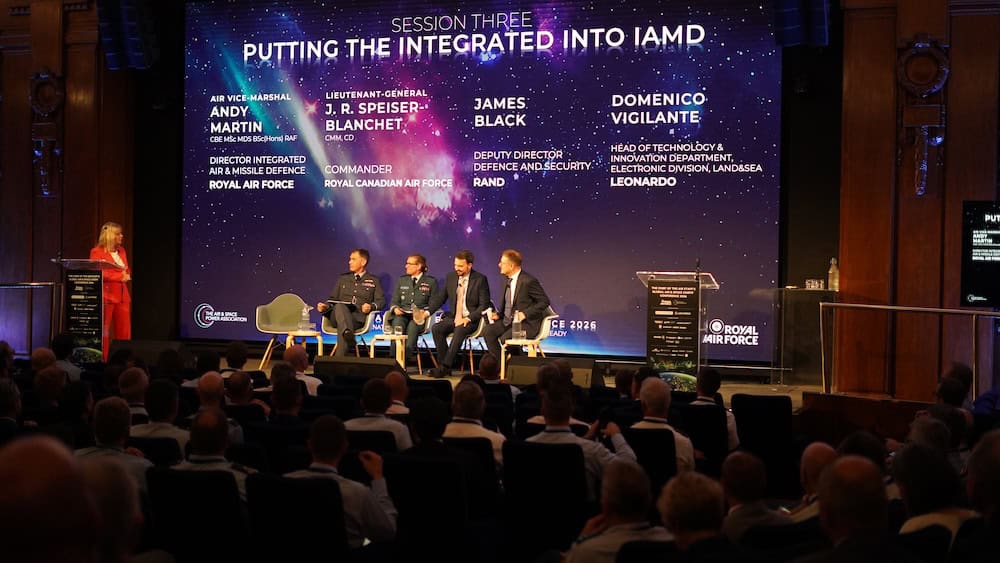
3. Putting the Integrated into IAMD

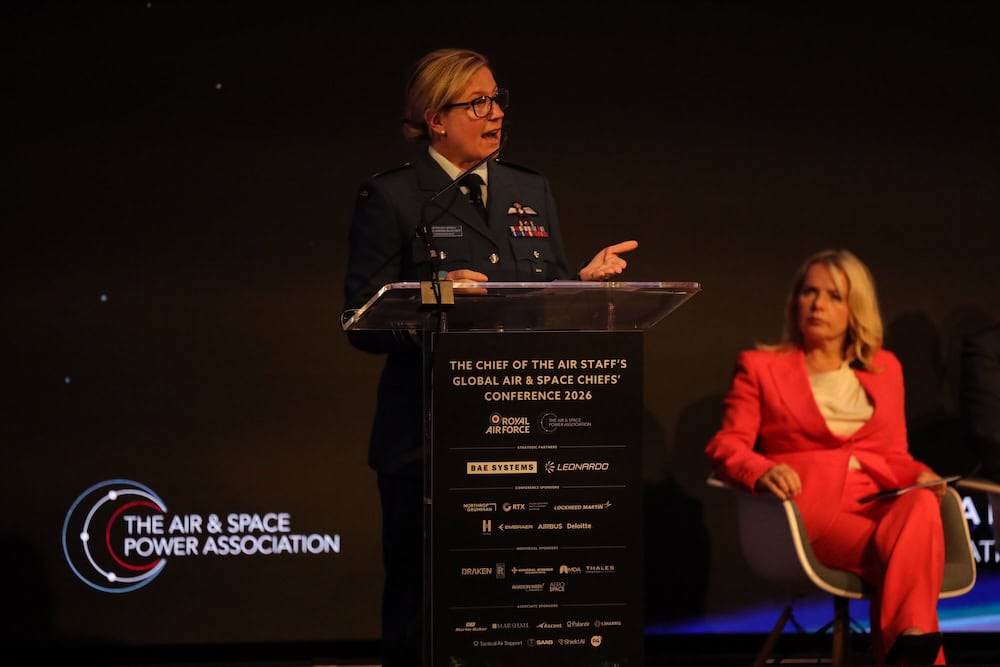
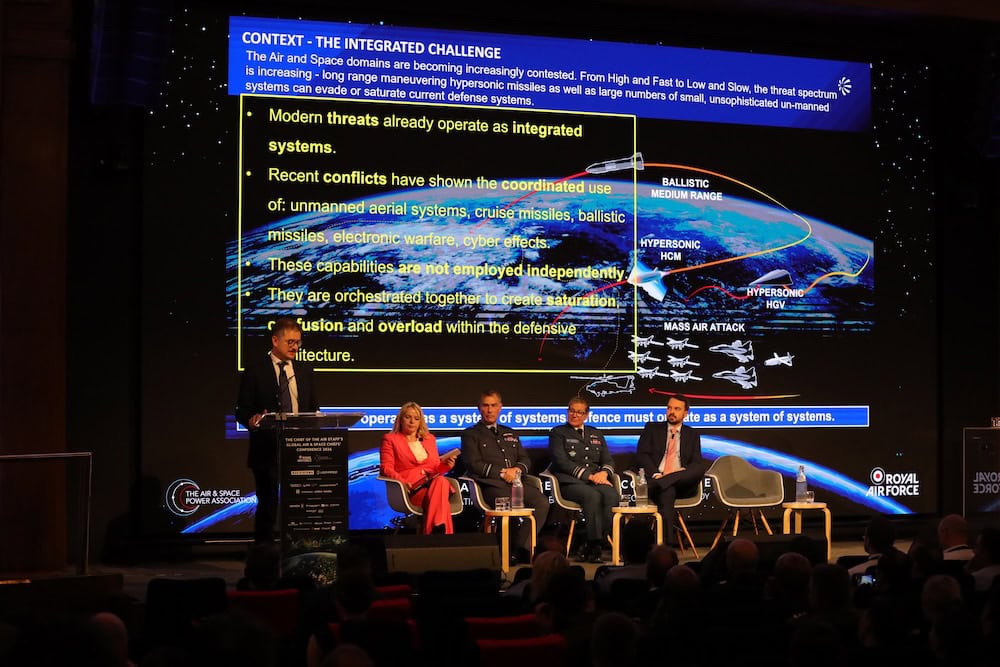
With NATO First and Integrated Air and Missile Defence (IAMD) both central tenets of the UK’s Strategic Defence Review, this third session brings both elements together. A senior RAF leader will chair a panel to look at the challenges and opportunities of developing and delivering IAMD, with valuable input from an international air chief, RAND Europe, and industry.

4. Delivering the Integrated Force

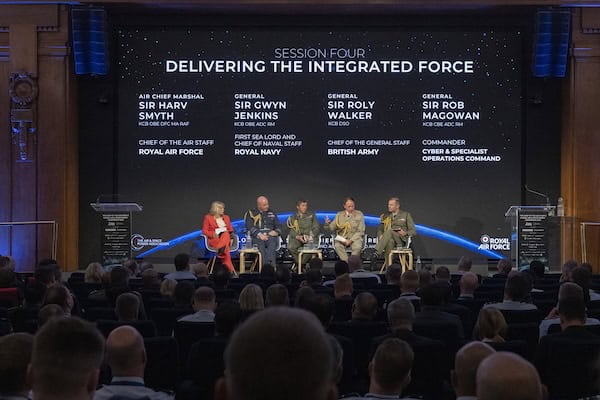
Having explored integration in IAMD, this session will go on to examine how this approach extends across all the UK armed forces. This panel will address for the first time how each of the UK’s armed forces and each service can develop and deliver together a fully integrated approach to operations.

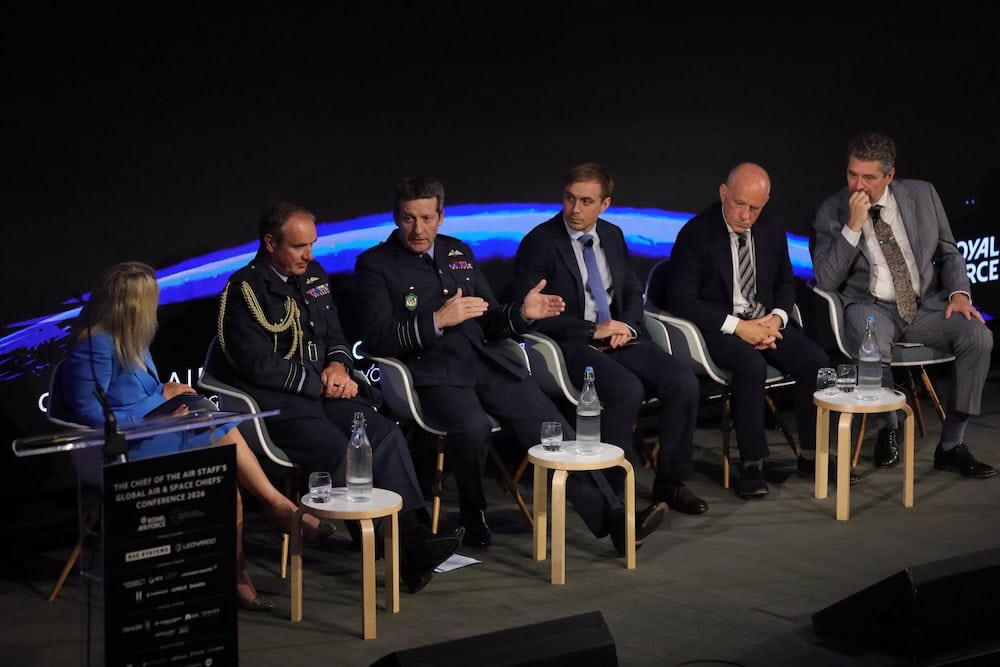
5. Contemporary Air & Space Power Lessons

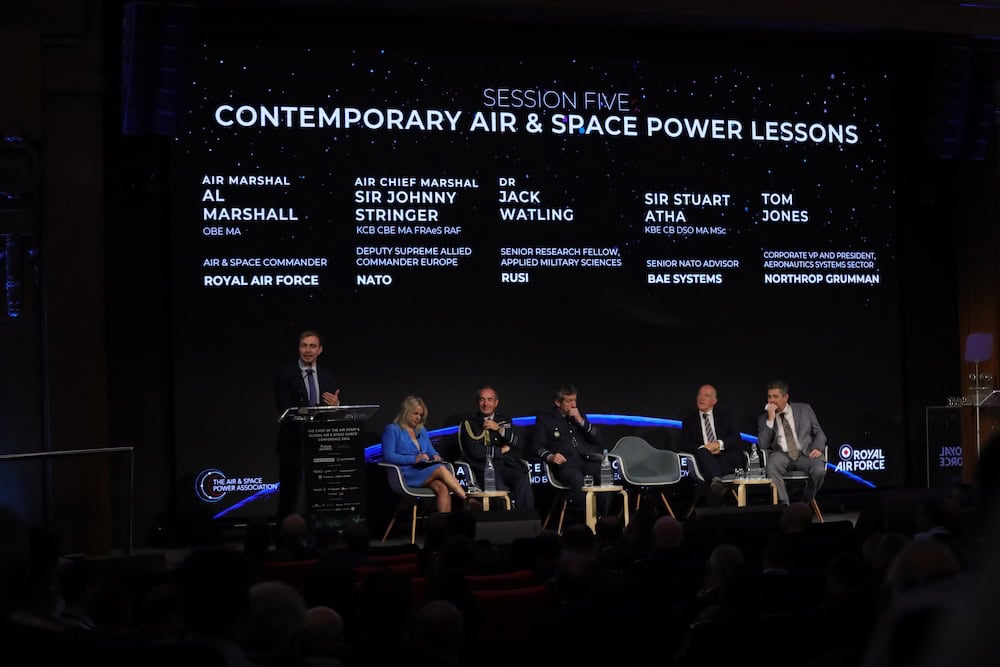
This final panel will debate the challenges and opportunities of innovating for multi-domain effect. A senior RAF official will lead the session supported by a senior NATO commander, a leading academic from RUSI and a senior industry figure.

Keynote speakers include:

  • Luke Pollard MP, Minister of State for Defence Readiness and Industry
  • Air Chief Marshal Sir Harv Smyth, Chief of the Air Staff, Royal Air Force
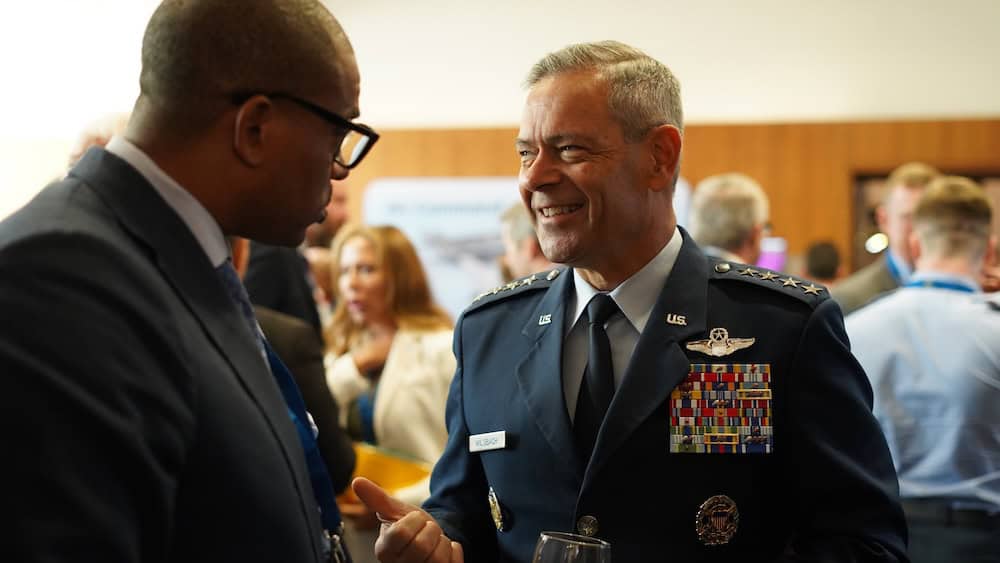
  • General Kenneth S. Wilsbach, Chief of Staff of the Air Force, United States Air Force
  • General Chance Saltzman, Chief of Space Operations, United States Space Force

International Air & Space Commanders from key allies and partners will join panels discussing themes such as emerging technologies, strategic collaboration, and global security challenges.

The Global Air & Space Chiefs’ Conference offers unparalleled networking opportunities, exclusive insights from top commanders, and access to the latest industry innovations, making it an essential event for defence professionals, industry partners, and academic experts.

Event Details

Start date: 15 July 2026

End date: 16 July 2026

Start time: 09:00 BST

End time: 17:00 BST

Venue: IET London, Savoy Place, WC2R 0BL

Sponsors

Strategic Partners

Conference Sponsors

Individual Sponsors

Associate sponsors

Resources

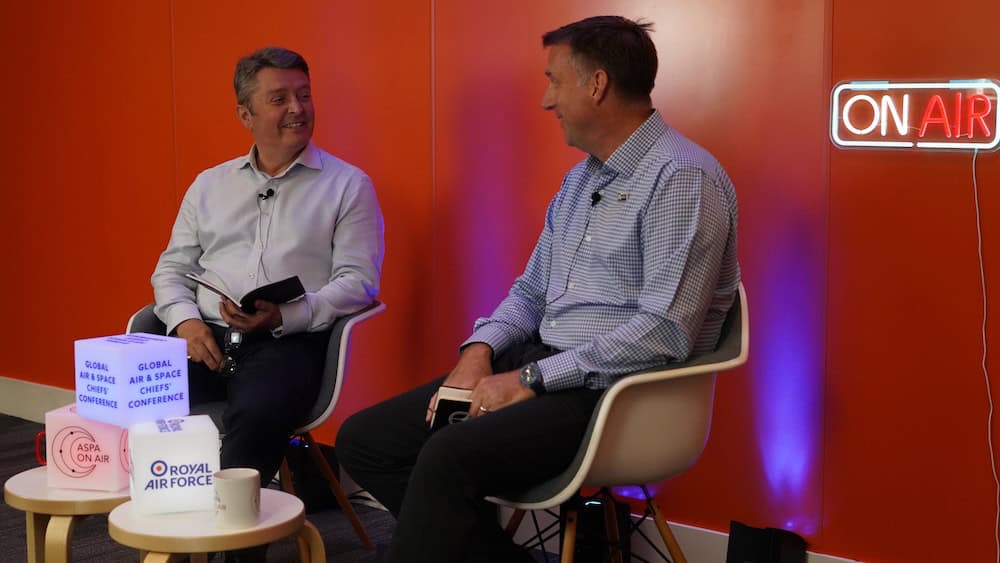
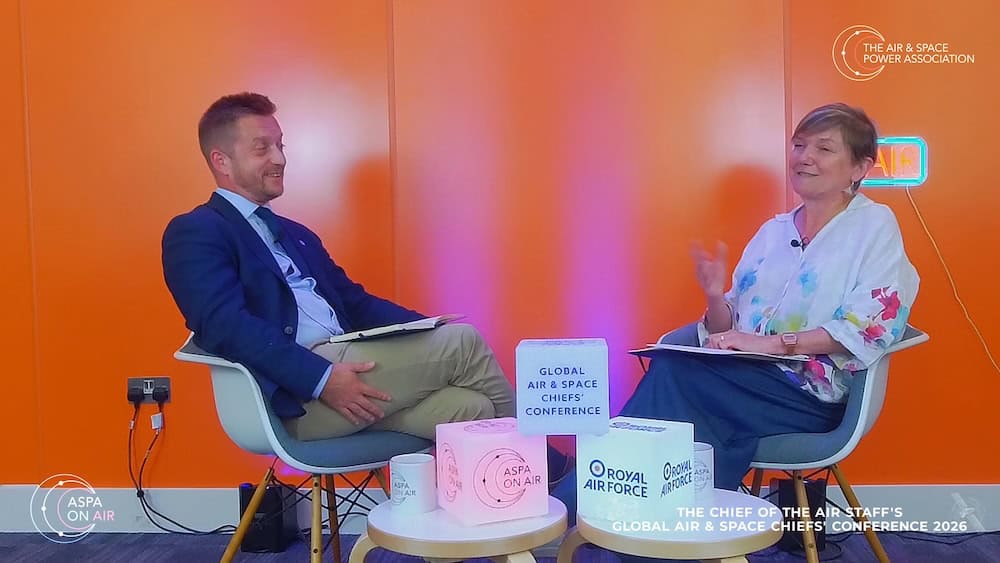
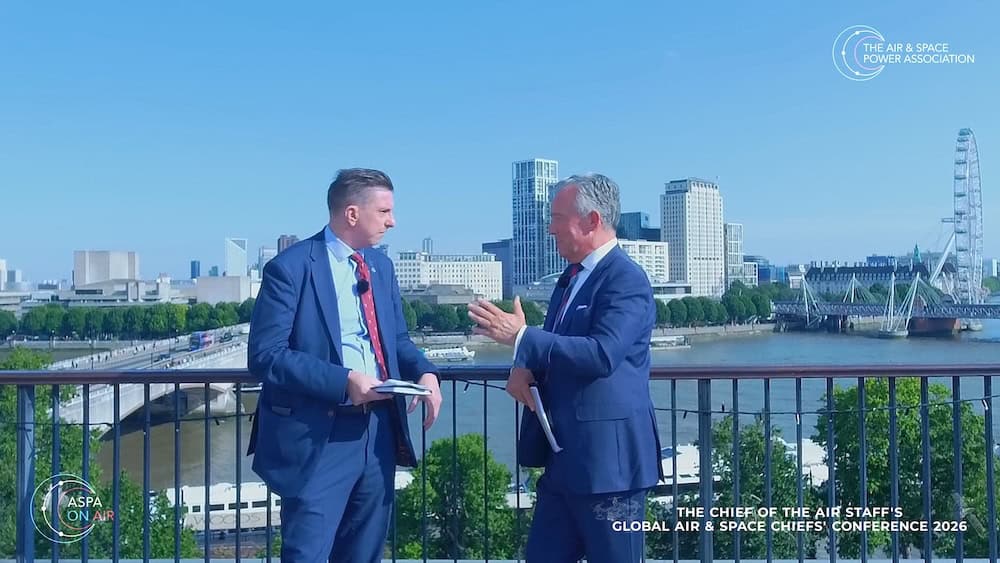
ASPA On Air GASCC 2026

7 Videos

Read these short summaries of each session with thanks to:

  • Jim Beldon, Honorary Secretary to The Air & Space Power Association
  • Sqn Ldr Aleathea Hill, OC Aerospace Battle Management Training Squadron 
  • Charles Taylor, Digital Manager | RAF Media and Communications
  • Wg Cdr Andy Mitchell, NATO CAOC

Session 1: Nuclear – Back to the Future?  

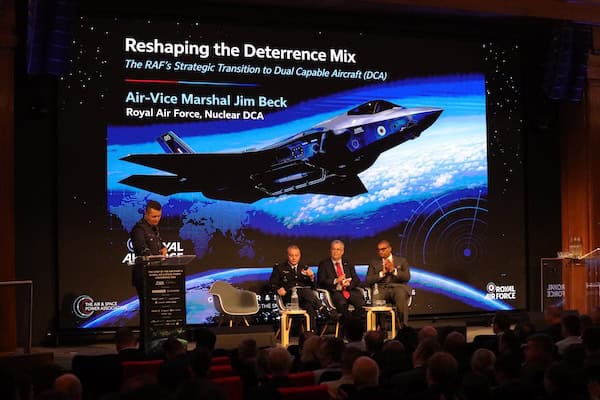
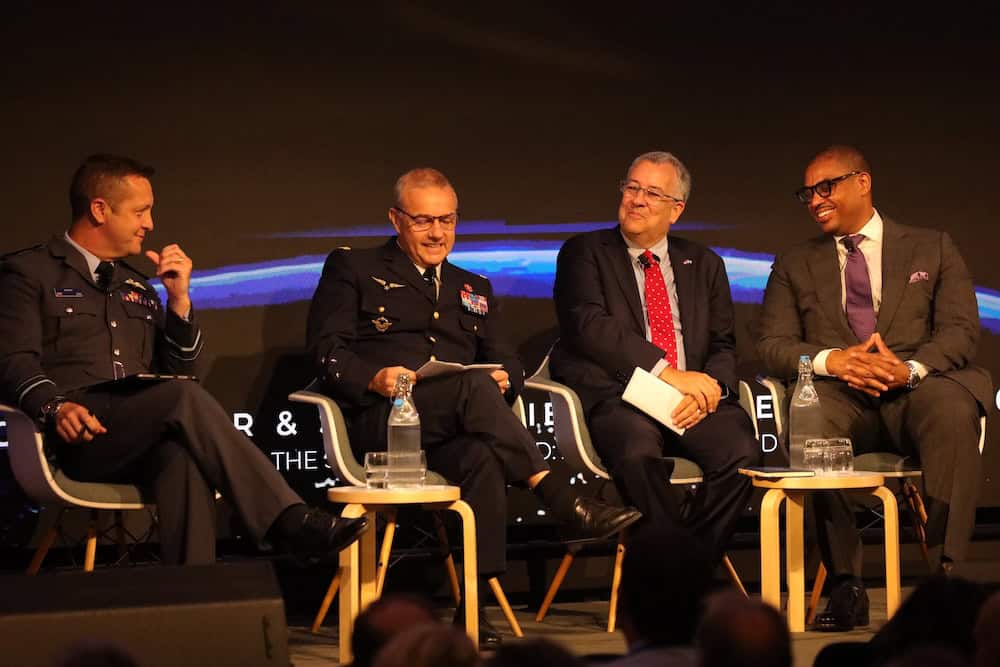
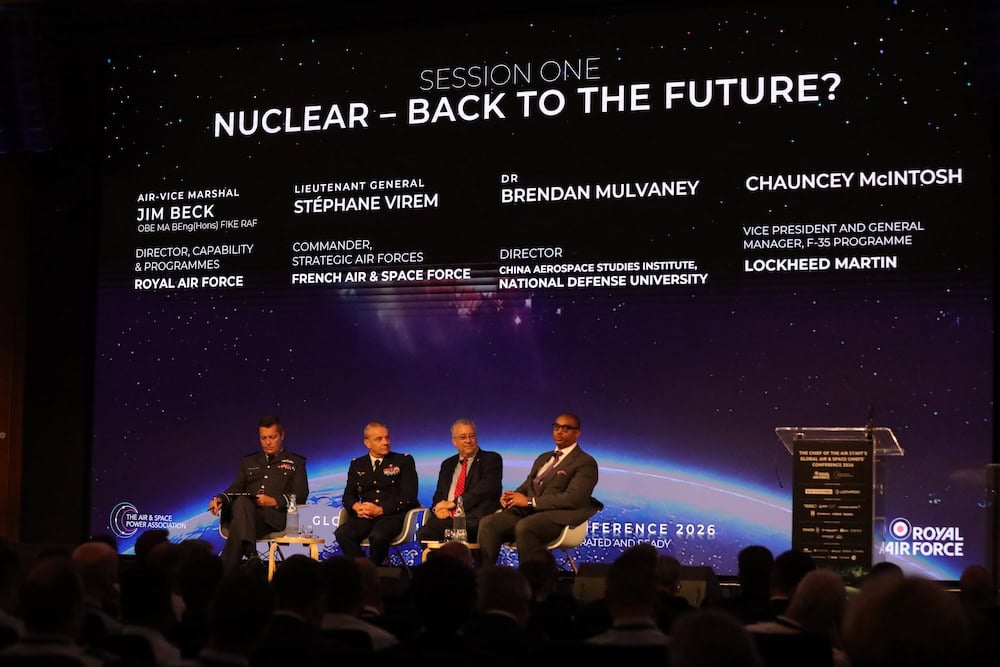
In this session Air Vice-Marshal Jim Beck, RAF Director Capability & Programmes outlined the UK’s return to NATO’s dual-capable aircraft mission and the need to rebuild the RAF’s ‘nuclear IQ’. Lieutenant General Stéphane Virem, Commander, Strategic Air Forces, French Air & Space Force, emphasised that credible deterrence depends upon sovereign decision-making, continuous readiness and strategic culture. Dr Brendan Mulvaney, Director of the China Aerospace Studies Institute, argued that China’s nuclear expansion is reshaping conventional deterrence and alliance dynamics. Chauncey McIntosh, Vice President & General Manager, F-35 Programme at Lockheed Martin, reinforced that enduring deterrence depends upon trusted alliances as much as advanced technology. The overriding message: deterrence is ultimately measured not by what nations possess, but by what adversaries believe allies are prepared and able to do together. Trust, training and visible credibility and demonstrable will are what constitute meaningful deterrence. 

Watch the full session here >

Session 2: Operationalising the Space Domain

In this session, General Chance “Salty” Saltzman, Chief of Space Operations, led a compelling discussion on how we move from simply operating in space to truly operationalising the domain. Drawing on 35 years of service and four years building the US Space Force, he reflected on the importance of leadership, decision-making and having the courage to choose a path while building capability in a new domain. Joined by RAdm Tony Williams (UK Space Command), Maj Gen Greg Novak (Australian Space Command), Dr Julia Balm (Freeman Air & Space Institute) and Dr Mike O’Callaghan (Airbus), the panel highlighted the significant international progress being made in developing coherent space strategies. While many lessons can be drawn from maritime, land and air power, the unique realities of physics ensure that space remains a domain unlike any other. A key takeaway was Gen Saltzman’s assertion that “Space is the ultimate team sport.” Space power depends upon alliances, industry, academia and civil-military collaboration. Orbital mechanics ignore national borders and make information sharing, interoperability and collective understanding operational necessities rather than desirable ambitions. The discussion also reinforced that space is no longer a benign environment. As dependence on space-based capabilities grows, so too does the need for credible deterrence, resilient architectures and the development of Space Control capabilities. Preparedness remains the foundation of credible deterrence. The panel also emphasised the need to build both a space-minded force across the conventional domains and a professional cadre of space specialists capable of developing the doctrine, expertise and training needed for future operations.

Session 3:  Putting the Integrated into IAMD 

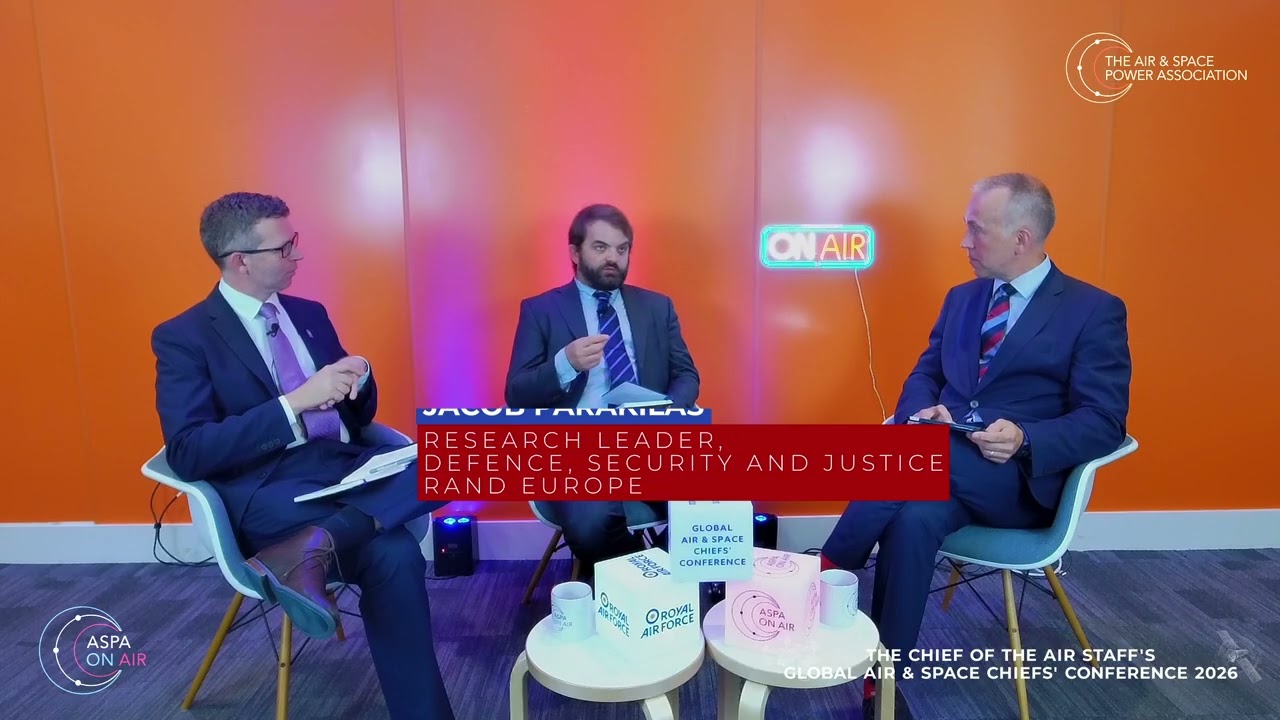
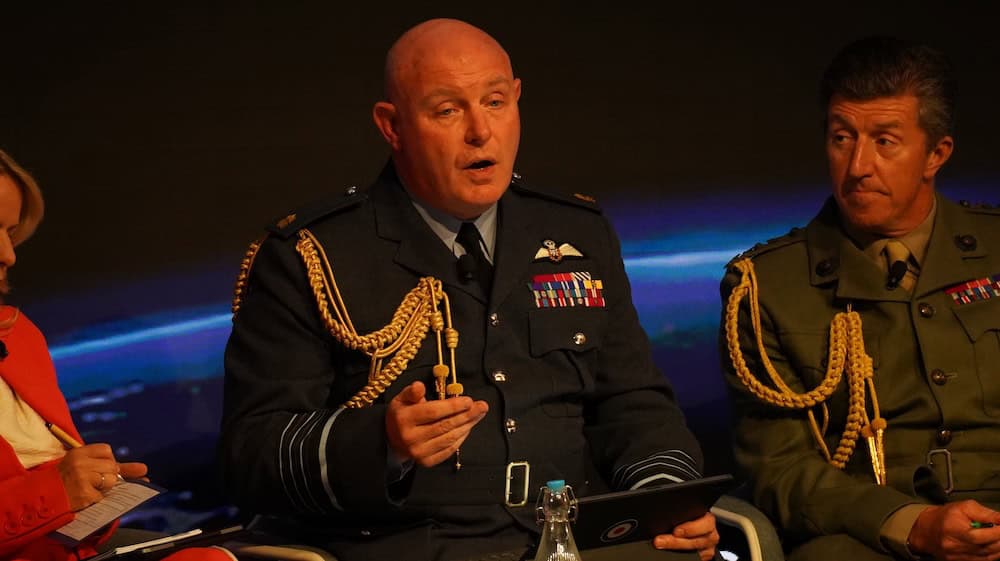
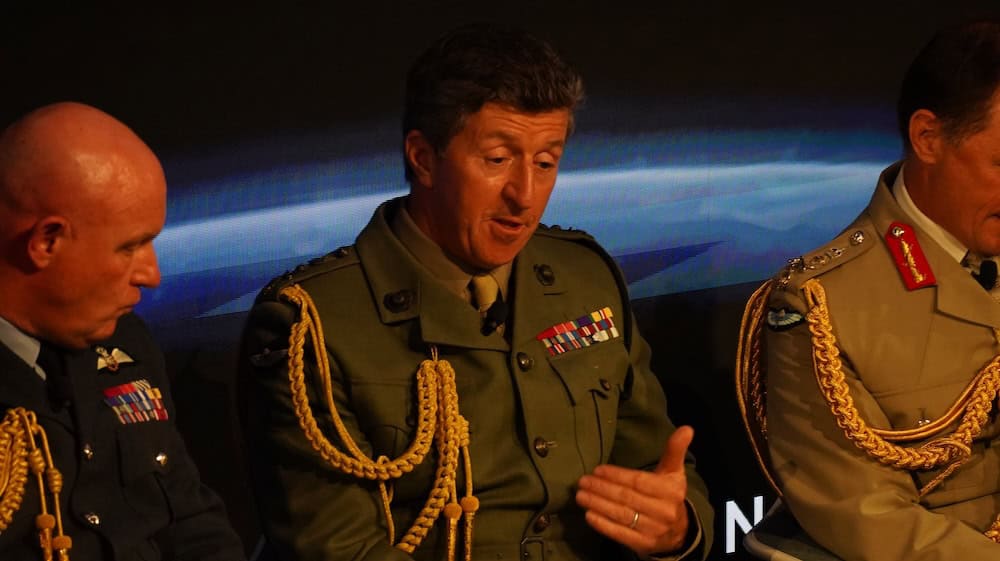
The central lesson from this session was clear: integrated attacks demand integrated defence, built on trusted relationships, common standards, resilient networks and sustained industrial capacity.  The session addressed Integrated Air and Missile Defence with the panel clear that the decisive capability is not any individual sensor, platform or effector; it is the integration of the entire defensive enterprise. Air Vice-Marshal Andy Martin, RAF Director IAMD, emphasised resilient command and control, shared data and ‘any sensor, best effector’ decision-making across government, allies and domains. Lt Gen Jamie Speiser-Blanchet, Commander, Royal Canadian Air Force, argued that integration is itself the capability, particularly across Canada’s vast Arctic approaches and through NORAD, NATO and Five Eyes. James Black, Deputy Director for Defence and Security, RAND Europe, stressed that IAMD is a socio-technical system requiring political permissions, industrial endurance, informed sequencing and non-military levers as much as equipment. Domenico Vigilante, Leonardo Electronics Division Head of Technology and Innovation, described the transition from interoperable systems towards an adaptive ‘kill web’, capable of orchestrating sensors, decision nodes and effectors dynamically. The discussion was especially timely following the establishment of the ten-nation Integrated Anti-Ballistic Missile Coalition, intended to develop shared requirements, strengthen industrial cooperation and establish a roadmap towards European operational capability.

Session 4: The Integrated Force

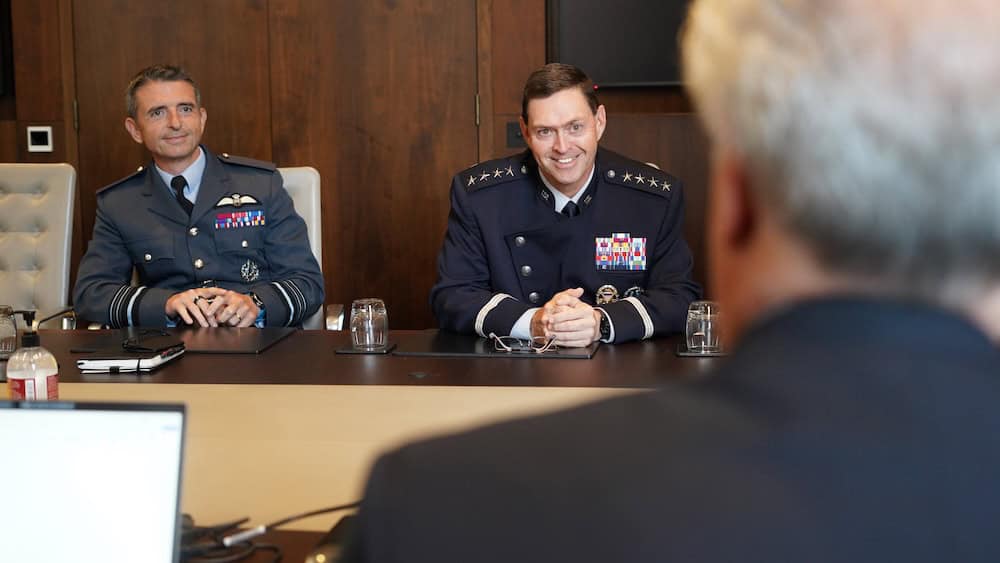
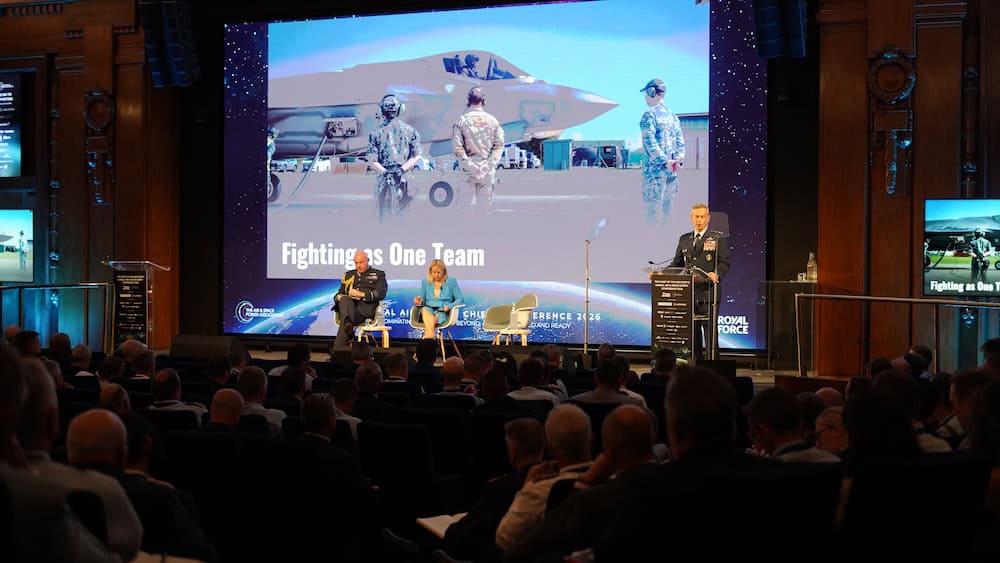
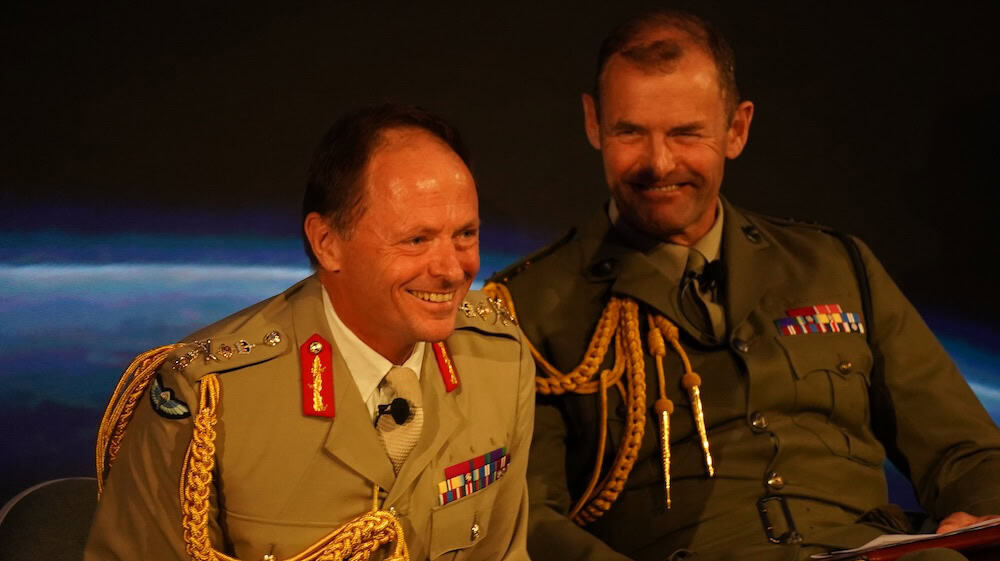
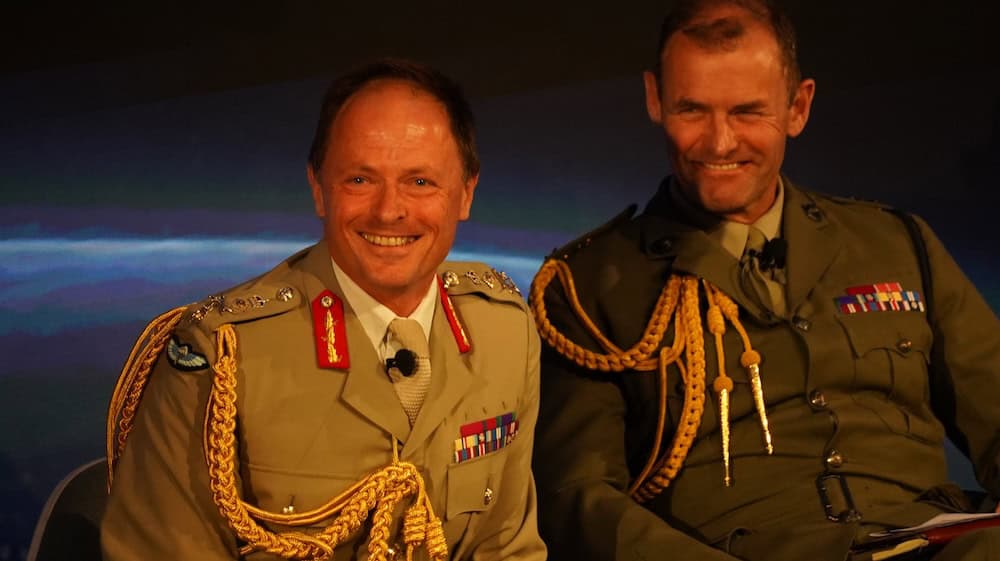
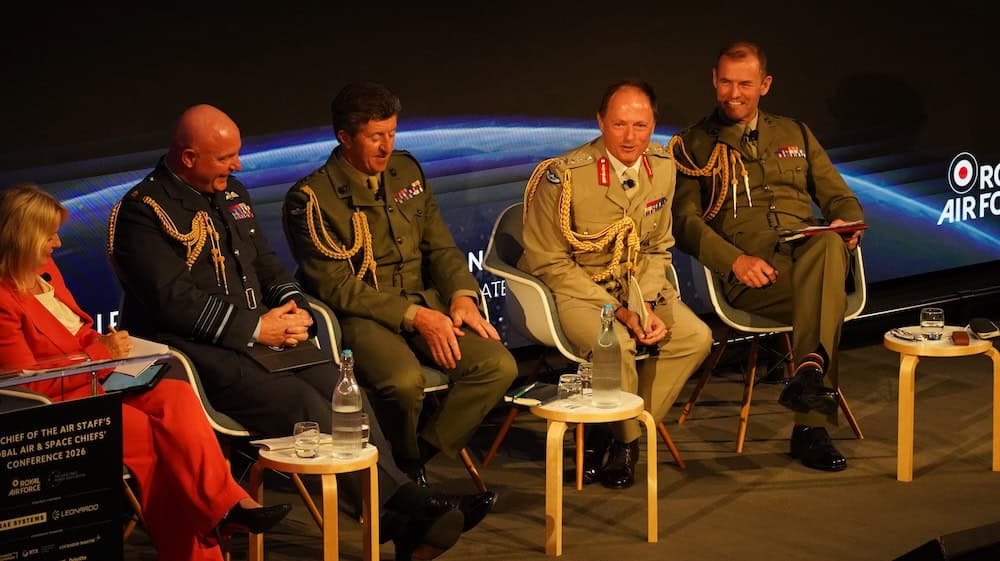
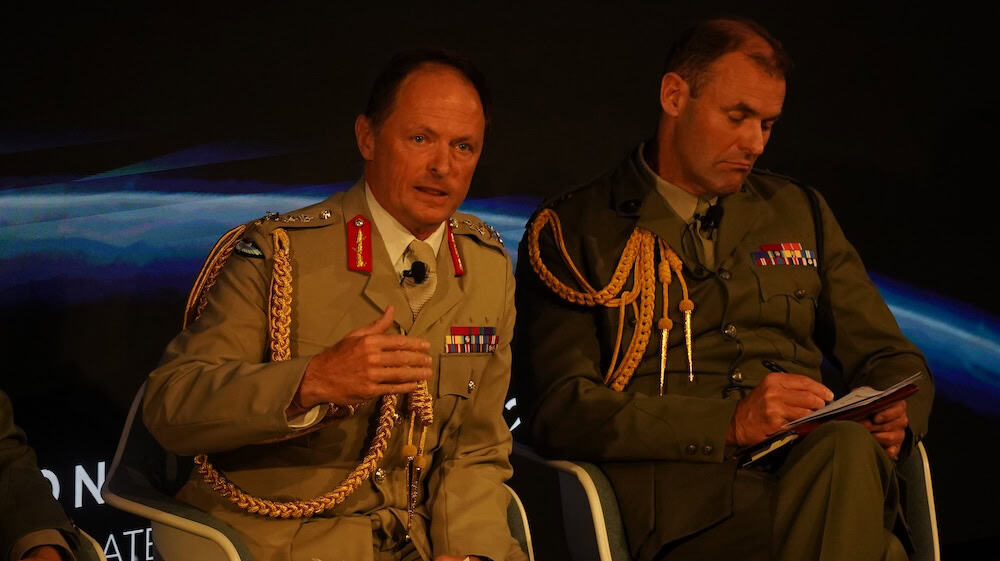
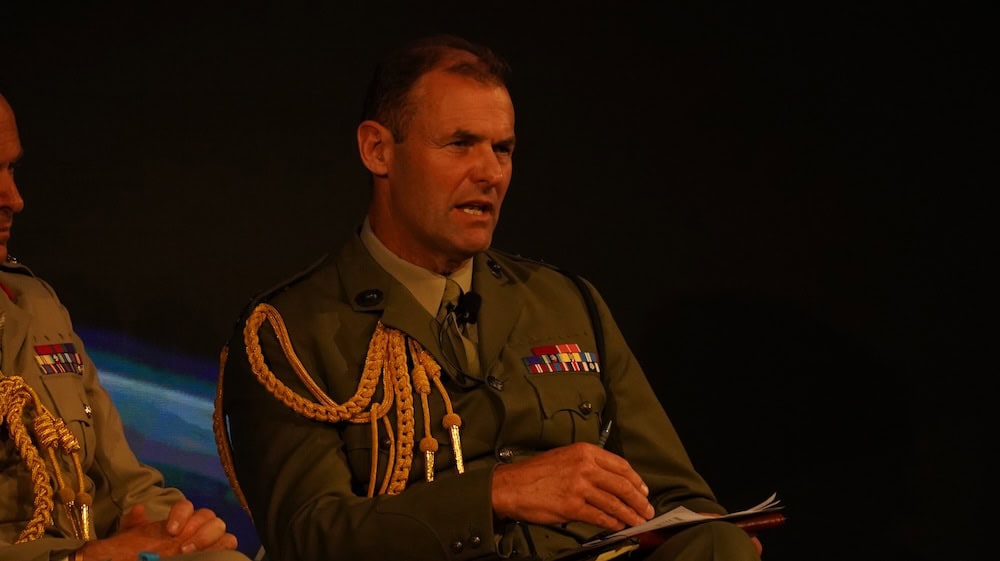
Four Chiefs, one panel. A powerful session closinmg Day One of the Global Air and Space Chiefs Conference saw Air Chief Marshal Sir Harv Smyth, Chief of the Air Staff, General Sir Gwyn Jenkins, First Sea Lord and Chief of Staff of the Royal Navy,  General Sir Roly Walker, Chief of the General Staff, British Army, and General Sir Rob Magowan, Commander, Cyber & Specialist Operations Command, united on stage to discuss how the UK’s services will develop and deliver a fully integrated approach to operations. Though representing their respective services, the message from all was of One Defence. At a campaign level, warfighting does not occur in any domain alone. Not on land, at sea, in space, or from the air. As the breadth, depth, and scale of threats have increased in recent years, the Chiefs highlighted the need for ever-greater integration across Defence, ensuring the UK can respond effectively to increasingly complex challenges. Their shared view was clear: an integrated approach to modern warfare reduces risk, maximises operational effect, and sustains both mission success and the force over the long term. With collaboration, innovation and integration at the heart of the discussions, day one set the tone for a conference focused on meeting today’s threats while preparing for tomorrows.

Session 5: Contemporary Air & Space Power: Harder, Better, Faster, Stronger 

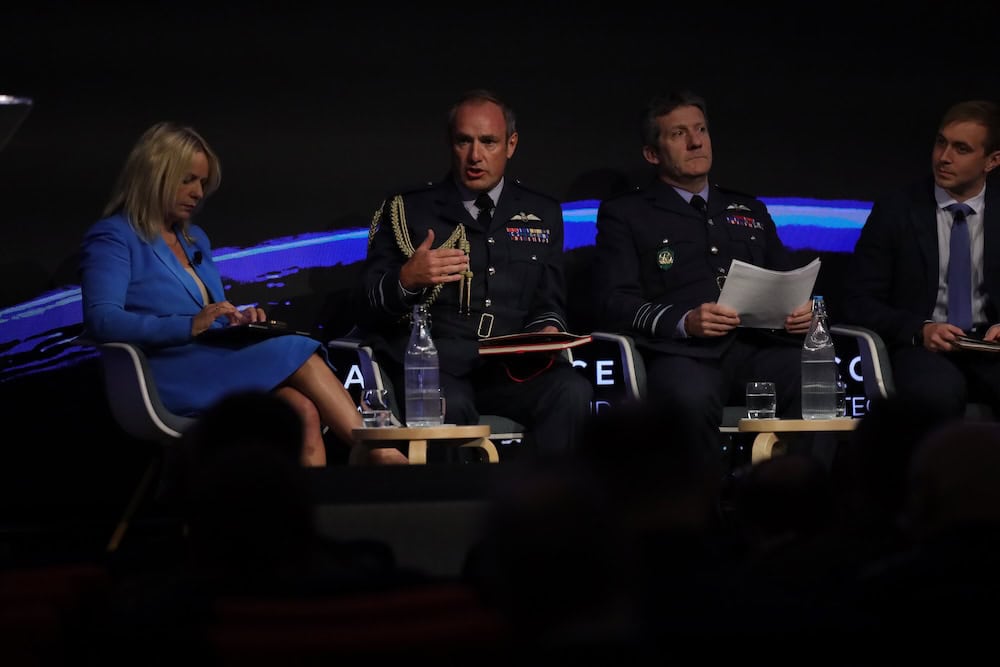
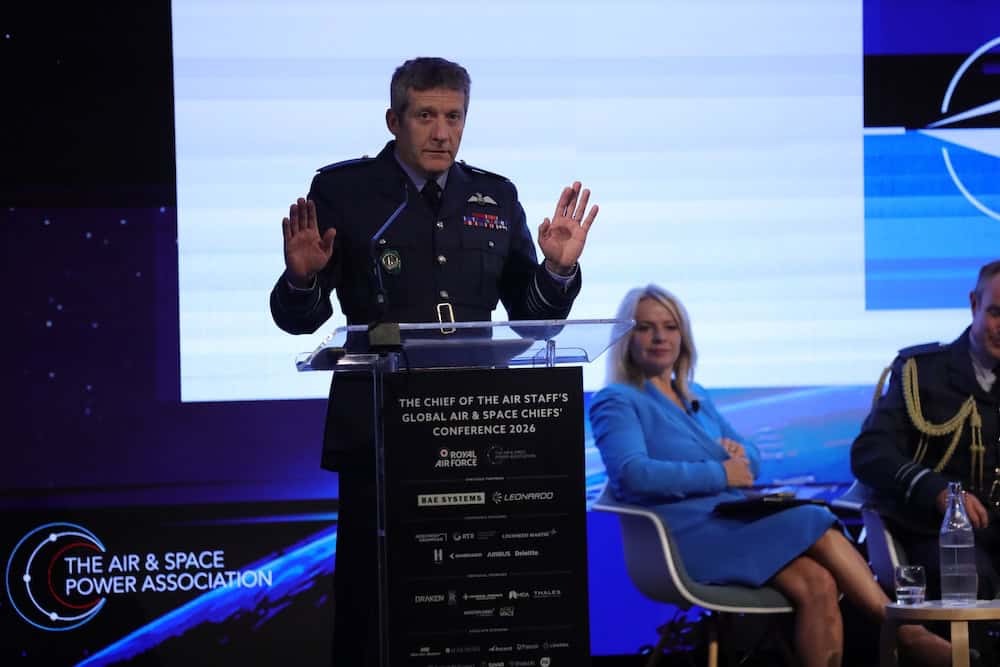
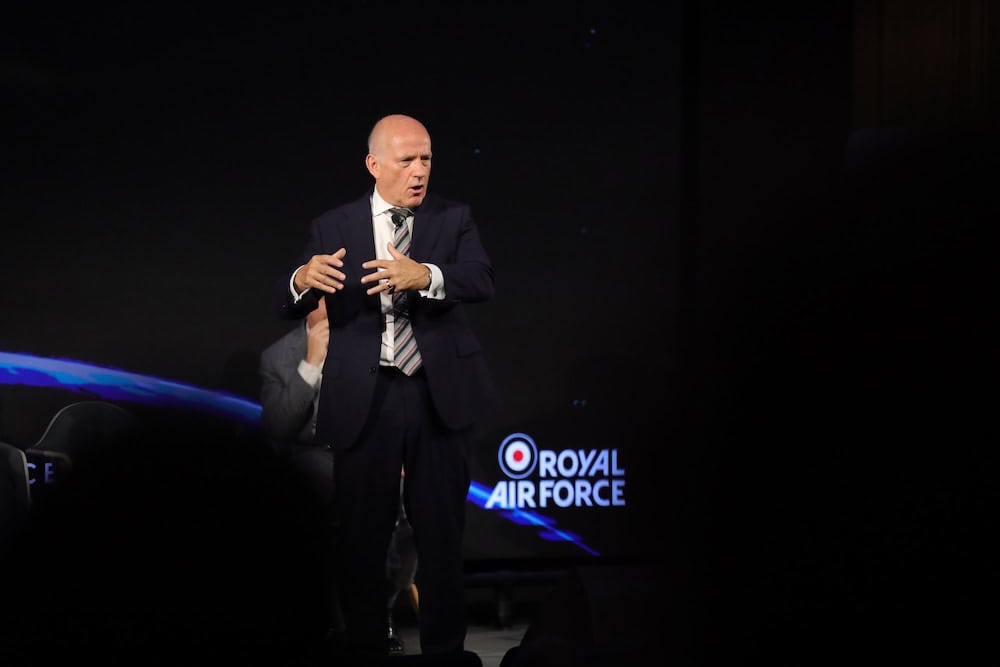
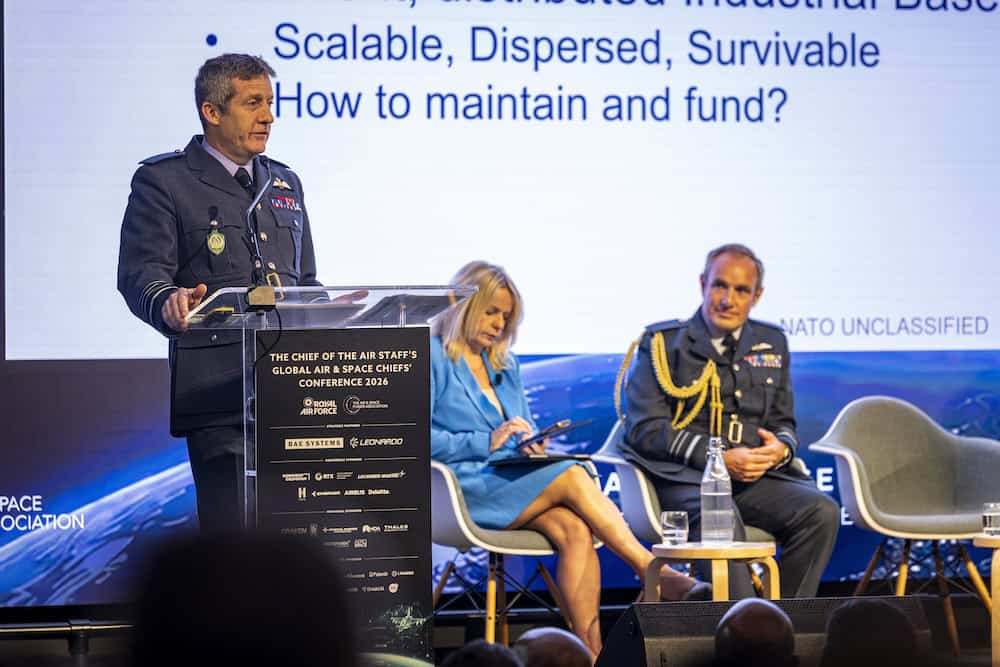
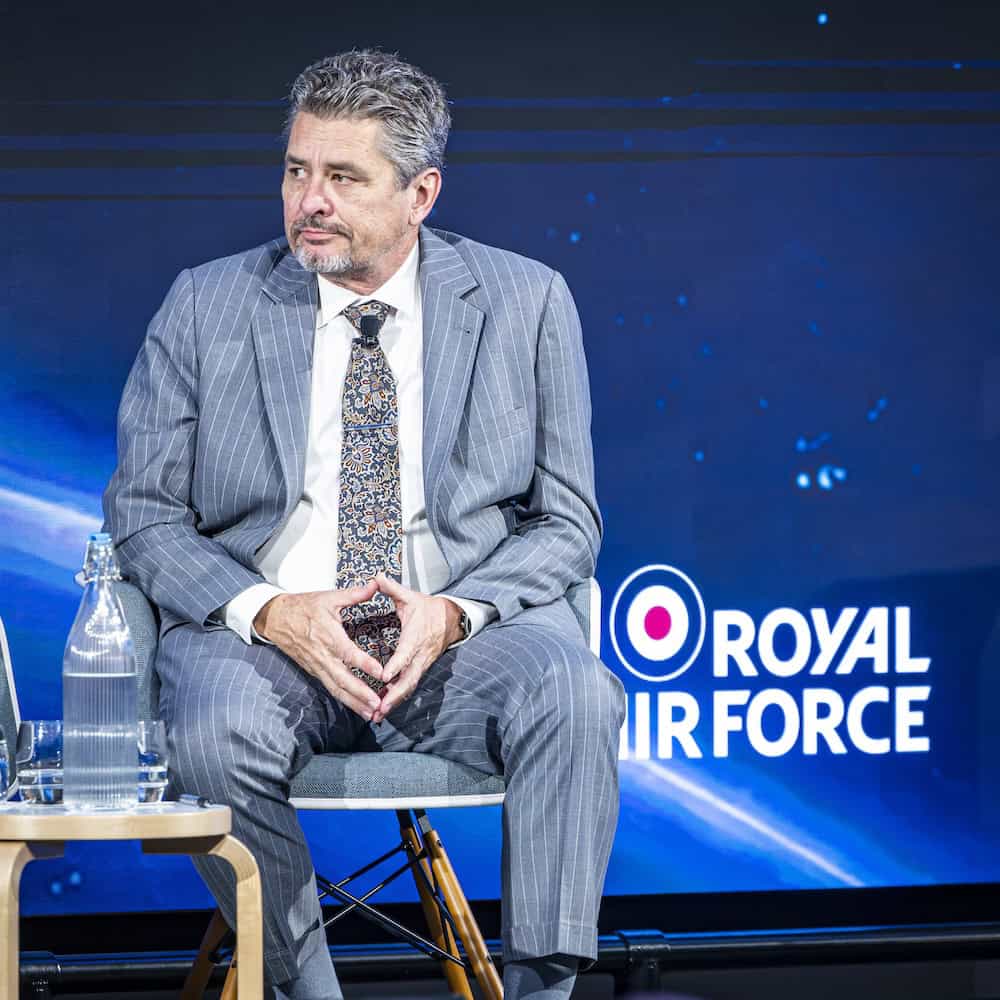
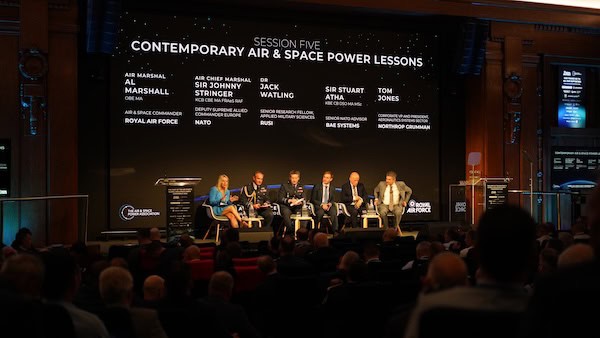
The final panel session of GASCC 2026 brought together a high-octane team to consider trending Air & Space Power lessons. Air Marshal Al Marshall (RAF Air & Space Commander) and Air Chief Marshal Sir Johnny Stringer (NATO DSACEUR) offered Commanders’ views; Dr Jack Watling (RUSI) injected lessons learnt from Russian experience; Sir Stu Atha (BAE) and Tom Jones (Northrop Grumman) wove industry’s thoughts into the discussion. In a deep, rich, and compelling discussion, some recurring themes leapt to the fore. Ukraine’s ongoing resistance to Russia’s illegal invasion remains a key theme for NATO: Ukraine’s today – defending home turf – could be wider Europe’s tomorrow. Ukraine’s struggle prompts PRAISE (partnership, resilience, adaptability, integration, sustainment (enough). Partnership, between armed forces and industry, bringing tacticians and technicians together across allied nations, is vitally important for both deterrence and coherent response. Credible deterrence rests on the resilience of the industrial base, something to be considered across all 32 allies (and wider). This industrial base ought to be designed to maximise adaptability, exploiting dual-use technologies and leveraging the latent capacity of typically civilian-oriented manufacturing potential to rapidly shift from ‘pilot light’ to ‘full flame’ munitions and materiel production. Successful nations should build on partnerships, trust, and collegiate conceptual thinking to ensure that standards, protocols and technologies are designed from the outset with integration in mind, underpinning operational coherence and further reinforcing industrial resilience (factory X in country A could take over as / when factory Y in country B became compromised). The confluence of partnership, resilience, adaptability, and integration should enable sustainment of operations for as long as required, with enough munitions and materiel to achieve victory – good enough, fast enough, cheap enough, possibly over-and-over again and at rates higher than once planned: harder, better, faster, stronger. This would need a mix of high-end and low-end capability, and whilst it might not yet be clear what this mix ought to look like, it was broadly agreed that collaborative combat aircraft (CCAs) ought to be markedly different – in terms of cost and delivery pace – to their symbiotic 6th Gen crewed aircraft: if CCAs end up being 75% the cost and complexity of crewed aircraft, we’ll have got it wrong. PRAISE – partnership, resilience, adaptability, integration, sustainment (enough) – shines light on other lessons too. Home turf operations drive considerations of basing resilience – dispersal, deception, hardening, camouflage – that have been of low importance during decades of out-of-area operations. Surviving by “going mobile or going underground” reinforces the importance of ACE and cross-national partnerships. Both RUS/UKR and Op EPIC FURY have shown the importance of Integrated Air & Missile Defence (IAMD) against both long-range deep strike and low-end high-volume hard-to-sense swarms of drones: it feels like we’ll need to defend everything, everywhere, all at once. Whilst enhancing and building IAMD, we should remember the importance of offensive action to impose cost and shape adversary will: you must be offensive to be defensive. This will require winning the access battle (enough access at the right time and place) whilst denying adversary access. Hitting NATO’s GDP spending targets (3.5% + 1.5%) sooner rather than later will be key to underpinning forces with resources and setting the conditions for all the above. We should continue to learn from every opportunity presented us, and strive to understand the threat space, whilst remaining alive to the tendency of operational analysis “to give you your adversary on their best day” (beware hyperbole and perverse lessons!). If we ground ourselves in partnership, resilience, adaptability, integration, and sustainment (enough), then we should have sufficient flexibility to react and succeed even if we haven’t quite understood all the lessons that could be drawn from contemporary experience. We have an excellent chance to move forward together.

Podcasts

ASPA On Air GASCC 2026

7 Videos

Read these short summaries of each session with thanks to:

  • Jim Beldon, Honorary Secretary to The Air & Space Power Association
  • Sqn Ldr Aleathea Hill, OC Aerospace Battle Management Training Squadron 
  • Charles Taylor, Digital Manager | RAF Media and Communications
  • Wg Cdr Andy Mitchell, NATO CAOC

Session 1: Nuclear – Back to the Future?  

In this session Air Vice-Marshal Jim Beck, RAF Director Capability & Programmes outlined the UK’s return to NATO’s dual-capable aircraft mission and the need to rebuild the RAF’s ‘nuclear IQ’. Lieutenant General Stéphane Virem, Commander, Strategic Air Forces, French Air & Space Force, emphasised that credible deterrence depends upon sovereign decision-making, continuous readiness and strategic culture. Dr Brendan Mulvaney, Director of the China Aerospace Studies Institute, argued that China’s nuclear expansion is reshaping conventional deterrence and alliance dynamics. Chauncey McIntosh, Vice President & General Manager, F-35 Programme at Lockheed Martin, reinforced that enduring deterrence depends upon trusted alliances as much as advanced technology. The overriding message: deterrence is ultimately measured not by what nations possess, but by what adversaries believe allies are prepared and able to do together. Trust, training and visible credibility and demonstrable will are what constitute meaningful deterrence. 

Watch the full session here >

Session 2: Operationalising the Space Domain

In this session, General Chance “Salty” Saltzman, Chief of Space Operations, led a compelling discussion on how we move from simply operating in space to truly operationalising the domain. Drawing on 35 years of service and four years building the US Space Force, he reflected on the importance of leadership, decision-making and having the courage to choose a path while building capability in a new domain. Joined by RAdm Tony Williams (UK Space Command), Maj Gen Greg Novak (Australian Space Command), Dr Julia Balm (Freeman Air & Space Institute) and Dr Mike O’Callaghan (Airbus), the panel highlighted the significant international progress being made in developing coherent space strategies. While many lessons can be drawn from maritime, land and air power, the unique realities of physics ensure that space remains a domain unlike any other. A key takeaway was Gen Saltzman’s assertion that “Space is the ultimate team sport.” Space power depends upon alliances, industry, academia and civil-military collaboration. Orbital mechanics ignore national borders and make information sharing, interoperability and collective understanding operational necessities rather than desirable ambitions. The discussion also reinforced that space is no longer a benign environment. As dependence on space-based capabilities grows, so too does the need for credible deterrence, resilient architectures and the development of Space Control capabilities. Preparedness remains the foundation of credible deterrence. The panel also emphasised the need to build both a space-minded force across the conventional domains and a professional cadre of space specialists capable of developing the doctrine, expertise and training needed for future operations.

Session 3:  Putting the Integrated into IAMD 

The central lesson from this session was clear: integrated attacks demand integrated defence, built on trusted relationships, common standards, resilient networks and sustained industrial capacity.  The session addressed Integrated Air and Missile Defence with the panel clear that the decisive capability is not any individual sensor, platform or effector; it is the integration of the entire defensive enterprise. Air Vice-Marshal Andy Martin, RAF Director IAMD, emphasised resilient command and control, shared data and ‘any sensor, best effector’ decision-making across government, allies and domains. Lt Gen Jamie Speiser-Blanchet, Commander, Royal Canadian Air Force, argued that integration is itself the capability, particularly across Canada’s vast Arctic approaches and through NORAD, NATO and Five Eyes. James Black, Deputy Director for Defence and Security, RAND Europe, stressed that IAMD is a socio-technical system requiring political permissions, industrial endurance, informed sequencing and non-military levers as much as equipment. Domenico Vigilante, Leonardo Electronics Division Head of Technology and Innovation, described the transition from interoperable systems towards an adaptive ‘kill web’, capable of orchestrating sensors, decision nodes and effectors dynamically. The discussion was especially timely following the establishment of the ten-nation Integrated Anti-Ballistic Missile Coalition, intended to develop shared requirements, strengthen industrial cooperation and establish a roadmap towards European operational capability.

Session 4: The Integrated Force

Four Chiefs, one panel. A powerful session closinmg Day One of the Global Air and Space Chiefs Conference saw Air Chief Marshal Sir Harv Smyth, Chief of the Air Staff, General Sir Gwyn Jenkins, First Sea Lord and Chief of Staff of the Royal Navy,  General Sir Roly Walker, Chief of the General Staff, British Army, and General Sir Rob Magowan, Commander, Cyber & Specialist Operations Command, united on stage to discuss how the UK’s services will develop and deliver a fully integrated approach to operations. Though representing their respective services, the message from all was of One Defence. At a campaign level, warfighting does not occur in any domain alone. Not on land, at sea, in space, or from the air. As the breadth, depth, and scale of threats have increased in recent years, the Chiefs highlighted the need for ever-greater integration across Defence, ensuring the UK can respond effectively to increasingly complex challenges. Their shared view was clear: an integrated approach to modern warfare reduces risk, maximises operational effect, and sustains both mission success and the force over the long term. With collaboration, innovation and integration at the heart of the discussions, day one set the tone for a conference focused on meeting today’s threats while preparing for tomorrows.

Session 5: Contemporary Air & Space Power: Harder, Better, Faster, Stronger 

The final panel session of GASCC 2026 brought together a high-octane team to consider trending Air & Space Power lessons. Air Marshal Al Marshall (RAF Air & Space Commander) and Air Chief Marshal Sir Johnny Stringer (NATO DSACEUR) offered Commanders’ views; Dr Jack Watling (RUSI) injected lessons learnt from Russian experience; Sir Stu Atha (BAE) and Tom Jones (Northrop Grumman) wove industry’s thoughts into the discussion. In a deep, rich, and compelling discussion, some recurring themes leapt to the fore. Ukraine’s ongoing resistance to Russia’s illegal invasion remains a key theme for NATO: Ukraine’s today – defending home turf – could be wider Europe’s tomorrow. Ukraine’s struggle prompts PRAISE (partnership, resilience, adaptability, integration, sustainment (enough). Partnership, between armed forces and industry, bringing tacticians and technicians together across allied nations, is vitally important for both deterrence and coherent response. Credible deterrence rests on the resilience of the industrial base, something to be considered across all 32 allies (and wider). This industrial base ought to be designed to maximise adaptability, exploiting dual-use technologies and leveraging the latent capacity of typically civilian-oriented manufacturing potential to rapidly shift from ‘pilot light’ to ‘full flame’ munitions and materiel production. Successful nations should build on partnerships, trust, and collegiate conceptual thinking to ensure that standards, protocols and technologies are designed from the outset with integration in mind, underpinning operational coherence and further reinforcing industrial resilience (factory X in country A could take over as / when factory Y in country B became compromised). The confluence of partnership, resilience, adaptability, and integration should enable sustainment of operations for as long as required, with enough munitions and materiel to achieve victory – good enough, fast enough, cheap enough, possibly over-and-over again and at rates higher than once planned: harder, better, faster, stronger. This would need a mix of high-end and low-end capability, and whilst it might not yet be clear what this mix ought to look like, it was broadly agreed that collaborative combat aircraft (CCAs) ought to be markedly different – in terms of cost and delivery pace – to their symbiotic 6th Gen crewed aircraft: if CCAs end up being 75% the cost and complexity of crewed aircraft, we’ll have got it wrong. PRAISE – partnership, resilience, adaptability, integration, sustainment (enough) – shines light on other lessons too. Home turf operations drive considerations of basing resilience – dispersal, deception, hardening, camouflage – that have been of low importance during decades of out-of-area operations. Surviving by “going mobile or going underground” reinforces the importance of ACE and cross-national partnerships. Both RUS/UKR and Op EPIC FURY have shown the importance of Integrated Air & Missile Defence (IAMD) against both long-range deep strike and low-end high-volume hard-to-sense swarms of drones: it feels like we’ll need to defend everything, everywhere, all at once. Whilst enhancing and building IAMD, we should remember the importance of offensive action to impose cost and shape adversary will: you must be offensive to be defensive. This will require winning the access battle (enough access at the right time and place) whilst denying adversary access. Hitting NATO’s GDP spending targets (3.5% + 1.5%) sooner rather than later will be key to underpinning forces with resources and setting the conditions for all the above. We should continue to learn from every opportunity presented us, and strive to understand the threat space, whilst remaining alive to the tendency of operational analysis “to give you your adversary on their best day” (beware hyperbole and perverse lessons!). If we ground ourselves in partnership, resilience, adaptability, integration, and sustainment (enough), then we should have sufficient flexibility to react and succeed even if we haven’t quite understood all the lessons that could be drawn from contemporary experience. We have an excellent chance to move forward together.

On Demand

On Demand Sponsored by Rolls-Royce

Details

Description

Keynote: Luke Pollard MP
Keynote: Gen B. Chance Saltzman
Keynote: ACM Sir Harv Smyth
Keynote: General Kenneth S Wilsbach

Dominating the Skies and Beyond: Agile, Integrated and Ready

‘In 2026, the rate of change in the global strategic environment shows no signs of abating, if anything, the tempo is increasing. However, there is a constant – the need for air and space power to dominate the skies and beyond. Mastering our domain is what we do; to provide the joint and coalition force with the freedom of action it needs to secure the battlespace, our nations, our interests, and our way of life. This is the ultimate team game; we cannot do this alone.

GASCC26 will explore the challenge and stimulate debate amongst the team who are responsible for delivering agility, integration, and readiness to global air and space power today, tomorrow and together. I look forward to seeing you at the merge!’

Air Chief Marshal Sir Harv Smyth
Chief of the Air Staff, Royal Air Force

About the Global Air & Space Chiefs’ Conference

The Chief of the Air Staff’s Global Air & Space Chiefs’ Conference brings together global leaders in Air and Space Power with captains of industry and technology enhanced by experts from international academia.

The conference explores the strategic challenges facing the Royal Air Force and Whole Force partners as well as international partners and global allies through a combination of keynote speakers, presentations and diverse panels formed of military, academic, industrial and other scientific and practitioner experts.

The Global Air and Space Chiefs’ Conference features conference, networking areas and displays and an exclusive reception on the evening of Day One. The conference is also broadcast for virtual attendees.

Conference Theme:

Dominating the Skies and Beyond – Agile, Integrated and Ready

The conference theme explores three key capability areas: space, nuclear and integrated air and missile defence. These focus areas are critical to the UK and to key partner nations as we develop and deliver domination of the skies and beyond.

The conference features the following sessions plus Keynote speeches.

1. Nuclear – Back to the Future?

The decision to procure the F-35A provides an opportunity for the RAF to return to the nuclear role. After a three-decade sabbatical, the RAF must refresh its ‘nuclear IQ.’ This first session sees senior defence officials and an international chief share insights on airborne nuclear capability. The panel also includes an Indo-Pacific expert and a leading industry figure who will discuss re-introducing a critical capability to the UK’s and NATO’s inventory.

2. Operationalising the Space Domain

Following the exploration of air-delivered nuclear capability, we shift focus to the rapidly evolving space domain and the importance of space domain awareness for allied security. Following a keynote address by an international space commander, a panel of space experts and practitioners will examine how we achieve optimum space domain awareness and what can be done to counter the threats to this key domain.

3. Putting the Integrated into IAMD

With NATO First and Integrated Air and Missile Defence (IAMD) both central tenets of the UK’s Strategic Defence Review, this third session brings both elements together. A senior RAF leader will chair a panel to look at the challenges and opportunities of developing and delivering IAMD, with valuable input from an international air chief, RAND Europe, and industry.

4. Delivering the Integrated Force

Having explored integration in IAMD, this session will go on to examine how this approach extends across all the UK armed forces. This panel will address for the first time how each of the UK’s armed forces and each service can develop and deliver together a fully integrated approach to operations.

5. Contemporary Air & Space Power Lessons

This final panel will debate the challenges and opportunities of innovating for multi-domain effect. A senior RAF official will lead the session supported by a senior NATO commander, a leading academic from RUSI and a senior industry figure.

Keynote speakers include:

  • Luke Pollard MP, Minister of State for Defence Readiness and Industry
  • Air Chief Marshal Sir Harv Smyth, Chief of the Air Staff, Royal Air Force
  • General Kenneth S. Wilsbach, Chief of Staff of the Air Force, United States Air Force
  • General Chance Saltzman, Chief of Space Operations, United States Space Force

International Air & Space Commanders from key allies and partners will join panels discussing themes such as emerging technologies, strategic collaboration, and global security challenges.

The Global Air & Space Chiefs’ Conference offers unparalleled networking opportunities, exclusive insights from top commanders, and access to the latest industry innovations, making it an essential event for defence professionals, industry partners, and academic experts.

Event Details

Start date: 15 July 2026

End date: 16 July 2026

Start time: 09:00 BST

End time: 17:00 BST

Venue: IET London, Savoy Place, WC2R 0BL

Sponsors

Strategic Partners

Conference Sponsors

Individual Sponsors

Associate sponsors

Resources

ASPA On Air GASCC 2026

7 Videos

Read these short summaries of each session with thanks to:

  • Jim Beldon, Honorary Secretary to The Air & Space Power Association
  • Sqn Ldr Aleathea Hill, OC Aerospace Battle Management Training Squadron 
  • Charles Taylor, Digital Manager | RAF Media and Communications
  • Wg Cdr Andy Mitchell, NATO CAOC

Session 1: Nuclear – Back to the Future?  

In this session Air Vice-Marshal Jim Beck, RAF Director Capability & Programmes outlined the UK’s return to NATO’s dual-capable aircraft mission and the need to rebuild the RAF’s ‘nuclear IQ’. Lieutenant General Stéphane Virem, Commander, Strategic Air Forces, French Air & Space Force, emphasised that credible deterrence depends upon sovereign decision-making, continuous readiness and strategic culture. Dr Brendan Mulvaney, Director of the China Aerospace Studies Institute, argued that China’s nuclear expansion is reshaping conventional deterrence and alliance dynamics. Chauncey McIntosh, Vice President & General Manager, F-35 Programme at Lockheed Martin, reinforced that enduring deterrence depends upon trusted alliances as much as advanced technology. The overriding message: deterrence is ultimately measured not by what nations possess, but by what adversaries believe allies are prepared and able to do together. Trust, training and visible credibility and demonstrable will are what constitute meaningful deterrence. 

Watch the full session here >

Session 2: Operationalising the Space Domain

In this session, General Chance “Salty” Saltzman, Chief of Space Operations, led a compelling discussion on how we move from simply operating in space to truly operationalising the domain. Drawing on 35 years of service and four years building the US Space Force, he reflected on the importance of leadership, decision-making and having the courage to choose a path while building capability in a new domain. Joined by RAdm Tony Williams (UK Space Command), Maj Gen Greg Novak (Australian Space Command), Dr Julia Balm (Freeman Air & Space Institute) and Dr Mike O’Callaghan (Airbus), the panel highlighted the significant international progress being made in developing coherent space strategies. While many lessons can be drawn from maritime, land and air power, the unique realities of physics ensure that space remains a domain unlike any other. A key takeaway was Gen Saltzman’s assertion that “Space is the ultimate team sport.” Space power depends upon alliances, industry, academia and civil-military collaboration. Orbital mechanics ignore national borders and make information sharing, interoperability and collective understanding operational necessities rather than desirable ambitions. The discussion also reinforced that space is no longer a benign environment. As dependence on space-based capabilities grows, so too does the need for credible deterrence, resilient architectures and the development of Space Control capabilities. Preparedness remains the foundation of credible deterrence. The panel also emphasised the need to build both a space-minded force across the conventional domains and a professional cadre of space specialists capable of developing the doctrine, expertise and training needed for future operations.

Session 3:  Putting the Integrated into IAMD 

The central lesson from this session was clear: integrated attacks demand integrated defence, built on trusted relationships, common standards, resilient networks and sustained industrial capacity.  The session addressed Integrated Air and Missile Defence with the panel clear that the decisive capability is not any individual sensor, platform or effector; it is the integration of the entire defensive enterprise. Air Vice-Marshal Andy Martin, RAF Director IAMD, emphasised resilient command and control, shared data and ‘any sensor, best effector’ decision-making across government, allies and domains. Lt Gen Jamie Speiser-Blanchet, Commander, Royal Canadian Air Force, argued that integration is itself the capability, particularly across Canada’s vast Arctic approaches and through NORAD, NATO and Five Eyes. James Black, Deputy Director for Defence and Security, RAND Europe, stressed that IAMD is a socio-technical system requiring political permissions, industrial endurance, informed sequencing and non-military levers as much as equipment. Domenico Vigilante, Leonardo Electronics Division Head of Technology and Innovation, described the transition from interoperable systems towards an adaptive ‘kill web’, capable of orchestrating sensors, decision nodes and effectors dynamically. The discussion was especially timely following the establishment of the ten-nation Integrated Anti-Ballistic Missile Coalition, intended to develop shared requirements, strengthen industrial cooperation and establish a roadmap towards European operational capability.

Session 4: The Integrated Force

Four Chiefs, one panel. A powerful session closinmg Day One of the Global Air and Space Chiefs Conference saw Air Chief Marshal Sir Harv Smyth, Chief of the Air Staff, General Sir Gwyn Jenkins, First Sea Lord and Chief of Staff of the Royal Navy,  General Sir Roly Walker, Chief of the General Staff, British Army, and General Sir Rob Magowan, Commander, Cyber & Specialist Operations Command, united on stage to discuss how the UK’s services will develop and deliver a fully integrated approach to operations. Though representing their respective services, the message from all was of One Defence. At a campaign level, warfighting does not occur in any domain alone. Not on land, at sea, in space, or from the air. As the breadth, depth, and scale of threats have increased in recent years, the Chiefs highlighted the need for ever-greater integration across Defence, ensuring the UK can respond effectively to increasingly complex challenges. Their shared view was clear: an integrated approach to modern warfare reduces risk, maximises operational effect, and sustains both mission success and the force over the long term. With collaboration, innovation and integration at the heart of the discussions, day one set the tone for a conference focused on meeting today’s threats while preparing for tomorrows.

Session 5: Contemporary Air & Space Power: Harder, Better, Faster, Stronger 

The final panel session of GASCC 2026 brought together a high-octane team to consider trending Air & Space Power lessons. Air Marshal Al Marshall (RAF Air & Space Commander) and Air Chief Marshal Sir Johnny Stringer (NATO DSACEUR) offered Commanders’ views; Dr Jack Watling (RUSI) injected lessons learnt from Russian experience; Sir Stu Atha (BAE) and Tom Jones (Northrop Grumman) wove industry’s thoughts into the discussion. In a deep, rich, and compelling discussion, some recurring themes leapt to the fore. Ukraine’s ongoing resistance to Russia’s illegal invasion remains a key theme for NATO: Ukraine’s today – defending home turf – could be wider Europe’s tomorrow. Ukraine’s struggle prompts PRAISE (partnership, resilience, adaptability, integration, sustainment (enough). Partnership, between armed forces and industry, bringing tacticians and technicians together across allied nations, is vitally important for both deterrence and coherent response. Credible deterrence rests on the resilience of the industrial base, something to be considered across all 32 allies (and wider). This industrial base ought to be designed to maximise adaptability, exploiting dual-use technologies and leveraging the latent capacity of typically civilian-oriented manufacturing potential to rapidly shift from ‘pilot light’ to ‘full flame’ munitions and materiel production. Successful nations should build on partnerships, trust, and collegiate conceptual thinking to ensure that standards, protocols and technologies are designed from the outset with integration in mind, underpinning operational coherence and further reinforcing industrial resilience (factory X in country A could take over as / when factory Y in country B became compromised). The confluence of partnership, resilience, adaptability, and integration should enable sustainment of operations for as long as required, with enough munitions and materiel to achieve victory – good enough, fast enough, cheap enough, possibly over-and-over again and at rates higher than once planned: harder, better, faster, stronger. This would need a mix of high-end and low-end capability, and whilst it might not yet be clear what this mix ought to look like, it was broadly agreed that collaborative combat aircraft (CCAs) ought to be markedly different – in terms of cost and delivery pace – to their symbiotic 6th Gen crewed aircraft: if CCAs end up being 75% the cost and complexity of crewed aircraft, we’ll have got it wrong. PRAISE – partnership, resilience, adaptability, integration, sustainment (enough) – shines light on other lessons too. Home turf operations drive considerations of basing resilience – dispersal, deception, hardening, camouflage – that have been of low importance during decades of out-of-area operations. Surviving by “going mobile or going underground” reinforces the importance of ACE and cross-national partnerships. Both RUS/UKR and Op EPIC FURY have shown the importance of Integrated Air & Missile Defence (IAMD) against both long-range deep strike and low-end high-volume hard-to-sense swarms of drones: it feels like we’ll need to defend everything, everywhere, all at once. Whilst enhancing and building IAMD, we should remember the importance of offensive action to impose cost and shape adversary will: you must be offensive to be defensive. This will require winning the access battle (enough access at the right time and place) whilst denying adversary access. Hitting NATO’s GDP spending targets (3.5% + 1.5%) sooner rather than later will be key to underpinning forces with resources and setting the conditions for all the above. We should continue to learn from every opportunity presented us, and strive to understand the threat space, whilst remaining alive to the tendency of operational analysis “to give you your adversary on their best day” (beware hyperbole and perverse lessons!). If we ground ourselves in partnership, resilience, adaptability, integration, and sustainment (enough), then we should have sufficient flexibility to react and succeed even if we haven’t quite understood all the lessons that could be drawn from contemporary experience. We have an excellent chance to move forward together.

Podcasts

ASPA On Air GASCC 2026

7 Videos

Read these short summaries of each session with thanks to:

  • Jim Beldon, Honorary Secretary to The Air & Space Power Association
  • Sqn Ldr Aleathea Hill, OC Aerospace Battle Management Training Squadron 
  • Charles Taylor, Digital Manager | RAF Media and Communications
  • Wg Cdr Andy Mitchell, NATO CAOC

Session 1: Nuclear – Back to the Future?  

In this session Air Vice-Marshal Jim Beck, RAF Director Capability & Programmes outlined the UK’s return to NATO’s dual-capable aircraft mission and the need to rebuild the RAF’s ‘nuclear IQ’. Lieutenant General Stéphane Virem, Commander, Strategic Air Forces, French Air & Space Force, emphasised that credible deterrence depends upon sovereign decision-making, continuous readiness and strategic culture. Dr Brendan Mulvaney, Director of the China Aerospace Studies Institute, argued that China’s nuclear expansion is reshaping conventional deterrence and alliance dynamics. Chauncey McIntosh, Vice President & General Manager, F-35 Programme at Lockheed Martin, reinforced that enduring deterrence depends upon trusted alliances as much as advanced technology. The overriding message: deterrence is ultimately measured not by what nations possess, but by what adversaries believe allies are prepared and able to do together. Trust, training and visible credibility and demonstrable will are what constitute meaningful deterrence. 

Watch the full session here >

Session 2: Operationalising the Space Domain

In this session, General Chance “Salty” Saltzman, Chief of Space Operations, led a compelling discussion on how we move from simply operating in space to truly operationalising the domain. Drawing on 35 years of service and four years building the US Space Force, he reflected on the importance of leadership, decision-making and having the courage to choose a path while building capability in a new domain. Joined by RAdm Tony Williams (UK Space Command), Maj Gen Greg Novak (Australian Space Command), Dr Julia Balm (Freeman Air & Space Institute) and Dr Mike O’Callaghan (Airbus), the panel highlighted the significant international progress being made in developing coherent space strategies. While many lessons can be drawn from maritime, land and air power, the unique realities of physics ensure that space remains a domain unlike any other. A key takeaway was Gen Saltzman’s assertion that “Space is the ultimate team sport.” Space power depends upon alliances, industry, academia and civil-military collaboration. Orbital mechanics ignore national borders and make information sharing, interoperability and collective understanding operational necessities rather than desirable ambitions. The discussion also reinforced that space is no longer a benign environment. As dependence on space-based capabilities grows, so too does the need for credible deterrence, resilient architectures and the development of Space Control capabilities. Preparedness remains the foundation of credible deterrence. The panel also emphasised the need to build both a space-minded force across the conventional domains and a professional cadre of space specialists capable of developing the doctrine, expertise and training needed for future operations.

Session 3:  Putting the Integrated into IAMD 

The central lesson from this session was clear: integrated attacks demand integrated defence, built on trusted relationships, common standards, resilient networks and sustained industrial capacity.  The session addressed Integrated Air and Missile Defence with the panel clear that the decisive capability is not any individual sensor, platform or effector; it is the integration of the entire defensive enterprise. Air Vice-Marshal Andy Martin, RAF Director IAMD, emphasised resilient command and control, shared data and ‘any sensor, best effector’ decision-making across government, allies and domains. Lt Gen Jamie Speiser-Blanchet, Commander, Royal Canadian Air Force, argued that integration is itself the capability, particularly across Canada’s vast Arctic approaches and through NORAD, NATO and Five Eyes. James Black, Deputy Director for Defence and Security, RAND Europe, stressed that IAMD is a socio-technical system requiring political permissions, industrial endurance, informed sequencing and non-military levers as much as equipment. Domenico Vigilante, Leonardo Electronics Division Head of Technology and Innovation, described the transition from interoperable systems towards an adaptive ‘kill web’, capable of orchestrating sensors, decision nodes and effectors dynamically. The discussion was especially timely following the establishment of the ten-nation Integrated Anti-Ballistic Missile Coalition, intended to develop shared requirements, strengthen industrial cooperation and establish a roadmap towards European operational capability.

Session 4: The Integrated Force

Four Chiefs, one panel. A powerful session closinmg Day One of the Global Air and Space Chiefs Conference saw Air Chief Marshal Sir Harv Smyth, Chief of the Air Staff, General Sir Gwyn Jenkins, First Sea Lord and Chief of Staff of the Royal Navy,  General Sir Roly Walker, Chief of the General Staff, British Army, and General Sir Rob Magowan, Commander, Cyber & Specialist Operations Command, united on stage to discuss how the UK’s services will develop and deliver a fully integrated approach to operations. Though representing their respective services, the message from all was of One Defence. At a campaign level, warfighting does not occur in any domain alone. Not on land, at sea, in space, or from the air. As the breadth, depth, and scale of threats have increased in recent years, the Chiefs highlighted the need for ever-greater integration across Defence, ensuring the UK can respond effectively to increasingly complex challenges. Their shared view was clear: an integrated approach to modern warfare reduces risk, maximises operational effect, and sustains both mission success and the force over the long term. With collaboration, innovation and integration at the heart of the discussions, day one set the tone for a conference focused on meeting today’s threats while preparing for tomorrows.

Session 5: Contemporary Air & Space Power: Harder, Better, Faster, Stronger 

The final panel session of GASCC 2026 brought together a high-octane team to consider trending Air & Space Power lessons. Air Marshal Al Marshall (RAF Air & Space Commander) and Air Chief Marshal Sir Johnny Stringer (NATO DSACEUR) offered Commanders’ views; Dr Jack Watling (RUSI) injected lessons learnt from Russian experience; Sir Stu Atha (BAE) and Tom Jones (Northrop Grumman) wove industry’s thoughts into the discussion. In a deep, rich, and compelling discussion, some recurring themes leapt to the fore. Ukraine’s ongoing resistance to Russia’s illegal invasion remains a key theme for NATO: Ukraine’s today – defending home turf – could be wider Europe’s tomorrow. Ukraine’s struggle prompts PRAISE (partnership, resilience, adaptability, integration, sustainment (enough). Partnership, between armed forces and industry, bringing tacticians and technicians together across allied nations, is vitally important for both deterrence and coherent response. Credible deterrence rests on the resilience of the industrial base, something to be considered across all 32 allies (and wider). This industrial base ought to be designed to maximise adaptability, exploiting dual-use technologies and leveraging the latent capacity of typically civilian-oriented manufacturing potential to rapidly shift from ‘pilot light’ to ‘full flame’ munitions and materiel production. Successful nations should build on partnerships, trust, and collegiate conceptual thinking to ensure that standards, protocols and technologies are designed from the outset with integration in mind, underpinning operational coherence and further reinforcing industrial resilience (factory X in country A could take over as / when factory Y in country B became compromised). The confluence of partnership, resilience, adaptability, and integration should enable sustainment of operations for as long as required, with enough munitions and materiel to achieve victory – good enough, fast enough, cheap enough, possibly over-and-over again and at rates higher than once planned: harder, better, faster, stronger. This would need a mix of high-end and low-end capability, and whilst it might not yet be clear what this mix ought to look like, it was broadly agreed that collaborative combat aircraft (CCAs) ought to be markedly different – in terms of cost and delivery pace – to their symbiotic 6th Gen crewed aircraft: if CCAs end up being 75% the cost and complexity of crewed aircraft, we’ll have got it wrong. PRAISE – partnership, resilience, adaptability, integration, sustainment (enough) – shines light on other lessons too. Home turf operations drive considerations of basing resilience – dispersal, deception, hardening, camouflage – that have been of low importance during decades of out-of-area operations. Surviving by “going mobile or going underground” reinforces the importance of ACE and cross-national partnerships. Both RUS/UKR and Op EPIC FURY have shown the importance of Integrated Air & Missile Defence (IAMD) against both long-range deep strike and low-end high-volume hard-to-sense swarms of drones: it feels like we’ll need to defend everything, everywhere, all at once. Whilst enhancing and building IAMD, we should remember the importance of offensive action to impose cost and shape adversary will: you must be offensive to be defensive. This will require winning the access battle (enough access at the right time and place) whilst denying adversary access. Hitting NATO’s GDP spending targets (3.5% + 1.5%) sooner rather than later will be key to underpinning forces with resources and setting the conditions for all the above. We should continue to learn from every opportunity presented us, and strive to understand the threat space, whilst remaining alive to the tendency of operational analysis “to give you your adversary on their best day” (beware hyperbole and perverse lessons!). If we ground ourselves in partnership, resilience, adaptability, integration, and sustainment (enough), then we should have sufficient flexibility to react and succeed even if we haven’t quite understood all the lessons that could be drawn from contemporary experience. We have an excellent chance to move forward together.

On Demand

On Demand Sponsored by Rolls-Royce

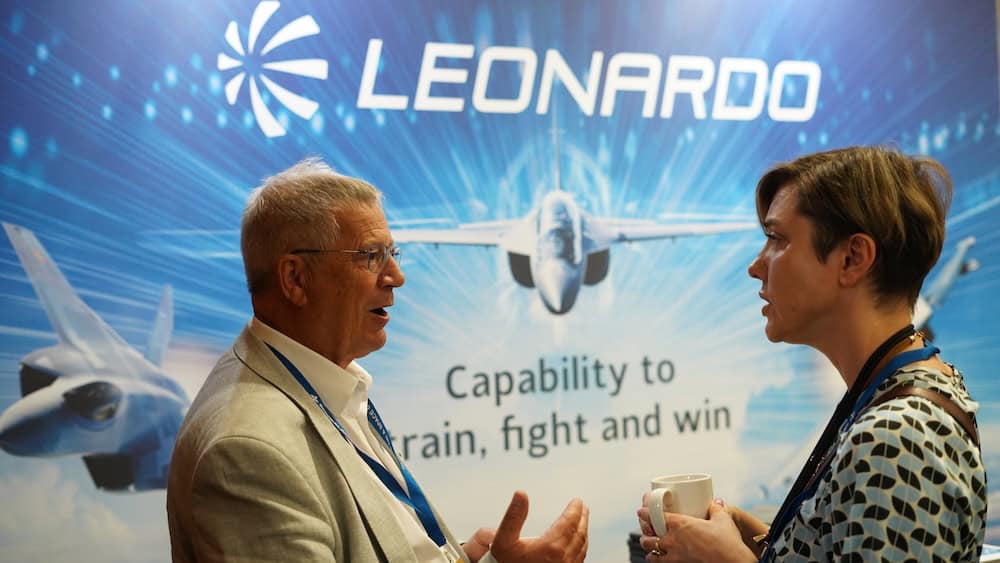
Leonardo is a global industrial group that researches, develops, builds and supports technological capabilities in aerospace, defence and security. It is a strategic partner in the UK-Italy-Japan Global Combat Air Programme (GCAP). In the UK, Leonardo provides critical radar and defensive aids for Typhoon and, as a founding member of Team Tempest, collaborates with the MOD, BAE Systems, Rolls-Royce and MBDA to develop future combat air capabilities, including for the GCAP core platform and collaborative combat aircraft payloads. To train for this complex future, Leonardo offers the proven M-346 Fighter Training System which fully integrates live, virtual and constructive capability. Leonardo is also a world leader in Counter-UAS capability with fielded systems protecting friendly forces on current operations. Leonardo’s Space Division aims to provide decisive space capabilities through greater mobilisation of the Space Alliance (Telespazio and Thales Alenia Space).

https://uk.leonardo.com/en/home

At BAE Systems, we provide some of the world’s most advanced, technology-led defence, aerospace and security solutions. We employ a skilled workforce of around 110,000 people in more than 40 countries.

Working with customers and local partners, we develop, engineer, manufacture and support products and systems to deliver military capability, protect national security and keep critical information and infrastructure secure.

http://www.baesystems.com/

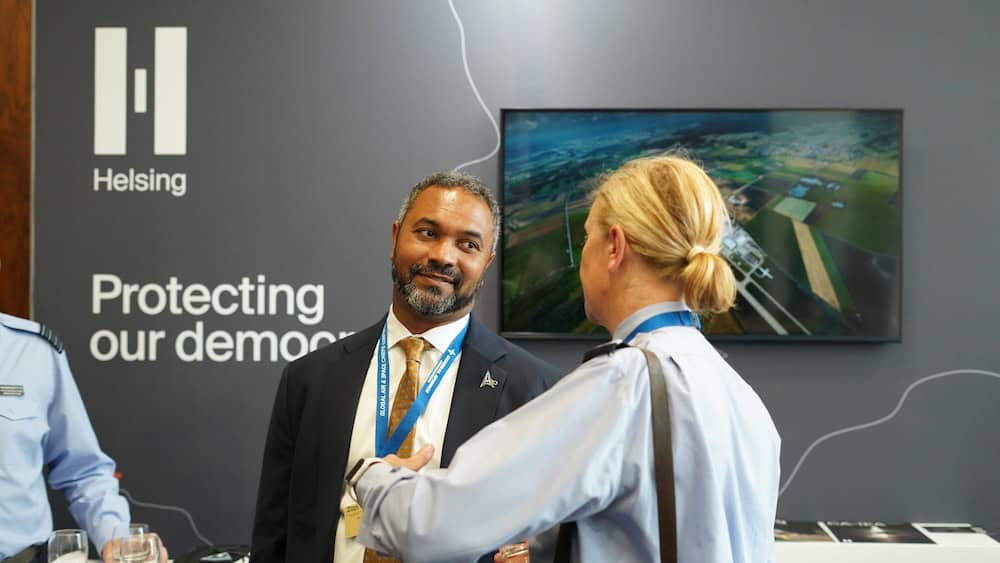
Helsing is a new type of defence company. We build software and AI to protect democracies. Our European engineers deliver capability gains from in-service platforms and new systems, using edge data-processing to enhance combat functions and decision-making.

Helsing is the EU’s largest AI defence technology startup, first established in Munich and London, with sovereign entities now operating in France and the Baltics, and ongoing support to Ukraine.

We partner with industry leaders and governments while funding our own research – developing capabilities at the speed of software.

https://helsing.ai/

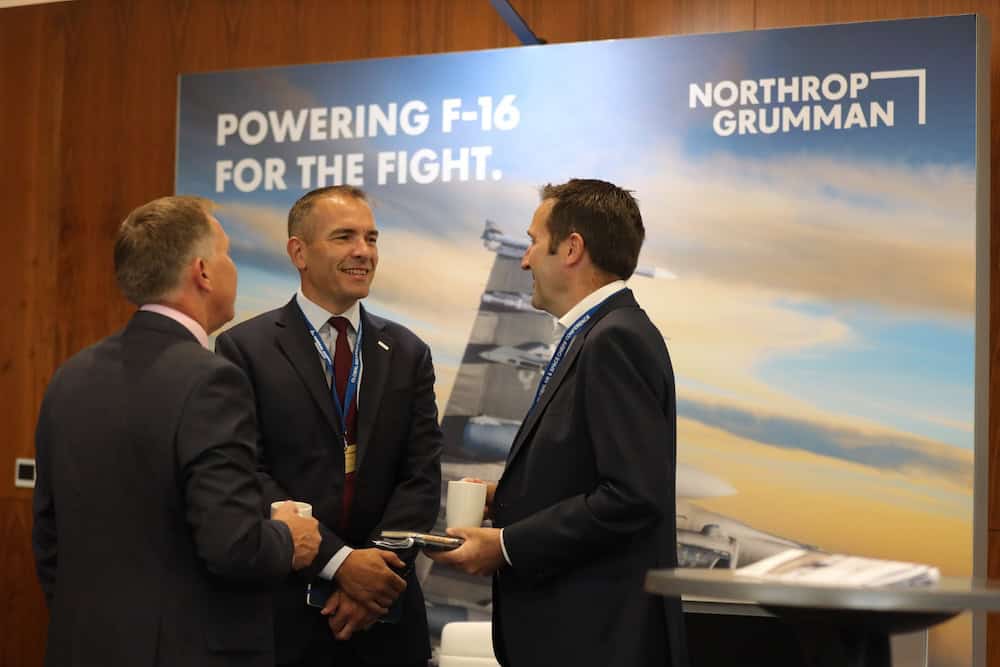
Northrop Grumman has a proven track record of delivering advanced solutions to the defence, space and security community, working together to solve their hardest challenges across every domain. We are an industry leader in solutions that harness the latest in data science, machine learning and secure cloud transformation technology, delivered at pace and scale.
Operating from more than ten sites across the UK, we sustain employment for more than 5,000 people in the many British SMEs and partners in our supply chain. As a British business we are committed to generating long-term prosperity and social value in the UK.

https://www.northropgrumman.com/

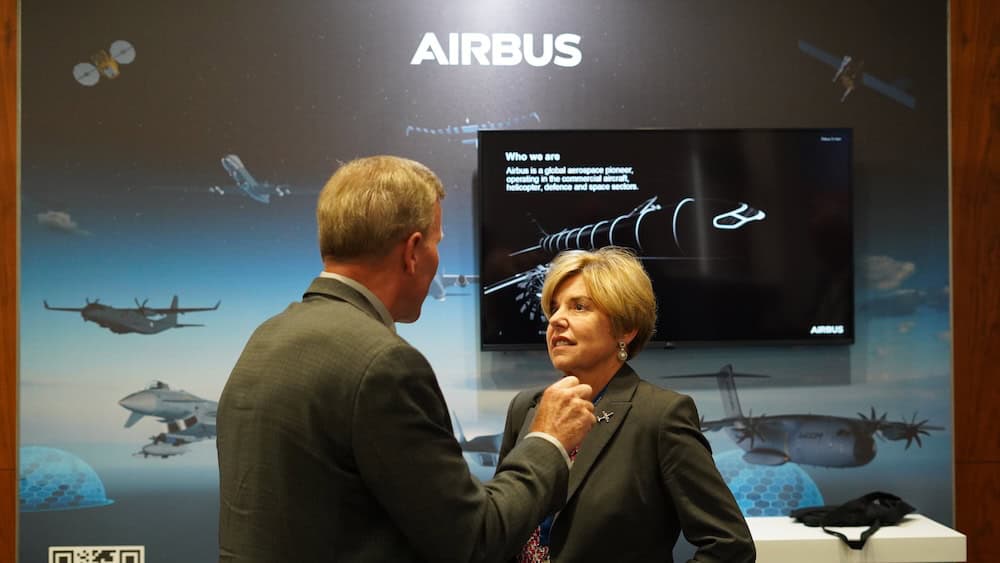
Airbus pioneers sustainable aerospace for a safe and united world. The Company constantly innovates to provide efficient and technologically-advanced solutions in aerospace, defence, and connected services. In commercial aircraft, Airbus designs and manufactures modern and fuel-efficient airliners and associated services. Airbus is also a European leader in space systems, defence and security. In helicopters, Airbus provides efficient civil and military rotorcraft solutions and services worldwide.

https://www.airbus.com/en

Solutions, operations and services

Driving Airbus’ Integrated Air, Missile and Defence

Enabling secure, efficient situational awareness and data exchange in military operations

Shaping the future of air power

Mission-focused, globally connected. The threat landscape is evolving fast, demanding mission partners who think globally and act with purpose. Deloitte combines deep defence expertise with the ability to make things happen – shaping industrial capability, embedding future-focused technologies, and enabling the militaries of the future. Our role is to help Defence build modernised, resilient and ready forces. For over 20 years, Deloitte has proudly worked with the UK MoD and defence industry on the most important transformations in the sector. In the UK we employ over 350 veterans, have 3,000 security cleared staff and over 1,000 people working daily in support of the Defence mission.

https://www.deloitte.com/global/en/Industries/defense-security-justice.html

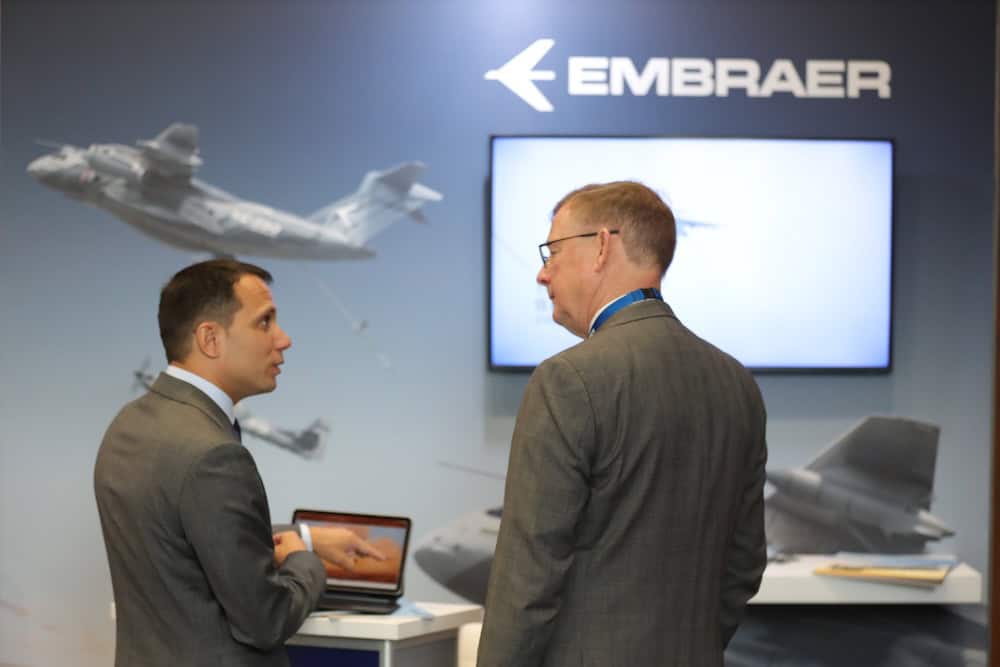
Embraer is a global company with over 55 years of aerospace expertise. Its portfolio includes the KC-390 Millennium, a new-generation multi-mission military transport aircraft with unrivaled mobility and operational flexibility in a single platform. In addition to the A-29 Super Tucano, an advanced trainer and light attack aircraft, Embraer also offers a complete line of integrated solutions for air, space, sea, land and cyber systems.

https://embraerds.com

With more than 180,000 global employees, we push the limits of technology and science to redefine how we connect and protect our world. With industry-leading capabilities, we advance aviation, engineer integrated defense systems for operational success, and develop next-generation technology solutions and manufacturing to help global customers address their most critical challenges. The company, with 2025 sales of more than $88 billion, is headquartered in Arlington, Virginia.

https://www.rtx.com/

Lockheed Martin

Lockheed Martin is a global defence technology company driving innovation and advancing scientific discovery. Our all-domain mission solutions and 21st Century Security vision accelerate the delivery of transformative technologies to ensure those we serve always stay ahead of ready. More information at Lockheedmartin.com

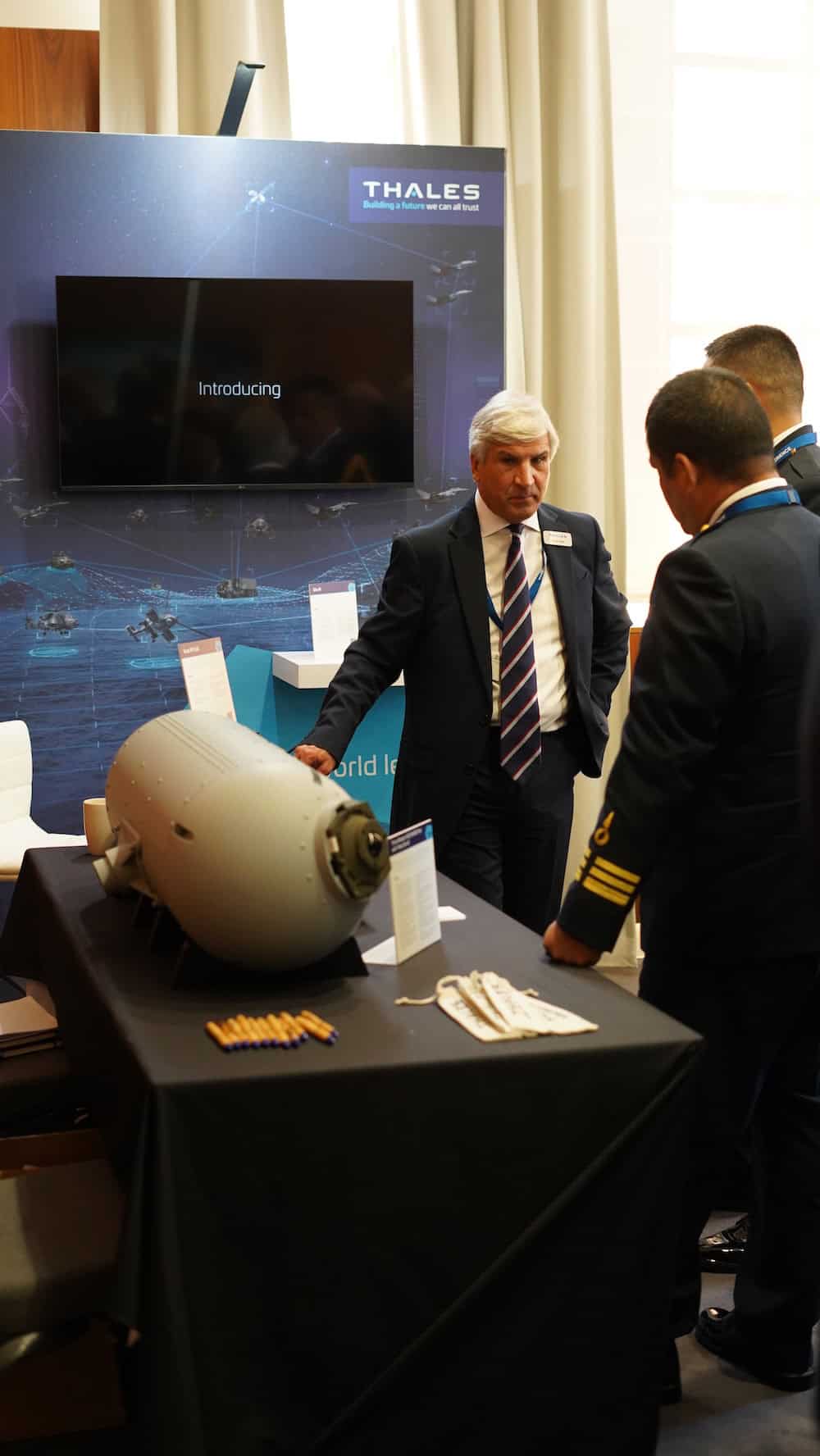
Thales is a global leader in advanced technologies for the Defence, Aerospace, and Cyber & Digital segments. Its portfolio of innovative products and services helps address several major challenges: sovereignty, security, sustainability and inclusion. The Group allocates €4.5 billion each year in Research & Development in key areas, particularly for critical environments, such as AI, Cybersecurity, Quantum, Cloud technologies and 6G. Thales has more than 85,000 employees in 65 countries and has sites in every region of the UK.
We are proud of our partnership with the UK Ministry of Defence and UK Armed Forces, NATO allies and global partners – harnessing the extraordinary power of technology to build a future we can all trust.

https://www.thalesgroup.com/en

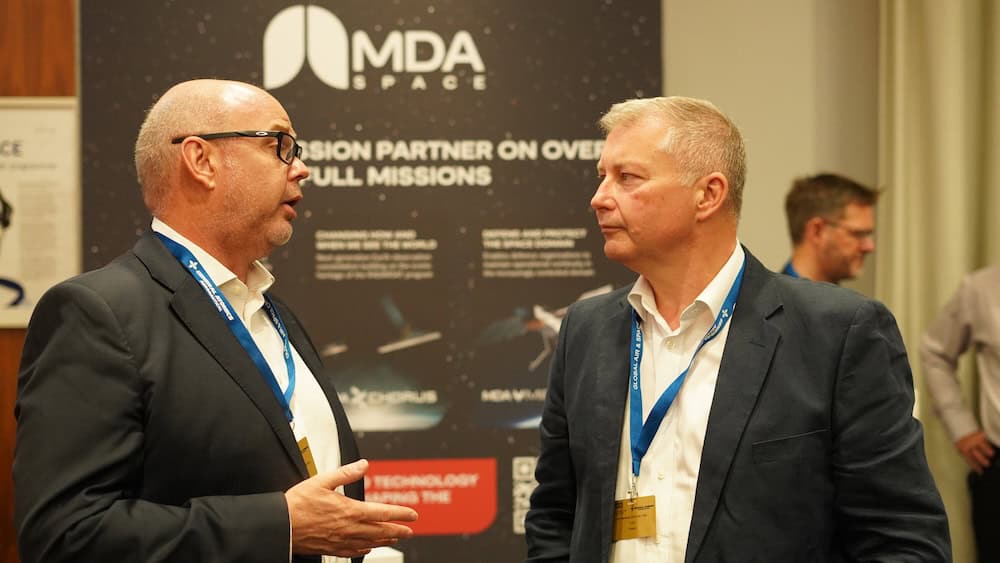
Building the space between proven and possible, MDA Space is a trusted mission partner to the global defence & space industry. A robotics, satellite-systems and geointelligence pioneer with 55-years+ of world firsts and more than 450 missions, MDA Space is a global leader in communications satellites, Earth and space observation, and space exploration and infrastructure. The global MDA Space team of 4,000+ space experts has the knowledge and know-how to turn an audacious customer vision into an achievable mission – bringing to bear a unique mix of experience, engineering excellence and wide-eyed wonder that’s been in our DNA since day one.

http://www.mda.space/

Rolls-Royce: A Force for Progress

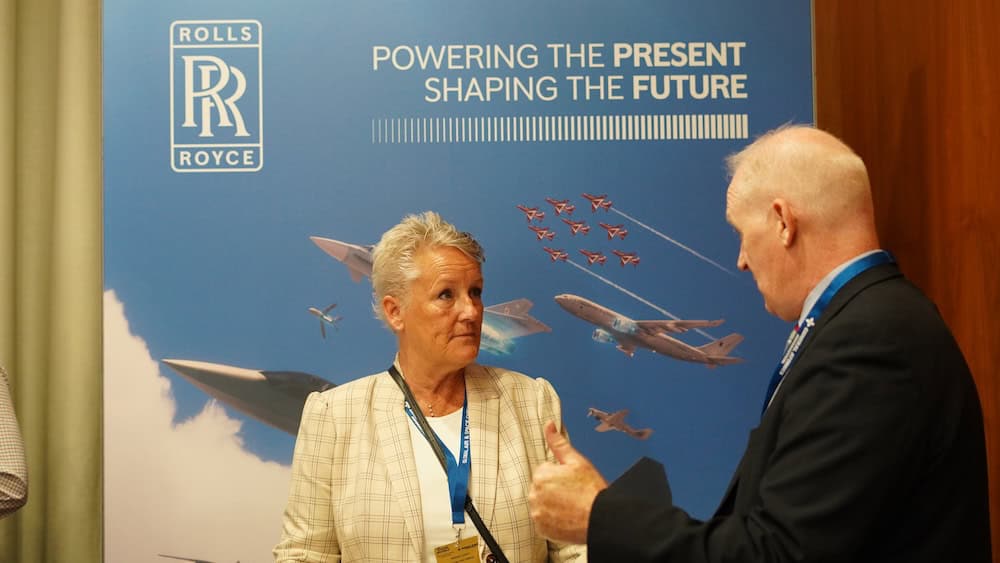
In an era of rapidly changing global threats and technological change, Rolls-Royce stands as a force for progress. As a leader in advanced power and propulsion, we are delivering agile, integrated solutions, with increasing readiness and resilience. From developing the next generation combat air power to pioneering autonomous capability, our technology ensures operational confidence now while also preparing for a safer future. With cutting-edge engineering and strategic collaboration, Rolls-Royce empowers global allies to maintain decisive edge, securing our skies and ensuring a resilient future.

https://www.rolls-royce.com/products-and-services/defence

General Atomics Aeronautical Systems, Inc. is the world leader in Remotely Piloted Aircraft Systems. The company has delivered more than 1,600 uncrewed aircraft in its 30+ year history. GA-ASI’s RPAS have flown more than 9 million flight hours, and include MQ-9A Reaper®, MQ-1C Gray Eagle®, MQ-20 Avenger®, MQ-9B SkyGuardian®/SeaGuardian® and YFQ-42A, a new Collaborative Combat Aircraft for the U.S. Air Force. The Royal Air Force operate the new Protector RG Mk1, an MQ-9B model that received Military Type Certificate in 2025, which enables routine operations in civil airspace from domestic RAF bases, drastically expanding its operational flexibility.

www.ga-asi.com

The Royal Aeronautical Society, founded in 1866, is the leading professional organisation for the aerospace, aviation and space sectors. We provide our global network of members with professional recognition for their accomplishments and expertise, along with opportunities for learning and development through sharing knowledge resources and events.
https://www.aerosociety.com/

To fight and win when it matters most, frontline forces must train regularly against realistic, integrated, multi-domain adversaries.

This is where Draken excels.

From the classroom to major multi-national, whole-force exercises, governments worldwide call on us to prepare and challenge their personnel daily.

Our team of skilled professionals work closely with customers to build the training capabilities they need to help preserve national security.

Who are we? We’re the future-focused, fully integrated, adversary force.

https://www.draken.aero/

Aviation Week is the largest multimedia information and services provider for the global aviation, aerospace, and defense industries, serving 1.2 million professionals around the world. Industry professionals rely on Aviation Week to help them understand the market, make decisions, predict trends, and connect with people and business opportunities. Customers include the world’s leading aerospace manufacturers and suppliers, airlines, airports, business aviation operators, militaries, governments and other organizations that serve this worldwide marketplace. Aviation Week’s portfolio delivers award-winning journalism, data, intelligence and analytical resources, world-class tradeshows and conferences, and results-driven marketing services and advertising.

Aviation Week is part of Informa Markets, a division of Informa PLC.

https://aviationweek.com/

Martin-Baker is the world’s longest established and most experienced designer and manufacturer of Ejection Seats, Crashworthy Seats and associated safety equipment. The Company’s advanced technology safeguards the aviator throughout the escape, survival, location, and recovery phases. Backed by 81 years of experience, Martin-Baker has saved over 7,814 aircrew lives to date.

https://martin-baker.com/

Ascent Flight Training is a trusted provider of innovative training systems, designing, developing and delivering world-class, bespoke military training through UKMFTS and NFTE. We train fixed wing, multi-engine, fast jet and rotary wing pilots and mission aircrew, through elementary, basic and advanced flying courses, offering turnkey solutions that generate mission-ready teams, through our blend of live and synthetic training.

https://ascentflighttraining.com/

Focused on increasing combat readiness, we are 150+ seasoned Weapons School Instructors and Graduates, proven Combat Aviators, Adversaries and Test Pilots, Air Battle Managers, and Aviation Maintenance professionals. We provide innovative business practices to governments and the aviation industry with unparalleled commercial air support and tactical consulting.

Please visit: http://tacticalairsupport.com

As a global leader in military maintenance, repair and overhaul (MRO), we work closely with aircraft operators to keep their fleets mission-ready and mission-capable. We have supported the C-130 Hercules since 1966, earning multiple world-first accreditations, permissions and accolades for our excellence on the platform.

https://marshallgroup.com/en

L3Harris is the Trusted Disruptor in defense tech. With customers’ mission-critical needs always in mind, our employees deliver end-to-end technology solutions connecting the space, air, land, sea and cyber domains in the interest of national security.

Visit https://www.l3harris.com/ for more information.

Saab serves the global market with world-leading products, services and solutions from military defence in all domains to civil security. Saab’s market offering is broad and consists of complex systems involving extensive research and development. With operations on every continent, Saab continuously develops, adapts and improves new technology to meet customers’ changing needs.

https://www.saab.com/

Founded in 2015, Shield AI is a venture-backed deep-tech company with the mission of protecting service members and civilians with intelligent systems. Its products include the V-BAT and X-BAT aircraft, Hivemind Enterprise, and the Hivemind Vision product lines. With offices and facilities across the U.S., Europe, the Middle East, and the Asia-Pacific, Shield AI’s technology actively supports operations worldwide. Follow Shield AI on LinkedIn, X, Instagram, and YouTube.

For more information, visit www.shield.ai.

PA Consulting is a global innovation and transformation consultancy with an enduring focus on finding solutions to complex problems. PA was founded in 1943 at a time of national crisis to help the British war effort by improving productivity in munitions factories. Since then, innovation has been a key ingredient in the ground-breaking solutions that we provide to our clients. Our Defence and Security experts help clients navigate complex challenges with innovative, technology-driven solutions that protect people, assets, and national interests. We pride ourselves on working constructively alongside other organisations, and we are committed to being a true partner to Defence.

https://www.paconsulting.com/industries/defence-and-security

Palantir provides the leading AI operating system for data-driven operations and decision-making. It is deployed globally, helping allied air and space forces tackle their most complex challenges.


Proven on the battlefield in Ukraine and deployed by the U.S. Department of War and the U.K. Armed Forces, the platform supports real-world defence operations today. As of March 2025, this includes Maven Smart System (MSS) NATO, the Alliance’s AI-enabled warfighting system. By fusing heterogeneous data from disparate systems into a secure, unified environment, the platform empowers the operator across the full mission cycle—from planning and force generation, to supply chain management and dynamic targeting.


Beyond the battlefield, we power the defence industrial base—enabling manufacturers to accelerate production, improve quality, and build resilience.

https://www.palantir.com/uk