Director, Strategy, Plans, and Policy
USSPACECOM

Space Policy Lead & Deputy Head Strategic Effects
MOD

Managing Director
Surrey Satellite Technology Ltd

Deputy Director Defence and Space,
National Security Secretariat
Cabinet Office

Executive Deputy National Security
Adviser (Intelligence, Defence and
Security)
Cabinet Office

Director of Business Development & Product
Kepler Communications

Space Security Lead, Security Policy Department
Ministry of Foreign Affairs of the Kingdom of the Netherlands

Head of Country UK and Managing Director
Airbus Defence and Space

Director
UK Space Agency

Air & Space Commander
Royal Air Force

Assistant Chief of Space Operations
USSF

Deputy Space Commander
French Air and Space Force

Head Strategic Effects Policy
MOD

Chief Technology Officer for Space
BAE Systems Digital Intelligence
Head Space Capability
UK Space Command

Managing Director
National, Future Planet Capital

Minister for Space, Cyber and Regulatory Reform
Assistant Chief of Staff Force Development
NATO

Analyst
RAND Europe

Space Chief Technology Officer
UK Space Agency

Director Sense, Decide, Communicate, and Synthetic Training
National Armaments Director Group
National Armaments Director

Chair
The Air & Space Power Association

Investment Director
Foresight Group

Chief of the Air Staff
Royal Air Force

Regional Director of Space UK and Europe
Lockheed Martin

Secretary of State for Defence

Deputy Supreme Allied Commander Europe, NATO
Chief Executive
SAIBRE Capital

Space Portfolio Director
National Armaments Director Group
Interim Commander
UK Space Command
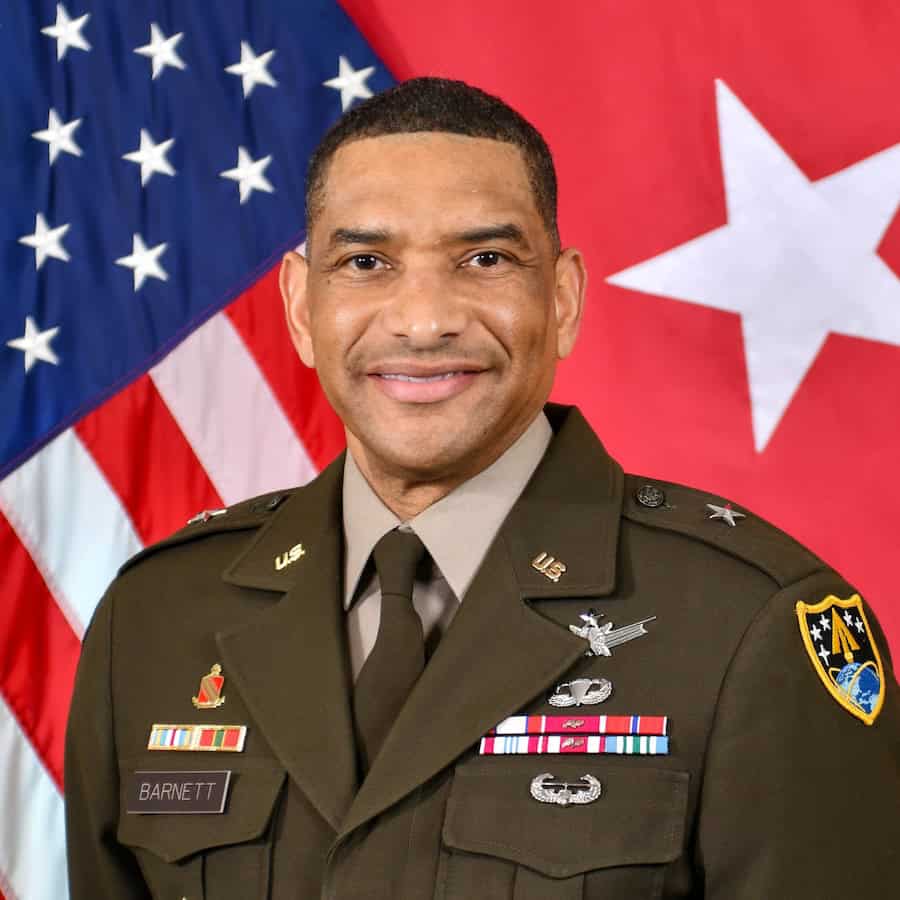
Brigadier General (BG) Barnett is a senior officer in the United States Army with over 32 years of service. He is a graduate of Indiana University and holds Master’s degrees in Kinesiology and Strategic Studies. His extensive military education includes the U.S. Army Command and General Staff College and the U.S. Marine Corps War College. He currently serves as the Director of Strategy, Plans, and Policy for United States Space Command (USSPACECOM). Throughout his career, BG Barnett has held numerous command and staff positions. His significant command assignments include leading the 1-44th Air Defense Artillery, the 30th Air Defense Artillery Brigade, and the 10th Army Air and Missile Defense Command in Germany. He also served as the Commanding General of the U.S. Army Cadet Command, where he was responsible for commissioning most the U.S. Army’s new officers. His operational experience includes multiple deployments in support of coalition missions in the Middle East and Europe, including Operation New Dawn, Operation Enduring Freedom, and Operation Atlantic Resolve. His major decorations include the Army Distinguished Service Medal, the Legion of Merit, and the Bronze Star Medal, among others.
Joshua Broom leads defence space policy development and coordination at the UK Ministry of Defence. He sets the strategic direction for the MOD’s space priorities, and works across teams in defence to translate this into military strategy, operational policy, capability development, and programmes of record. He also coordinates the MOD’s contribution to cross government space policy and strategy, working closely with the Department for Business, Innovation, Science, & Trade (BIST), Cabinet Office, Department for Transport, and Foreign, Commonwealth, & Development Office (FCDO).
Josh has worked in the UK Government on space since he joined the Civil Service in 2017. He has held five different roles in five different Government departments all in space policy and delivery: the Department for the Environment, Food, & Rural Affairs (DEFRA), the UK Space Agency, Department for International Trade (DIT), and as Head of Space at the Department for Business & Trade (DBT). He has tackled many complex issues such as negotiating with the European Union on UK participation in EU space programmes, mobilising space-based assets and expertise for emergency responses to international crises, establishing precedent-setting agreements and partnerships with strategic space-faring allies, and landing companies from abroad across the UK space ecosystem.
Prior to his career in the Civil Service, Josh studied at Loughborough University and Cranfield University to secure bachelor’s and master’s degrees in engineering and environmental science respectively. He is a self-professed space ‘geek’, keen traveller, and rugby enthusiast.
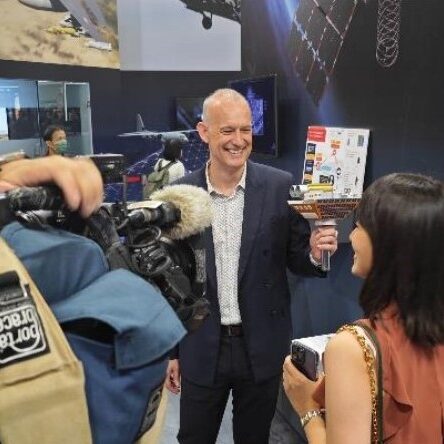
Andrew Cawthorne is Managing Director of Surrey Satellite Technology Ltd (SSTL), bringing over two decades of experience in pioneering space missions and commercial innovation.
After earning a Master’s degree in Astronautics and Space Engineering from Cranfield University, Andrew began his career at the European Space Agency in the Netherlands. As part of ESA’s Aurora programme, he contributed to a range of visionary projects including the conceptual design of a human mission to Mars and early-stage development work for the ExoMars rover.
He joined SSTL in 2004 as a systems engineer on TopSat, a high-resolution Earth imaging demonstrator, before becoming the technical lead on NigeriaSat-2—a complex imaging satellite delivered to the Nigerian government. His leadership in Earth observation (EO) saw him appointed Head of EO in 2012 and Director of EO in 2016, where he oversaw major programmes including the DMC3 constellation and the trailblazing Carbonite series of small, low-cost video-capable satellites.
In 2019, Andrew took on the role of Director of Business Development and Sales, driving SSTL’s growth through a broad portfolio of missions spanning commercial, institutional, and international markets. He became Managing Director in July 2024.
That same year, Andrew was awarded the prestigious Sir Arthur C Clarke Award for Space Achievement – Individual, recognising his outstanding contribution to the UK space industry.
Chris has been Deputy Director for Defence in the Cabinet Office since 2024. He has recently also taken on responsibility for space as part of the new ‘one government’ approach to the domain. Supported by a newly established Cabinet Office team, he will work with government and industry to reinforce the UK’s position as a competitive space power well positioned to pursue its interests in and through space, and to drive the growth of the sector.
Including his current role, Chris has spent the best part of a decade in the Cabinet Office advising successive Prime Ministers on issues of defence and national security, prior to which he spent spells in the MOD and the Department of Health.
Matt has been in the Civil Service for 20 years, most recently in his role as Director for Intelligence, Technology and Security within the National Security Unit in the Cabinet Office. The extensive portfolio covered counter-terrorism and serious and organised crime, oversight of intelligence finance, critical and emerging technology and digital, data and intelligence policy.
He previously worked in the Office for Security and Counter Terrorism where he was responsible for the Prevent pillar of the UK counter-terrorism strategy and for targeted communication campaigns to prevent terrorism and serious and organised crime. He has worked internationally to tackle online harms, particularly to prevent terrorist’s use of the internet. Prior to this, Matt was a Deputy Director in the Department for Education, responsible for coordinating the rollout of the academies programme. He has a long history of working on crime-reduction strategies at both the national and local level, including in his work at the Department for Children, Schools and Families on family intervention projects to prevent youth and gang crime.
Matt is a one-time professional basketball player, a keen runner and cyclist and has an MSc in Criminology from the London School of Economics.
Michael is Director of Business Development & Product at Kepler, leading international sales and product strategy for Kepler’s optical data relay network and hosted payload business. He works with satellite operators, mission developers, and government partners to enable real-time data delivery from orbit through optical communications infrastructure.
With more than a decade of experience across the space and aerospace sectors, Michael has held leadership roles spanning business development, programme delivery, and mission development for both satellite and defence platforms. Prior to Kepler, he led the Space Services business at Spire Global, supporting RF and optical satellite missions for government and commercial customers. Earlier in his career at Leonardo, he worked on advanced radar, electronic warfare, and infrared targeting systems for multiple European fast jet platforms.
Maud Duit is Space Security Lead in the Security Policy Department of the Ministry of Foreign Affairs of the Kingdom of the Netherlands. Within the Non-proliferation and Arms Control division, she’s working on space security, Integrated Air and Missile Defence and strategic stability policy. Maud Duit is also PhD candidate at Leiden University, where she researches the militarisation of space and the implications for strategic stability and deterrence. Her work bridges diplomacy, contemporary security policy, and military strategy, exploring how developments in the space domain are reshaping deterrence and escalation dynamics. Maud has an academic background in international relations and cybersecurity at Leiden University, and military strategy at the Netherlands Defence Academy.
As Managing Director of Airbus Defence and Space UK Kata is responsible for delivering products and services across the Air, Space and Cyber domains. Prior to joining Airbus in 2023, she was a civil servant, supporting governments across a range of national security priorities since 2001. While at the Ministry of Defence Kata advised Ministers and Chiefs on policy, operations and planning from the integrated civilian/military headquarters in Whitehall. She led the 2021 Defence Review which saw a major reset of UK Armed Forces, a shift towards tackling state on state competition, and a £16.5Bn investment towards a modern, tech-enabled military. Kata held senior roles in the Cabinet Office – supporting the Prime Minister’s National Security Council advising on the Integrated Review, AUKUS and Russia’s invasion of Ukraine; leading the government’s response to the 2013 Snowden intelligence crisis; and was the Chief of Staff to the Cabinet Secretary – 2016-19. In 2022 Kata was a member of the senior leadership team charged with setting up the new Department for Science, Innovation and Technology. She remains passionate about the transformative potential at the intersection of science and technology and national security and is committed to ever closer collaboration between government and industry.
Rebecca is passionate about maximising the UK’s space potential, having worked in space for ten years across the UK Space Agency, DSIT and its predecessor department. As Policy Director and then International Director at the UK Space Agency, she worked closely with ESA and the EU, led legislation enabling UK launch, and served as a Trustee of the National Space Centre. At BEIS and now DSIT, she established the Space Directorate, enabled the first launch from Cornwall, and developed the first National Space Strategy with MOD, working closely with ministers. She was appointed as Director for UKSA on 1 April. Rebecca is committed to championing diversity within the space sector, to ensure it benefits from the widest range of potential talent and expertise.
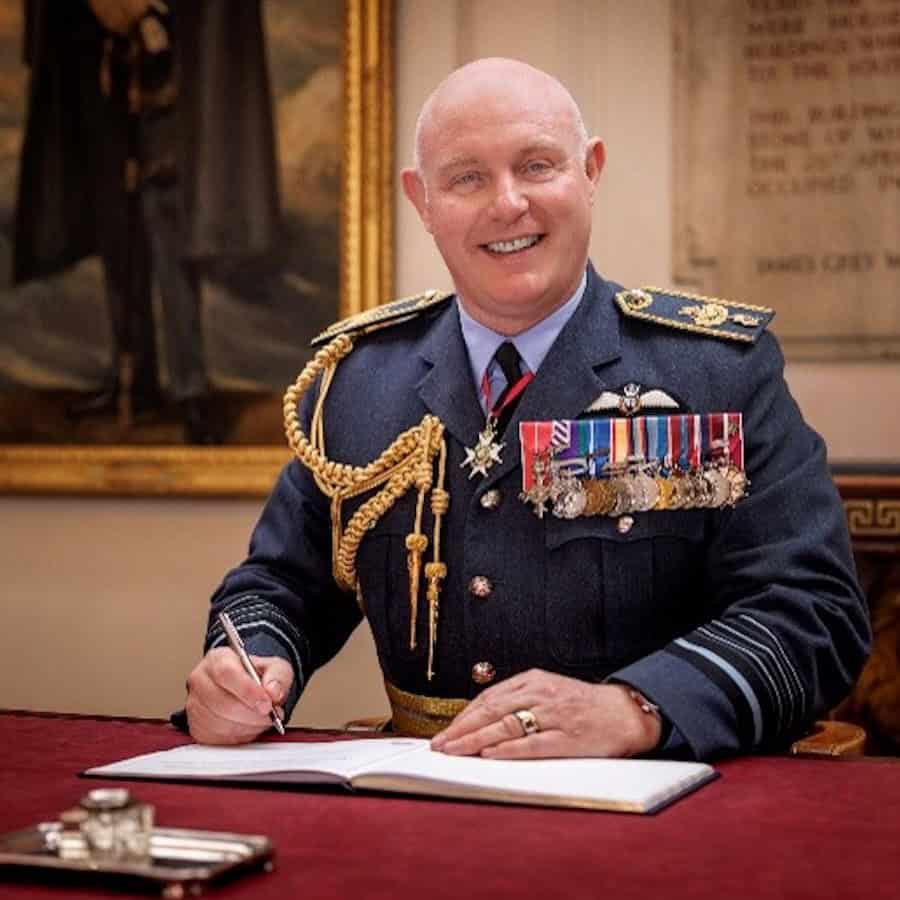
Air Marshal Mark Flewin CBE joined the Royal Air Force in 1998. After pilot training he flew the Jaguar, becoming a Qualified Weapons Instructor and conducted multiple front-line tours including operations over Iraq. As one of the first pilots to fly the Typhoon in 2005, he played a key role in its development, serving as Officer Commanding 1 (Fighter) Sqn, Station Commander RAF Coningsby and the Typhoon Force Commander.
He has held a range of operational and command appointments, including deployments to the Combined Air and Space Operations Centre in Qatar and command of 903 Expeditionary Air Wing on Op SHADER. In addition to flying the Jaguar and Typhoon he has also displayed the Spitfire and Hurricane with the Battle of Britain Memorial Flight.
Senior staff roles have included Chief of Staff within the Air Staff at the Ministry of Defence, Chief of Staff Joint Effects at Permanent Joint Headquarters, and Head of Space Operations, Planning and Training at UK Space Command. As Air Officer Commanding No. 1 Group, he oversaw the RAF’s front-line aircraft, Air and Space Warfare Centre, Battle of Britain Memorial Flight and Royal Air Force Aerobatic Team, the Red Arrows.
Following service as Assistant Chief of Defence Staff (Military Strategy) from April 2025, he was appointed Air and Space Commander in July 2026. Married with two children, he enjoys display flying, road cycling and running.
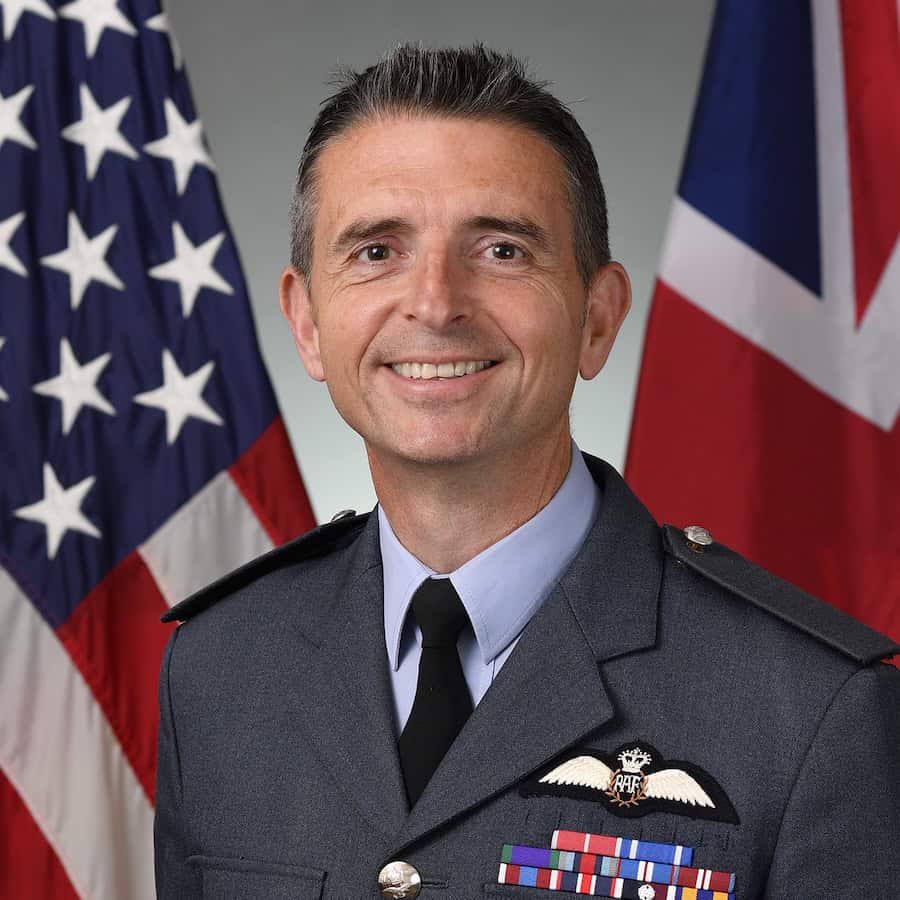
Air Marshal Paul “Godders” Godfrey is the Assistant Chief of Space Operations for Future Concepts and Partnerships, United States Space Force, at the Pentagon. In this role, he integrates allies and partners into the Space Force’s capability development strategy.
Joining the Royal Air Force (RAF) in 1991, Godfrey spent most of his career as a fighter pilot. He served as a Harrier Weapons Instructor, was among the first operational Eurofighter Typhoon pilots, and flew the F-16 on an exchange tour with the United States Air Force. Additionally, he flew Spitfires and Hurricanes with the Battle of Britain Memorial Flight.
His staff and leadership roles include managing Typhoon requirements, F-35B operational entry into service, and serving as Head of Carrier Enabled Power Projection. In 2020, he directed the 609th Air Operations Center in Al Udeid.
Godfrey has commanded at multiple levels, including F-16 and Typhoon squadrons, Operations Wing at RAF Coningsby, and RAF Lossiemouth. Notably, he served as the inaugural Commander of U.K. Space Command from 2021 to 2024.
After his national service, Rear admiral Sébastien Goinère joined the French Navy in September 1999.
He was first assigned to a frigate “Aconit” and took part in a deployment with a British naval group, NTG 2000. Then, he was assigned deputy ship commander on the aviso “Commandant Blaison”. There, he took part in the Enduring Freedom mission.
Between 2005 ans 2007, he served as an exchange officer in the Canadian Navy’s support structures in Halifax. He returned to the “Aconit” in 2007 as deputy ship commander.
In 2014, he was appointed Commanding Officer of the Hydrographical and Oceanographic Survey Ship “Beautemps Beaupré”.
After two years as an instructor at the French naval Academy and one year at the Staff College, he joined the Scientific Ship “Monge” as second in command. Then, he commanded the Fort-de-France naval base.
He held various positions in the field of finance and military planning at the Armed Forces Headquarters, then in the field of capabilities at the Navy Headquarters.
He was then appointed head of the space affairs office at the General Secretary for Defence and National Security.
Since September 1st 2025, he has been Deputy Commander of Space.
Natasha – more commonly known as Tasha, has worked on UK cyber security and national security for over a decade across the Home Office, National Cyber Security Centre, and the Ministry of Defence.
Tasha is Deputy Director Strategic Effects Policy (SEP) in MOD taking up post in April 2024. This is a broad role covering UK defensive and offensive Cyber defence policy, Space strategic and operational policy as well as strategic operations, which covers Rules of Engagement and Targeting policy.
Previously, Tasha worked for three years as Deputy Director, Head of Cyber Assessments at the National Cyber Security Centre, part of GCHQ and was responsible for UK Intelligence Assessments of cyber threat.
A civil servant since 2008, Tasha developed the Home Office’s approach to cyber policy looking predominately at State Threats but also how the broader ‘digitally enabled society’ presents both threats and opportunity to some of our key national security problems. From 2008-2015 Tasha worked on policy areas ranging from police leadership to public order.
Tasha has a degree in History and International Relations, an MSc in Public Policy and a PhD in early twentieth century Irish history and politics. In her spare time, Tasha is a keen bibliophile and is learning book conservation and book binding.
Tasha is hard of hearing and wears hearing aids – it’s always helpful if you talk to her face on!
Tony Holt is the Chief Technology Officer for Space at BAE Systems Digital Intelligence and has more than 30 years of experience in the space industry, working for several major spacecraft manufacturers and ground system providers. Tony started his career in systems and AOCS engineering and expanded his capabilities in technologies across avionics, spacecraft operations, software and ground segments, and in missions and payloads including Earth Observation, Science, Telecommunications and Navigation. Tony’s expertise in the sector ranges across institutional, experimental, and commercial missions, and has included two patents and a NASA Group Achievement Award. Previous roles include Chief Sales & Innovation Officer at In-Space Missions and Engineering Director at Surrey Satellite Technology Ltd.
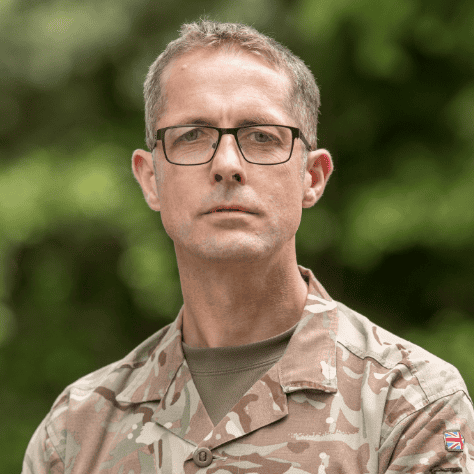
Brigadier Neil Lakin is a Royal Engineer Officer in the British Army, he spent much of his early career in construction, combat and close support engineer roles, including deployments to Iraq and Afghanistan; he has specialised in Geospatial Information and held policy and advisor posts across Defence.
He has significant expertise in end-to-end capability integration with a focus on the delivery of digital and advanced technologies alongside international partners. After initially joining UK Space Command to lead its Force Development work, he moved to his current role as Head of Space Capability in August 2026 and runs the 1* Generate Pillar within Headquarters.
Neil holds Master’s Degrees from the University of Nottingham, Cranfield University and King’s College London. During his career the Army has enabled him to compete at representative levels in swimming, pentathlon and skydiving. Currently he is trying to qualify as an ‘age-group’ road runner.
Alex Leigh is Managing Director at Future Planet Capital (FPC), where he manages the UK Innovation & Science Seed Fund (UKI2S) and specifically focuses on the MOD-backed portfolio. He leads investments in early-stage deep technology companies developing capabilities across defence, security and national resilience.
Alex has more than 15 years of experience spanning venture capital, private equity, engineering and entrepreneurship. He has worked with hundreds of founders, reviewed thousands of investment opportunities, and been involved in around 40 portfolio companies and five successful exits. His investment experience includes dual-use technologies across space, quantum, artificial intelligence, robotics, advanced materials and defence systems.
Working closely with the Ministry of Defence, government, academia and industry, Alex helps identify and scale technologies that strengthen the UK’s sovereign capability while supporting commercial growth. He regularly serves on company boards and advises founders on fundraising, commercial strategy and building businesses for long-term success.
Alongside his investment work, Alex is an educator and content creator focused on venture capital, innovation and entrepreneurship, helping founders and investors better understand the journey from breakthrough technology to commercial impact.
Baroness Lloyd of Effra CBE was appointed Parliamentary Under-Secretary of State (Minister for Space, Cyber and Regulatory Reform) jointly in the Department for Digital, Culture, Media and Sport (DCMS) on 23 July 2026 and the Department for Business, Innovation, Science and Trade (BIST) on 22 July 2026.
She was previously Parliamentary Under-Secretary of State in the Department for Science, Innovation and Technology (DSIT) between 11 September 2025 and 22 July 2026. Before that, she was both Parliamentary Under-Secretary of State in the Department for Business and Trade (DBT) and Baroness in Waiting (Government Whip) between 11 September 2025 and 12 June 2026.
Brigadier General David Morpurgo, Italian Air Force, was born in Naples, Italy, in November 1972. He attended the Italian Air Force Academy from 1991 to 1995 and earned his military pilot wings on the T-37 and T-38 at Sheppard AFB, Texas, in 1996.
He spent much of his operational career flying the AM-X and held various squadron-level appointments. In 2010, he commanded the “Black Cats Task Group” in Herat, Afghanistan. He later served in the Italian Air Force Staff’s Organization and Personnel Department, becoming Chief of the Organization Office following promotion to Colonel in 2014.
His international and command appointments include Italian Senior National Representative for operations in Iraq at CAOC al-Udeid, Qatar, Commander of the 51st Wing in Istrana, and senior roles in the Italian Defence General Staff. Promoted to Brigadier General in January 2021, he served as Deputy Defence Policy Director of the Italian Defence General Staff and, from 2022 to 2024, as Deputy Commander of the Deployable Air Command and Control Centre.
He has nearly 3,000 flight hours and holds multiple postgraduate and master’s degrees in aeronautics, political science, strategic studies, geopolitics, and leadership.
He is married with Chiara and has one son, Luca, and stepdaughter Ludovica.
Dr Aleix Nadal is an analyst at RAND Europe on the Defence, Security and Justice team. His primary research interests include space power, deterrence and escalation dynamics, and the privatisation of security in new operational domains. He is a member of the RAND Europe Space Hub (RESH) team, a cross-RAND centre of excellence for space-related research. He holds a Ph.D. in defence studies from King’s College London, where he examined the evolving posture of the Royal Air Force (RAF) on outer space since the end of the 1991 Gulf War. He has previously taught for the RAF’s officers development programme on air and space power at the Joint Services Command and Staff College.
Professor Anu Ojha OBE is the UK Space Agency’s first Space Chief Technology Officer, providing strategic leadership across science, engineering, regulation and technology. Previously Director for Championing Space having joined the Civil Service in 2023, he oversaw the UK’s multi-billion pound European Space Agency commitments, international relations, skills and workforce development, parliamentary affairs, stakeholder engagement and communications, and continues to be a strategic ambassador for UK space priorities spanning space science, exploration and satellite applications.
Prior to joining UKSA, he founded the UK National Space Academy in 2008 and, in his first career in education, was among the first UK physics teachers to receive Advanced Skills Teacher status for outstanding teaching, later serving on the leadership team of England’s largest school.
Appointed Honorary Professor in the School of Physics and Astronomy at the University of Leicester in 2016, he continues to teach at Space Park Leicester at undergraduate and postgraduate levels. His technical work includes co-investigating nuclear power applications for exploration, analysing data from ESA missions such as SOHO, Rosetta and ExoMars, and leading ISS education programmes including the Astro Academy Principia experiment suite conducted by astronaut Tim Peake. Over the past decade he has helped shape UKSA, STFC and ESA strategies, led international capacity-building partnerships, supported the UK Ministry of Defence’s Space Directorate, served six years on both STFC Council and ESA’s senior science committee for human and robotic exploration, and contributed to the 2025 UK Strategic Defence Review as an invited member of the Review and Challenge team as well as continuing to work with NATO’s Space Centre of Excellence in Toulouse.
Vikash (Kash) Patel CEng MAPM is a senior Defence leader with over 20 years’ experience delivering operational capability and business transformation across the UK Ministry of Defence (MOD).
Since joining the MOD as a graduate engineer in 2001, Kash has held a range of leadership roles spanning the delivery of complex equipment capability, conducting investment scrutiny and assurance, developing and delivering Defence policy, and leading large-scale transformation.
Promoted to the Senior Civil Service in 2019, Kash has specialised in leading complex portfolios and has also held senior leadership roles within DE&S as Chief Operating Officer for the Strategic Enablers Domain and Director of Commissioning for the National Armaments Director Group.
Since January 2026, Kash has been Director Sense, Decide, Communicate and Synthetic Training within the National Armaments – Materiel pillar, overseeing a portfolio of more than 300 Defence capability projects, including those within the space domain.
Rupert Pearce is the UK’s National Armaments Director (NAD) and a member of the Defence Board, as a 4*/Permanent Secretary grade civil servant.
Rupert has spent over40 years as an accomplished business leader with a distinguished career spanning law, technology, telecommunications, energy, and venture capital. With extensive experience as a CEO, chairman, and venture partner, and has a proven track record of driving growth, innovation, and transformation in global, high-growth, and capital-intensive businesses.
As a Venture Partner and Chair of UK-based tech companies and venture capital firms Rupert has advised on investment strategies, supported portfolio companies, and identified new opportunities in the technology sector.
From 2012 to 2021, Rupert was CEO of Inmarsat plc, a FTSE 100 global leader in mobile satellite communications. During his tenure, he oversaw the launch of six satellites, the development of the groundbreaking Global Xpress broadband network, and the establishment of market-leading business units in aviation, maritime, defence and government sectors. He also led Inmarsat’s transition to private ownership in one of the largest take-private deals on the London Stock Exchange.
Rupert began his career as a lawyer, rising to become an equity partner at the international law firm Linklaters, where he spent 13 years specialising in corporate finance, M&A and private equity transactions.
Beyond his executive roles, Rupert has contributed to industry and government initiatives, including serving on the UK Government’s Trade Advisory Group for telecom services, the ITU/UNESCO Broadband Commission, and the boards of TechUK and the Smart Africa Initiative. He is also a published author and former Visiting Fellow at Imperial College London.
An Oxford graduate with a First-Class BA and MA in Modern History, Rupert also completed a Fulbright Fellowship in US Securities Law at Georgetown University. He is married with three children.
His career reflects a commitment to innovation, leadership, and delivering transformative results across diverse industries.
Mark Roberts runs a small Space sector consultancy focusing on launch, spaceports and regulation. Before this he was the Defence and Security Director for RHEATECH UK and Project Director for Spaceport 1. Previously an operational pilot in the Royal Air Force, he commanded both 12 Squadron and RAF Lossiemouth. Mark was also Director of the Air Staff with Space and Cyber Policy in his portfolio, and Head of Capability Deep Target Attack, with responsibility for Combat Air, Complex Weapons, Land Engagement and elements of the Carrier programme. Mark is the Chairman of The Air and Space Power Association.
Rubina is a deeptech investor with 15 years’ experience developing, commercialising, scaling and investing in breakthrough technologies. She is an Investment Director at Foresight Group, a FTSE 250-listed investment manager with £12bn AUM, where she leads investments across deeptech, defence, space and climate technology.
Previously, Rubina was a Principal at Octopus Ventures, where she led deeptech investments, shaped fund strategy and fundraising, and established Octopus Springboard, an accelerator supporting the commercialisation of breakthrough technologies. Prior to that, she established and led the innovation division at British Gas and held roles at Centrica Ventures and Fraunhofer TechBridge, supporting deeptech companies from early development through scale.
Rubina began her career as a solar engineer at Fraunhofer and holds a BEng from the Australian National University and an MEng from the University of Michigan. Having lived and worked across Australia, the US, UK and India, she brings a global perspective to investing in technologies addressing major industrial and societal challenges. She mentors founders through the EIC Deep Tech programme and serves on the board of POWERful Women.
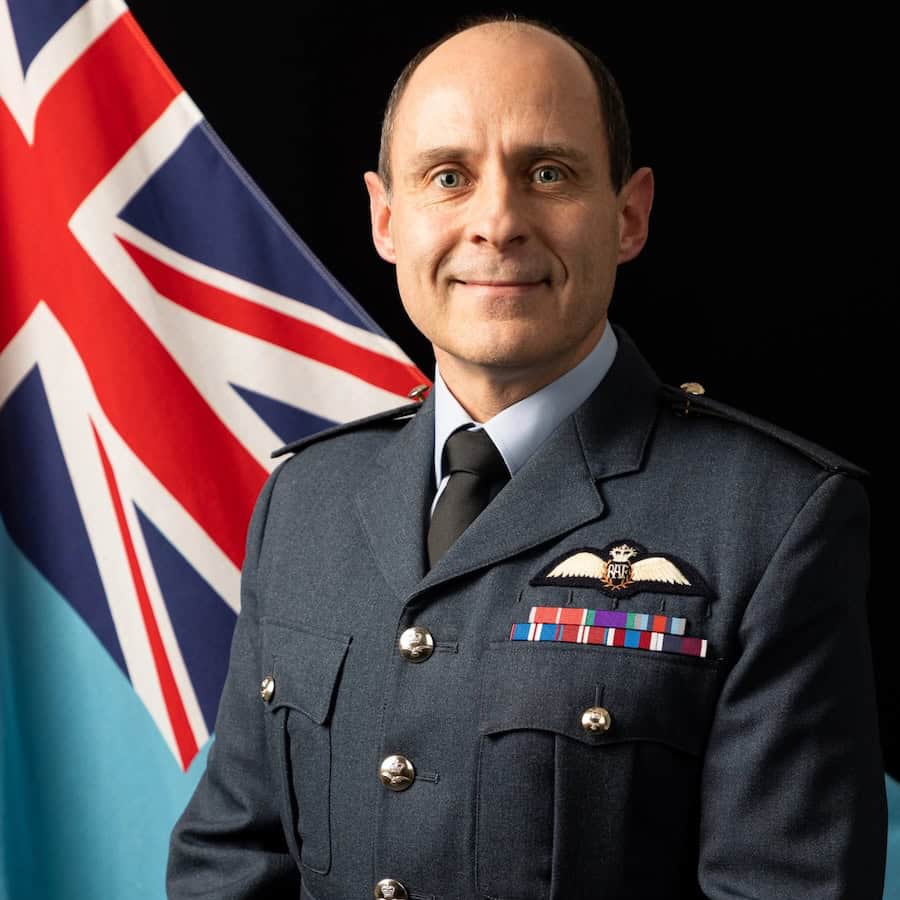
Born and educated in Northern Ireland, Smyth joined the RAF in 1991 via the Sixth Form Scholarship Scheme, and upon completion of flying training, spent 15 years as a frontline Harrier pilot and weapons instructor. He has extensive combat experience having flown hundreds of operational missions from both land bases and aircraft carriers over: Bosnia; Kosovo; Serbia; Iraq; and Afghanistan. In early staff roles Smyth worked in the UK Air & Space Warfare Centre and spent 2 tours in the F-35 Lightning programme, the latter based in Washington DC as the UK’s F-35 National Director.
In 2013 Smyth retrained as a Tornado pilot and became the Station Commander of RAF Marham, transitioning the base for F-35 integration. On promotion to Air Commodore (1*) in 2015 he became the Tornado Force Commander, and in parallel, the UK’s first F-35 Lightning Force Commander. He followed this with a short appointment in the MOD as the 1* Head of Carrier Enabled Power Projection (CEPP), before deploying to Qatar as Director of the 609th Combined Air and Space Operations Centre during the height of the Counter-Daesh campaign.
Promoted to Air Vice-Marshal (2*) in 2018, Smyth retrained as a Typhoon pilot and became Air Officer Commanding Number 1 Group (AOC 1Gp), where he was responsible for the Air Combat Group of the RAF. In 2020, Smyth then became UK MOD’s inaugural Director Space, setting the foundation for UK Space Command, building the Defence Space Programme, and producing UK’s foundational National and Defence Space Strategies.
Smyth was promoted to Air Marshal (3*) in 2022 and appointed as the RAF’s Deputy Commander (Operations): this role transitioned to become the UK Air and Space Commander in 2023 and was responsible for all RAF’s air and space operations globally.
In Apr 24 Smyth became the first RAF officer to hold the role of Deputy Chief of Defence Staff – Military Strategy and Operations (DCDS (MSO), responsible for the provision of military advice to senior leadership across government including the Prime Minister, the development of UK military strategy and its integration with partners across government and allies, and the commissioning of UK military operations at home and across the globe. During this tour Smyth was a routine member of COBR, the Joint Intelligence Committee, Small Ministerial Groups, and the National Security Council.
Smyth is a Patron of 2 charities: the Jon Egging Trust (supporting troubled teenagers) and the Mark Long Trust (giving disadvantaged individuals the wings to fly). He is also President of RAF Rugby, President of RAF Rowing, President of the RAF Small Arms Association, Admiral of RAF Sailing Association, a Board Member of the Freeman Air and Space Institute, and an ambassador for the RAF Charitable Trust. With strong links to Northern Ireland, Smyth is extremely proud to be Honorary Colonel for the 2nd Battalion (Northern Ireland) Army Cadet Force, Senior Mentor to the Northern Ireland Universities’ Air Squadron (NIUAS), and Patron of the Ulster Aviation Society, Ireland’s sole military aircraft museum.
Honours
Chris Spicer has been appointed Director at Lockheed Martin Space UK and Europe, bringing a strong track record in operational transformation, complex programme delivery and business growth.
He joins from Babcock, where he spent 16 years in a range of senior roles working across multiple domains including Land, Marine and Mission Systems. Most recently as Managing Director Engineering and Systems Integration where he re-established Babcock as a vehicle manufacturer / systems integrator building vehicles for the British Army, Foreign Commonwealth & Development Office, Metropolitan Police Service and wider government agencies. In this role Chris has led a transformation of capability within Babcock, secured multi-million-pound contracts, driven sustained growth and developed a strong export offering to support UK prosperity.
Previously, Chris served as Managing Director Assets, overseeing the management and delivery of critical support to UK national resilience across the breadth of the UK and as the Business Development Director for Babcock’s Marine Support business.
Recognised for his ability to solve complex challenges and communicate effectively across industry, government and defence stakeholders, Chris was awarded the British Empire Medal in the 2020 Queen’s Birthday Honours for his leadership of Babcock’s response to the UK ventilator challenge during the COVID-19 pandemic.
Wes Streeting was appointed Secretary of State for Defence on 20 July 2026.
He was previously Secretary of State for Health and Social Care from 5 July 2024 to 14 May 2026. He was re-elected as the MP for Ilford North in July 2024.
Air Chief Marshal Sir Johnny Stringer was born in Sale and educated at Watford Boys’ Grammar School and New College, Oxford. Johnny joined the Jaguar Force at RAF Coltishall in 1993 after completing officer and pilot training. A Qualified Weapon Instructor, he flew operationally over the Former Yugoslavia and helped enforce the Northern Iraq No Fly Zone.
From 2007 to 2009, Johnny commanded 29 Squadron, the Typhoon Operational Conversion Unit at RAF Coningsby; leaving on promotion, he spent 2 years as DACOS Joint Effects in the J3 Division (Current Ops) of the UK Permanent Joint Headquarters at Northwood. He returned to New College as a visiting Trenchard Fellow on the Oxford Changing Character of War programme in Autumn 2011.
Johnny commanded RAF Coningsby and its Typhoon Wing, between October 2012 and September 2014, supporting national and overseas Typhoon operations, and displayed the Spitfire and Hurricane with the Battle of Britain Memorial Flight. He was posted as ACOS Ops to HQ Air Command in August 2015 before commanding No.83 Expeditionary Air Group as the UK Air Component Commander between October 2016 – October 2017, in charge of all national air operations in the fight against Daesh and across the Middle East. For this tour, Johnny was awarded the CBE in the May 2018 Operational Honours List. Promoted in February 2018, he was Chief of Staff Joint Forces Command and, from January 2020 to March 2021, Director Strategy in UK Strategic Command (JFC’s successor) – in this latter role he led the Command’s engagement on the UK Government’s 2021 Integrated Security and Defence Review.
Johnny held a professional industrial placement between May 2021 and June 2022. Promoted to Air Marshal (3*), he served as Deputy Commander NATO Allied Air Command between August 2022 and October 2025. Johnny was knighted in the 2025 King’s Birthday Honours List and selected for promotion to Air Chief Marshal and appointed as Deputy Supreme Allied Commander Europe in March 2026.
He is a graduate of the UK Advanced and Higher Command and Staff Courses, the Royal College of Defence Studies and holds Masters degrees from Oxford and Kings College London. Johnny is married to Lisa and has two sons. His interests include history, literature, food and drink, and cycling.
Andrew is the Chief Executive of Saibre Capital delivering national interest investments into housing, data centres, EV charging, chip fabrication, satellites, energy, intelligence, advanced recycling, manufacturing automation, drug discovery and strategic shipping. He runs global space advisory and national security consultancies, advises the UK Government on quantum investments and is an angel investor and on the boards of space, quantum and advanced materials businesses. An oarsman at Henley and second-in-command of the Light Cavalry in Windsor.
Rear Admiral Anthony (Tony) Williams joined the Royal Navy as a Warfare Officer in 1994, embarking on his complement appointment with Fishery Protection Squadron. Following a deployment to the Arabian Gulf as a Fighter Controller on HMS GLOUCESTER, he served with 899 Naval Air Squadron and instructed at the Royal Navy School of Fighter Control.
Selected for command, Tony became Executive Officer of HMS Tyne in 2004, before joining HMS IRON DUKE as PWO in 2008, supporting disaster relief operations in the Caribbean following Hurricane Ike. He later oversaw UK counter-piracy operations and overseas counter-terrorism capacity building at Permanent Joint HQ.
Tony commanded RN mine countermeasure vessels from 2011 and the Fishery Protection Squadron from 2014. Following command of HMS RALEIGH and an OPTOUR with UKMCC in 2017, he was assigned to MoD’s Finance and Military Capability Division in 2018, responsible for Royal Navy capability planning.
Upon promotion in 2019, Tony deployed to the Gulf before returning to MoD in the Space Directorate. He moved to the National Shipbuilding Office in 2021 as Deputy Head for Delivery and became Head of Capability at UK Space Command in 2024. Promoted to Rear Admiral in 2026, he became the inaugural Space Portfolio Director within the National Armaments Director Group.
Tony is married and has a university age family. His interests include reading, history and keeping fit.
Air Commodore Darren Whiteley was commissioned into the Royal Air Force in 1998. As an Air Battle Manager he has operated across the globe, including operations in Afghanistan, Iraq and Op ELLAMY (Libya). More recently he has become embedded in the US and Allied space community completing tours at the operational level, as HQ staff within the Pentagon and as a Deputy Director within a Combatant Command.
Whiteley has extensive leadership in Command and Control (C2), Intelligence, Surveillance, and Reconnaissance (ISR), and space operations, beginning with key assignments at RAF Buchan and Number 1 Air Control Centre, including a deployment as the initial Unit commander for Op HERRICK in Afghanistan. Following his promotion to Squadron Leader, he served alongside US forces as the lead NATO Air Planner for support to Afghanistan operations before transitioning to the Air Warfare Centre. As a Wing Commander, he spearheaded the Financial Military Capability Transformation Programme and later provided strategic military advice on NATO to the Chief of Defence Staff and Defence Ministers within the Ministry of Defence. His trajectory continued through command of RAF Fylingdales and his role as Chief of Staff Space and Battlespace Management Force, leading to his promotion to Group Captain where was selected as the first Allied deputy of the US’s Combined Space Operations Center. After completing the UK Higher Command and Staff Course in 2022, he led the United States Space Force’s “Partner to Win” initiative as Deputy Director of Global Partnerships, ultimately promoting to Air Commodore in September 2023 to serve as the Deputy J5 at USSPACECOM.
Air Commodore Whiteley resides with his partner, Marion; his son currently lives in the United States. Outside of his professional duties, he is a dedicated—and often long-suffering—supporter of Middlesbrough Football Club. He spends his leisure time mountain biking, practicing photography, and managing a rescue dog with a penchant for the local wildlife; his cats give him less stress. He also enjoys exploring the complexities of fine Scotch whisky.
Air Commodore Whiteley was appointed Deputy Commander, UK Space Command in July 2026.